I. Current need for consulting on certificate of origin of goods
The demand for consultation on certificates of origin of goods has been increasing significantly, especially as Viet Nam participates in numerous free trade agreements (FTAs) with major partners such as the EU, CPTPP, and RCEP. Demonstrating the origin of goods not only enables enterprises to enjoy preferential tariffs but also facilitates access to and expansion into international markets.

However, rules on certificates of origin (C/O) are often complex, varying across agreements and importing countries, which creates difficulties for enterprises in declaring and completing dossiers. Therefore, services providing consultation on certificates of origin of goods play an essential role in supporting enterprises to correctly understand the regulations, prepare accurate documentation, shorten processing time, and avoid related legal risks.
II. Legal Regulations Related to Consultation on Certificates of Origin of Goods
To ensure that the export process complies with the law and that enterprises receive tariff incentives, understanding the legal framework governing certificates of origin of goods is essential. Below are some important regulations that enterprises must take into account when performing or using consultation on certificates of origin of goods.
1. What Is Consultation on Certificates of Origin of Goods?
Clause 1 Article 3 of Decree No. 31/2018/NĐ-CP defines the origin of goods as follows:
The origin of goods is the country, group of countries, or territory where the entire goods are produced or where the last substantial processing is carried out in cases where multiple countries, groups of countries, or territories take part in the production process.
Accordingly, consultation on certificates of origin of goods may be understood as the activity of providing legal, technical, and administrative support to enterprises or individuals during the process of determining and applying for a certificate of origin (C/O). This consultation service assists the beneficiary in understanding relevant legal provisions, choosing the appropriate C/O form for each export market, preparing valid dossiers, and handling any issues that arise.
The objective of the consultation is to ensure that goods meet the eligibility requirements for C/O issuance, thereby benefiting from preferential tariffs under trade agreements and facilitating international customs clearance.
2. Which Legal Documents Govern Consultation on Certificates of Origin of Goods in Viet Nam?
In Viet Nam, consultation activities related to certificates of origin of goods are governed by specific legal instruments. These include the Law on Foreign Trade Management 2017, which serves as the fundamental legal basis for the management of import–export activities and the rules of origin.
In addition:
- The Government has issued Decree No. 146/2025/NĐ-CP on decentralization and delegation of authority in the fields of industry and trade, effective from 1 July 2025;
- Decree No. 31/2018/NĐ-CP, also issued by the Government, plays an important role by providing detailed guidance on the implementation of the Law on Foreign Trade Management related to the determination and certification of goods origin;
- Compliance is also required with Circular No. 05/2018/TT-BCT on rules of origin of goods issued by the Minister of Industry and Trade;
- Circular No. 11/2020/TT-BCT on the rules of origin of goods under the Free Trade Agreement between Viet Nam and the European Union;
- Circular No. 33/2023/TT-BTC on determining the origin of exported and imported goods issued by the Minister of Finance.
These legal documents collectively establish the core legal framework enabling organizations and individuals to comply with the proper procedures and legal requirements in this field.
3. In Which Situations Is Consultation on Certificates of Origin of Goods Required?
The situations in which the measure of certifying the origin of goods must be applied are provided under Article 33 of the Law on Foreign Trade Management 2017, including:
- For exporters and importers seeking to enjoy preferential tariffs under international treaties to which the Socialist Republic of Viet Nam is a party;
- Where the law requires that exported or imported goods must have a certificate of origin;
- Where a competent state authority issues a certificate at the request of a trader, or where the trader self-certifies the origin without falling under the cases mentioned above.
Accordingly, consultation on certificates of origin of goods is particularly necessary in numerous situations, especially for enterprises exporting to markets that have free trade agreements with Viet Nam and wish to enjoy tariff preferences. In addition, newly established enterprises, those without experience in applying for C/O, or those unfamiliar with legal regulations concerning origin criteria, appropriate C/O forms, or procedural requirements, also greatly benefit from professional assistance. When goods contain materials sourced from multiple countries or undergo various processing stages, determining the lawful country of origin is crucial to avoid violations.
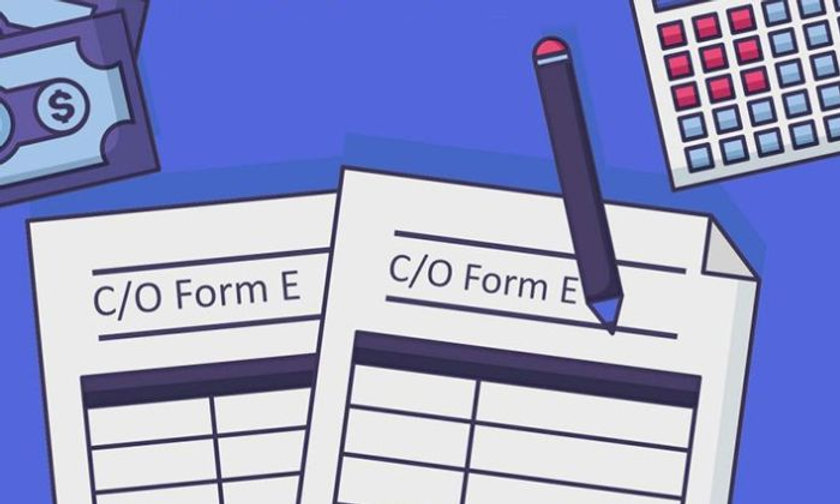
Furthermore, when customs authorities in the importing country request origin verification or raise suspicion of fraud, timely consultation helps enterprises handle the situation effectively and mitigate risks. For enterprises that wish to self-certify origin under the applicable mechanism, seeking expert advice is also necessary to ensure compliance with statutory conditions and procedures.
4. According to Current Legal Regulations, What Principles Must Be Followed When Providing Consultation on Certificates of Origin of Goods?
Pursuant to Article 3 of Circular No. 40/2025/TT-BCT, the principles governing the organization of C/O issuance and the issuance of Approval Documents are as follows:
- Ensuring consistency and comprehensiveness in state management of the origin of exported goods.
- Ensuring compliance with the principles under the Law on Government Organization 2025 and the Law on Local Government Organization 2025.
- Conformity with regulations on authorities and organizations empowered to issue C/O and Approval Documents under international treaties to which the Socialist Republic of Viet Nam is a party.
- Ensure that the implementation of treaties to which the Socialist Republic of Viet Nam is a member, and international agreements from the Department level under Ministries, Ministries, or ministerial-level agencies and above that contain provisions on the origin of goods, is not interrupted.
Accordingly, consultation on certificates of origin of goods must adhere to several core principles to ensure transparency, accuracy, and legal compliance. First, consulting activities must be based on the existing legal framework, including the Law on Foreign Trade Management 2017, relevant decrees, and circulars guiding the determination and certification of origin.
At the same time, the content of the consultation must be objective, truthful, and must not distort the nature of the goods or facilitate origin fraud, thereby preventing legal risks for enterprises during export and import processes. Moreover, consultants must respect the lawful rights and interests of the advised organizations or individuals, maintain confidentiality of business information, and provide solutions tailored to the specific circumstances of each case.
In some cases, consultation must also take into account international trade agreements to which Viet Nam is a party, ensuring that enterprises can lawfully enjoy tariff preferences consistent with international commitments.
III. Clarifications on Issues Related to Consultation on Certificates of Origin of Goods
During the process of researching and applying for certificates of origin, enterprises often encounter legal and procedural difficulties. The following section provides answers to common questions to assist enterprises in better understanding the use of consultation on certificates of origin of goods.
1. Is Consultation on Certificates of Origin of Goods Applicable to Small and Medium-Sized Enterprises (SMEs)?
Yes. Consultation on certificates of origin of goods is fully applicable to small and medium-sized enterprises, and SMEs are even the group that should prioritize using this service. SMEs often face challenges in understanding legal documents, C/O issuance procedures, and technical requirements relating to rules of origin, especially when participating in global supply chains or exporting to markets with stringent regulations.
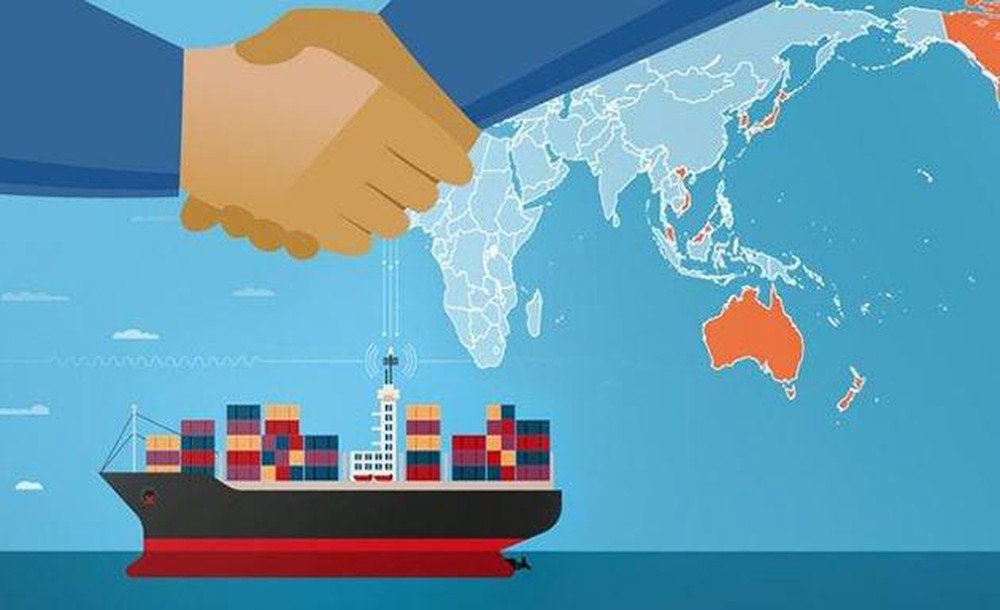
By using consultation services, enterprises receive assistance in correctly identifying the type of C/O needed, preparing valid documentation, saving time, and reducing legal risks. This is a practical solution enabling SMEs to access export markets in a professional, efficient, and legally compliant manner.
2. Which Authorities Are Permitted to Provide Consultation on Certificates of Origin of Goods?
Pursuant to Clause 1 Article 4 of Circular No. 40/2025/TT-BCT on the content and scope of issuing C/O and Approval Documents:
Article 4. Content and Scope of Issuing C/O and Approval Documents
- The Export and Import Department (Ministry of Industry and Trade) issues and organizes the issuance of types of C/O and Approval Documents listed in Annex I attached to this Circular when the conditions under Article 5 of this Circular and other relevant legal regulations are satisfied.
- Organizations assigned by provincial People’s Committees, in accordance with their competence under the Law on Local Government Organization, issue types of C/O and Approval Documents listed in Annex II attached to this Circular when the conditions under Article 5 of this Circular and other relevant legal regulations are satisfied.
- Compliance with conditions shall be based on self-assessment using the form in Annex III attached to this Circular. The Export and Import Department (Ministry of Industry and Trade) shall submit the self-assessment results to the Minister of Industry and Trade; organizations assigned by provincial People’s Committees shall submit such results to the provincial People’s Committee and the Minister of Industry and Trade.
Accordingly, the authority responsible for organizing and implementing the issuance of C/O and Approval Documents is the Export and Import Department (Ministry of Industry and Trade).
3. Do Providers of Consultation on Certificates of Origin of Goods Bear Legal Liability if Their Consultation Violates the Law?
Pursuant to Clause 8 Article 15 of Circular No. 33/2023/TT-BTC on the examination of certificates of origin for imported goods, the following minor errors or discrepancies do not affect the validity of certificates of origin:
Customs authorities shall accept certificates of origin in cases where there are small errors or minor discrepancies between the information declared on the certificate and other documents in the customs dossier, provided that such errors or discrepancies are consistent with the actual imported goods, including:
- Spelling or typographical errors not altering the declared information on the certificate of origin;
- Differences in the marking method in relevant boxes on the certificate of origin: machine-marked or handwritten, marked with an “x” or “√”;
- Minor differences between the signature on the certificate of origin and the specimen signature;
- Differences in units of measurement between the certificate of origin and other customs documents (such as the customs declaration, invoice, bill of lading);
- Differences in the paper size of the submitted certificate of origin compared with the prescribed template;
- Differences in ink color used in the entries on the certificate of origin;
- Differences in commodity codes: consistent at the 6-digit subheading level but differing at the 8-digit level;
- Differences in the name and number of the transport vessel due to changes in transportation arrangements;
- Minor differences in the description of goods between the certificate of origin and other documents;
- Other minor differences as provided under international treaties to which Viet Nam is a party, as notified by the General Department of Customs.
Thus, certificates of origin containing any of the above minor errors may still be accepted by customs authorities.
However, it can be seen that providers of consultation on certificates of origin of goods may indeed bear legal liability if they offer consultation in violation of the law, causing damage to the advised organization or individual or leading to unlawful acts.

Under Article 584 of the Civil Code 2015 on liability for non-contractual damages, if a consulting entity provides inaccurate information or incorrect legal guidance, thereby affecting the lawful rights and interests of its clients (for example, rejection of C/O issuance, administrative sanctions, or denial of tariff preferences), it may be required to compensate for damages. In cases where the incorrect consultation involves fraudulent intent, falsification, or assisting commercial fraud, the consulting entity may also be subject to administrative penalties or criminal liability, depending on the severity of the violation.
Therefore, consultation activities in this field must strictly comply with current legal regulations and ensure accuracy and honesty in all advisory content.
4. Is there any specific service contract template dedicated to consultation on certificates of origin of goods?
According to Article 513 of the Civil Code 2015, regulations on service contracts are provided as follows: A service contract is an agreement between the parties whereby the service provider performs work for the service user, and the service user must pay service fees to the service provider.
At present, Vietnamese law has not issued any standardized service contract template specifically applicable to activities of consultation on certificates of origin of goods. The conclusion of contracts in this field is primarily based on the principle of mutual agreement between the parties, in accordance with the general provisions of the Civil Code 2015 and other relevant legal documents. Contract contents usually include fundamental clauses such as: scope of work, responsibilities of the consultant and the client, performance timeline, service fees, ownership of documents and materials, and confidentiality obligations. Although no fixed template exists, to ensure legal validity and minimize risks, the parties should clearly set out their rights and obligations in a written contract and, when necessary, seek legal advice.
5. Can consultation on certificates of origin of goods support enterprises in expanding export markets?
Consultation on certificates of origin of goods plays an important role in assisting enterprises to expand their export markets. One of the essential conditions for goods to enjoy tariff preferences under free trade agreements is compliance with rules of origin. However, rules of origin are often complex, differ between markets, and vary across agreements. Professional consultation services help enterprises accurately determine the required type of C/O, select suitable production options to meet the origin criteria, and provide guidance on preparing the application dossier in accordance with legal regulations. As a result, enterprises not only ensure legal compliance but also increase their ability to access potential export markets, fully utilize tariff incentives, and enhance international competitiveness.
IV. Legal consultation services related to consultation on certificates of origin of goods
If your enterprise is facing difficulties in determining, declaring, or applying for certificates of origin of goods (C/O), do not hesitate to contact us.
For legal consultation services related to consultation on certificates of origin of goods — please immediately contact NGOC PHU LAW COMPANY LIMITED to receive prompt, accurate, and lawful support from our team of experienced lawyers and experts. We are committed to accompanying your enterprise on the journey of integration and sustainable export market development.