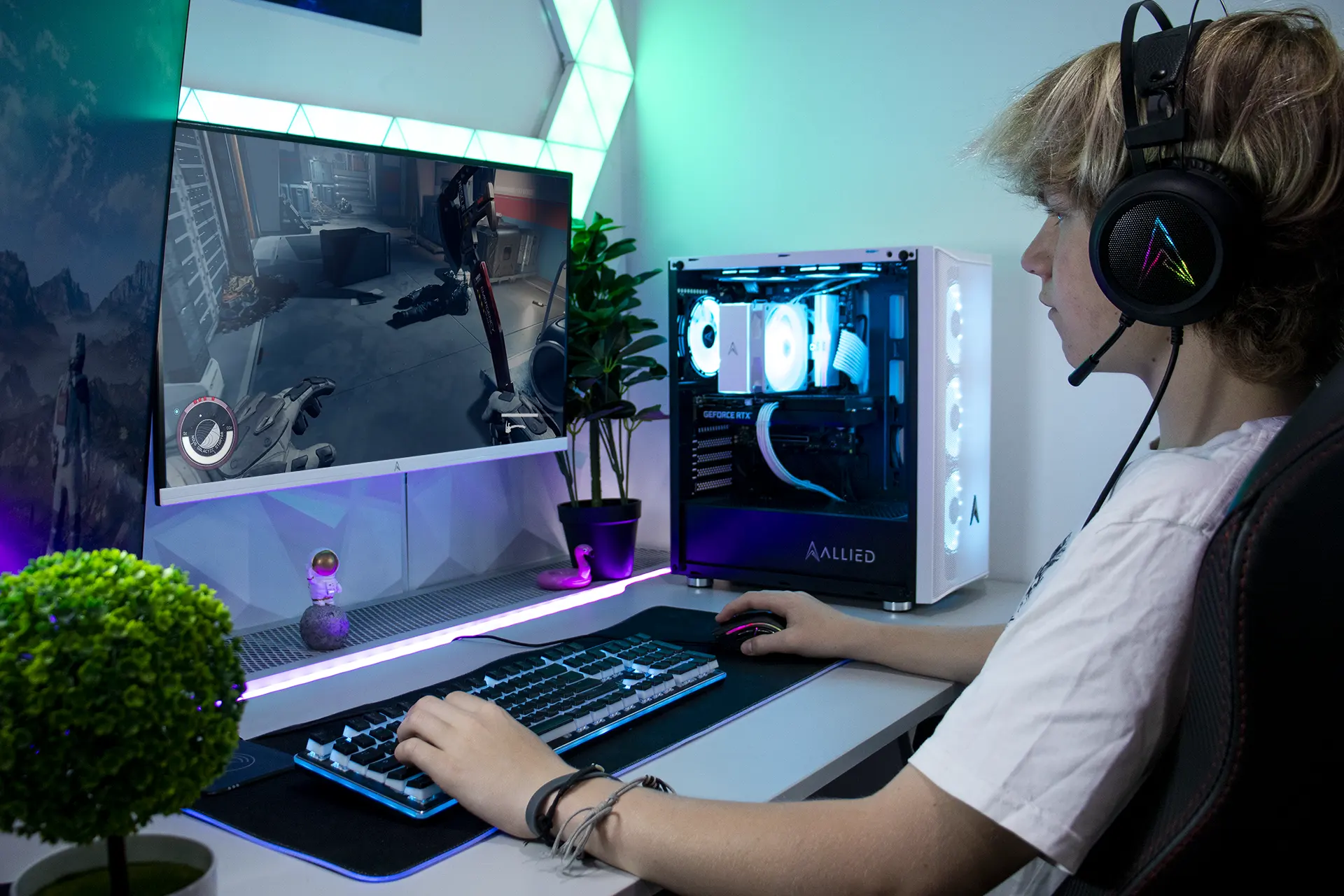
Currently, game publishing is becoming more popular than ever due to the development of technology and the increasingly large gaming community. So how can we understand what a game publishing license is and the issues surrounding game publishing licenses? Let's explore the current legal regulations related to this issue with NPLaw below.
I. The current situation of game publishing licenses
Currently, game publishing is becoming more popular than ever due to the development of technology and the increasingly large gaming community. However, obtaining a game publishing license is still a complex process that requires attention and patience.
Some current issues regarding game publishing licenses include:
- License approval procedure: Government organizations have different regulations and procedures for approving game publishing licenses, which can sometimes be overly complex and time-consuming.
- Cost: Obtaining a game publishing license sometimes requires significant expenses, especially when publishing an international game.
- Conditions and requirements: License approval organizations often impose various requirements regarding game content, file formats, technical infrastructure, etc.
- Competition: The gaming market is becoming increasingly competitive, and obtaining a game publishing license can help developers build more trust in the eyes of players.
- Copyright and legal issues: The lack of a game publishing license can lead to copyright and legal issues.
In summary, obtaining a game publishing license is still a difficult process and requires thorough preparation from the game developers.

II. Understanding game publishing licenses
1. What is a game publishing license?
A game publishing license is an official document issued by a government management authority to allow a game title to be published and distributed in the market. This ensures that the game meets the regulations and standards for safety, copyright, and ethical principles in the gaming and entertainment industry.
2. Why is it necessary to obtain a game publishing license?
Companies need to obtain a license before publishing their products on the market. This is a common regulation in many countries around the world. Obtaining an online game license is a step for state management authorities to approve the content and game script to determine whether the online game violates any regulations or goes against public morals and customs. Clause 3, Article 31 of Decree 72/2013/ND-CP regulates:
Enterprises are allowed to provide G2, G3, and G4 gaming services when they have a Certificate of Registration for Electronic Gaming Services and a Service Provision Notification for each electronic game.
III. Legal regulations on game publishing licenses
1. Types of games that require obtaining a publishing license.
The online electronic gaming services provided by the enterprise must apply for an online gaming business license, including:
- Electronic games that involve simultaneous interaction between multiple players through the enterprise's game server (abbreviated as game G1);
- Electronic games that only involve interaction between the player and the game's server system of the enterprise (abbreviated as game G2);
- Electronic games involve interaction among multiple players but do not involve interaction between players and the game's server system of the enterprise (abbreviated as game G3).
- Electronic games are downloaded over the internet, with no interaction between players and between players and the game's server system of the enterprise (abbreviated as game G4).
2. Dossier to apply for game publishing licenses
Dossier to apply for G1 Online Game License:
- Documents proving domain ownership such as: Certificate of domain registration owned by the company; or international domain ownership commitment.
- Location leasing contract for the placement of equipment.
- Information about the number of employees in the company.
- Payment methods for game services.
- List of partners providing payment support services.
- The diagram describes the technical system providing electronic gaming services.
- Configuration, quantity, functionality, and software of the server devices.
- Information about technical and content management personnel (qualifications, management skills, personal information).
Dossier to apply for G2, G3, and G4 Online Game Licenses:
- Application for a certificate of registration for providing electronic gaming services
- Notarized copies of the enterprise registration certificate; Investment certificate that includes the industry of providing electronic gaming services.
- The resume of the personnel responsible for managing the provision of electronic gaming services, certified by the competent authority.
- Document confirming the legal use of the domain name (for games provided on the Internet).
- Project to provide electronic gaming services.
3. The procedure for obtaining a game publishing license
The procedure for issuing a game publishing license is carried out in the following specific steps:
Step 1: The enterprise prepares the license-issuing dossier. The enterprise prepares one original dossier to apply for a license to provide electronic gaming services according to the above regulations and guidelines.
Step 2: Submit the license-issuing dossier.
After preparing the dossier, the enterprise submits one original license-issuing dossier to the Ministry of Information and Communications (Department of Broadcasting, Television, and Electronic Information) in one of the following methods:
- Submit directly at the Department of Broadcasting, Television, and Electronic Information—Ministry of Information and Communications, located on the 9th floor, 115 Tran Duy Hung building, Cau Giay, Hanoi.
- Submit by mail services.
- Submit through the internet via online accounts and electronic signatures.
Step 3: Evaluation of the online game license-issuing dossier
The Electronic Game Evaluation Advisory Council, established and operating under the Decision of the Minister of Information and Communications, will evaluate the game license-issuing dossiers of enterprises, with the evaluation content including:
- Game content.
- Game script.
- Technical project for providing electronic gaming services.
The Video Game Evaluation Advisory Council is responsible for conducting advisory and evaluation work rigorously and objectively, ensuring the rights of enterprises, and complying with legal regulations.
Step 4: The Department of Broadcasting, Television, and Electronic Information issues a game license or denies it.
- Within 30 (thirty) working days from the date of receiving a valid dossier, the Department of Broadcasting, Television, and Electronic Information will conduct an evaluation of the dossier and submit it to the Minister of Information and Communications for review and issuance of an electronic gaming service license.
- In the case of denying to issue a license, the Ministry of Information and Communications will provide a written response stating the reasons for the denial.
Step 5: The licensed enterprise will announce the official time for providing gaming services.
- Before officially providing the service for 10 (ten) working days, the enterprise must send a specific notification about the official service provision time to the Department of Broadcasting, Television, and Electronic Information—Ministry of Information and Communications.
- The Ministry of Information and Communications in the area where the enterprise registers its headquarters and where the enterprise has a system of equipment providing services notifies enterprises providing server rental services, server placement rental services, telecommunications enterprises, internet service providers, and enterprises providing payment support services in electronic games.
- Upon receiving the notification, the receiving authority is responsible for sending a receipt to the enterprise within 7 (seven) working days from the date of receiving the notification.
Step 6: Conduct the operation report of the enterprise doing game business.
- Periodic report:
+ Reporting period: Enterprises providing electronic gaming services must submit periodic reports every six (6) months (on June 1 and December 1 each year).
+ Reporting authority: Department of Broadcasting, Television, and Electronic Information, local Ministry of Information and Communications where the enterprise headquarters is registered to operate.
+ Unexpected report: Enterprises doing game business are responsible for submitting unexpected reports at the request of the competent state management authority.
IV. Answering questions related to game publishing licenses
1. Which authority has the competency to issue game publishing licenses?
Pursuant to Clause 4, Article 32, and Clause 2, Article 33 of Decree 72/2013/ND-CP, as amended by Decree 27/2018/ND-CP, the authority responsible for evaluating dossiers and issuing game licenses is the Ministry of Information and Communications. The Ministry of Information and Communications will decentralize administrative authorities to receive dossiers, specifically the Department of Broadcasting, Television, and Electronic Information.
- Accordingly, enterprises can submit their dossiers to the Department of Broadcasting, Television, and Electronic Information either in person or by mail.
- After the competent authority reviews and considers the dossier, if it meets all the conditions for issuing an online game license and has a complete dossier as per regulations, the Ministry of Information and Communications will issue the online game license in accordance with the law.
2. Conditions for enterprises to publish games in Vietnam
Pursuant to Articles 31 and 32 of Decree 72/2013/ND-CP, supplemented by Decree 27/2018/ND-CP, which regulates the conditions for enterprises to publish games:
- The enterprise is an enterprise established in accordance with Vietnamese law, with an enterprise registration certificate for providing online gaming services.
- A domain name has been registered for service provision.
- Having sufficient financial, technical, organizational, and personnel resources appropriate to the scale of operations;
- There are measures to ensure information safety and information security.
Note: The above are general conditions for the procedure to apply for an online game business license, but enterprises, before proceeding with the application for online game business licenses G1, G2, G3, and G4, also need to determine the nature of their game to carry out the online game business license application procedure accordingly.
3. If the game publishing company only has interaction between players and the company's game server system, is a license for providing electronic game services required?
If a game publishing company only has interaction between players and the company's game server system, is a license for providing electronic game services required? Pursuant to point b, clause 1, clause 3, Article 31 of Decree 72/2013/ND-CP as follows:
Principles of managing online electronic games
1. Online electronic games are classified as follows:
1. Classified according to the method of providing and using services, including:
- Electronic games that involve simultaneous interaction between multiple players through the enterprise's game server (abbreviated as game G1);
- Electronic games that only involve interaction between the player and the game's server system of the enterprise (abbreviated as game G2);
- Electronic games involve interaction among multiple players but do not involve interaction between players and the game's server system of the enterprise (abbreviated as game G3).
- Electronic games are downloaded over the internet, with no interaction between players and between players and the game's server system of the enterprise (abbreviated as game G4).
2. Classified by the age of the player in accordance with the content and script of the game. The Ministry of Information and Communications specifies the classification of games according to the age of the players.
3. Enterprises are allowed to provide G1 gaming services when they have an Electronic Gaming Service License and a decision approving the content and script for each electronic game issued by the Ministry of Information and Communications.
4. Enterprises are allowed to provide G2, G3, and G4 gaming services when they have a Certificate of Registration for Electronic Gaming Services and a Service Provision Notification for each electronic game.
Accordingly, if the game publishing company only has interaction between players and the company's game server system, it does not need an Electronic Gaming Service License but only needs a Certificate of Registration for Electronic Gaming Service and a Service Provision Notification for each electronic game.
4. What are the conditions for the approval of electronic game content and scripts?
Pursuant to Clause 3, Article 32 of Decree 72/2013/ND-CP, enterprises are issued a decision approving the content and script of electronic games when they meet the following conditions:
- The enterprise has an electronic gaming service license valid for at least 01 year.
- The content and script of the electronic game meet the following requirements:
+ Not violating the regulations pursuant to Clause 1, Article 5 of this Decree;
+ There are no images or sounds that evoke feelings of horror or dread; incite violence or savagery; vulgarity or suggestiveness; stimulate obscenity, depravity, or immorality contrary to the ethical traditions, culture, and customs of the nation; or distort or undermine historical traditions.
+ No images or sounds depicting acts of suicide, drug use, drinking, smoking, terrorism, acts of abuse, exploitation, child trafficking, and other harmful or prohibited behaviors.
+ Other requirements as regulated by the Ministry of Information and Communications.
+ Meeting the technical and professional requirements for providing electronic gaming services according to the regulations of the Ministry of Information and Communications.
V. Should a lawyer be contacted regarding the game publishing license issue? How to contact?
Above is all the detailed information that NPLaw provides to assist customers with the issue of game publishing licenses. In case you have any further questions related to the above issue or other legal matters, please contact NPLaw immediately for our team to provide direct consultation and guidance.












