I / The current reality of investment projects for new urban areas.
1. What is an investment project for a new urban area?
A new urban area project is an investment project to build a synchronous urban area with a system of technical infrastructure, social infrastructure, residential and other service buildings that are developed sequentially with existing urban areas or to form separate ones, whose boundaries and functions are determined to be consistent with urban construction planning approved by the competent state agencies, and a new urban area with a provincial administrative boundary.
2. Examples of new urban investment projects
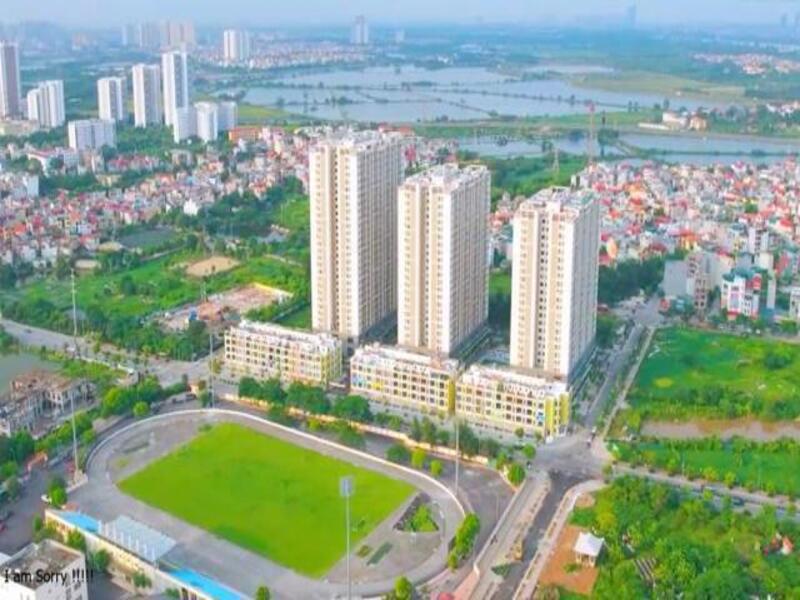
Lien Ninh new urban area, located in Thanh Tri District, Hanoi, Vietnam
This is the first urban area to be implemented after promulgating the Decision No. 32/2022/QD-UBND dated September 16th, 2022 of the People's Committee of Hanoi City stipulating the management of business and investment projects using land in Hanoi City.
Accordingly, the proposed project has an expected investment of 1,423.4 billion Vietnamese dong which is about 27.7 hectares of land use and has a population of about 4,500 people. The project aims to build a new urban area in correspondence with the urban subdivision planning, whose details are approved and synchronized with technical infrastructure and social infrastructure to enhance the quality of People's lives, contributing to creating a new urban appearance for Thanh Tri District. Investors implemented their investment and construction to synchronize the new urban area’s technical infrastructure in compliance with the approved detailed planning, green residential buildings, transport infrastructure, parking lots, preschools, 197 villas, 76 adjacent houses, subsidized housing with a maximum height of 30 floors, etc.
Progress on the project is from 2022 to 2026, and is proposed to be completed in the first quarter of 2026. The proposal contents of investing in the project of Thanh Tri District that include the function of using land and basic planning criteria consistent with the detailed construction planning of the Urban Area in Lien Ninh Commune with the ratio of 1/500 were approved by the People's Committee stated in Decision No. 2820/QD-UBND dated June 8th, 2018.
The project aims to effectively exploit and use the land fund, develop and meet the housing needs of the people in the area, contributing to the improvement of the quality of People's life and a change in the face of Thanh Tri District.

Phu My Hung urban area, located in Ho Chi Minh City, Vietnam
Phu My Hung is an urban area that was "born" early and has been developed most synchronously until now. Phu My Hung (A site covering an area of 409 hectares) has formed a modern and well-functioning urban area: housing, offices, commercial – leisure, health, education, services, industry, science, etc.
Nam Tu Liem urban area, located in Hanoi, Vietnam
Nam Tu Liem District was established according to Resolution No. 132/NQ-CP dated December 27th, 2013 of the Government, on the basis of adjusting the administrative boundaries of the former Tu Liem District, including 5 communes: Me Tri, My Dinh, Trung Van, Tay Mo and Dai Mo; the entire 536.34 ha and 34,052 remaining demographics of Xuan Phuong Commune; and the entire 137.75 ha and the 23,279 remaining demographics of Cau Dien Town.
Nam Tu Liem District has many modern and important architectural works of Hanoi Capital such as National Convention Center, My Dinh National Stadium, Hanoi Museum, Thang Long Boulevard, National Exhibition Construction Center, Hanoi Senior Athlete Training Center, etc. This district is one of the urban areas implementing the planning project of Hanoi approved by the Prime Minister in 2011. The aims are the building and development of Nam Tu Liem District to become the new center of the Capital with a safe, clean and convenient living environment, an attractive investment environment, rapid and sustainable economic development, etc.
II / How are the rights and obligations of the management board of the new urban area investment project regulated?
The management board of construction and investment projects has the rights and obligations prescribed in Article 69 of the Construction Law 2014, namely the following:
- Exercising project management rights as authorized by the owner;
- Proposing plans and solutions to organize the project management, and recommending to the owner to solve problems beyond its competence;
- Hiring a consulting organization to manage projects when it is needed after the investor or owner approves it;
- Fulfilling the owner’s obligations on project management within the authorization scope;
- Organizing the management of construction investment projects ensuring requirements for progress, quality, cost, and safety and protection of the environment while construction;
- Reporting work to the owner during the project management;
- Being responsible for legal violations in the management for implementing project;
- Other obligations as prescribed by law."
III / What criteria are new urban investment projects classified according to?
The provisions on the classification of construction investment projects are prescribed in Article 49 of the Construction Law 2014 and amended and supplemented in Clause 8, Article 1 of the revised Construction Law 2020. Accordingly, construction investment projects are classified according to “size, nature, type of construction and funding sources”. However, the revised Construction Law 2020 sets the criteria for classifying construction investment projects according to the functions, characteristics and management purposes of the construction works and investment projects; or according to the funding sources and investment forms, etc.
Based on the criteria of functions, characteristics of the construction works, and the purposes of the project management and construction investment.
This is one of the new points in the classification of construction investment projects in the revised Construction Law 2020. According to functions, characteristics of the construction works and management purposes, construction investment projects are classified into the following projects:
- Investment projects on construction of civil works;
- Investment projects on construction of industrial works;
- Investment projects on construction of technical infrastructure;
- Investment projects on construction of transport works;
- Investment projects on construction of works for agriculture and rural development;
- Investment projects on construction of national defense and security works;
- Investment projects on the construction of housing, urban areas and other investment projects with mixed functions.
Based on criteria for funding sources and forms of investment
Pursuant to Clause 3 Article 5 of Decree 59/2015/ND-CP, construction investment projects are classified according to the type of funding sources, including: “Projects using state budgets, projects financed by state funds other than budgets and projects using other funds”.
In the amended Construction Law 2020, the classification of construction investment projects according to the funding sources and forms has been expanded to many types of projects:
- Projects using public investment funds;
- Projects financed by state funds other than public investment;
- PPP project;
- Projects using other funds.
A construction investment project uses one or more funding sources and has single or multiple works of different types and grades.

IV / Is the new urban investment project considered a public investment project?
Clause 9, Article 3 of Decree 15/2021/ND-CP guiding some contents on the management of investment projects on construction, as follows:
“A construction investment project financed by state funds other than public investment is one using state funds in accordance with the Law on Bidding, but does not include public investment funds in accordance with the Law on Public Investment.”
Pursuant to Clause 44, Article 4 of the Law on Bidding 2013:
- “State funds include the state budget; government bonds, municipal bonds, local government bonds; official development assistance capital; concessional loans funded from sponsors; career development fund; development investment credit capital of the State; Government-guaranteed credits; State-guaranteed loans; investment development capital of State enterprises; and the value of land use rights.”
Pursuant to Clause 22, Article 4 of the Law on Public Investment 2019:
- “Public investment capital prescribed in this Law includes State budget, and capital from legal revenue sources of State agencies and public service units allocated to invest in accordance with the Law.”
Previously, the Construction Law 2014 used the terms "project financed by budget” and “project financed by state funds other than budget". However, from 01/01/2021, the amended Construction Law 2020 came into full force, which changed the terms "project financed by budget” and ”project financed by state funds other than budget" into "project financed by public investment” and “project financed by state funds other than public investment.
Thus, according to the above provisions, a project with public investment (state budget; capital from legal revenue sources of state agencies and public service unit allocated to invest), is determined as a public investment Project.












