An import tax review is an important process that enables enterprises to verify the accuracy of customs dossiers, HS codes, customs valuation, and tax incentive policies applicable to imported goods. In practice, many enterprises have been subject to tax reassessments, administrative sanctions, or customs clearance delays due to errors in declarations and document retention. Conducting periodic reviews proactively not only helps enterprises minimize legal risks but also supports cost optimization and ensures that import-export activities are implemented smoothly and in compliance with applicable laws.
An import tax review is an important process that enables enterprises to verify the accuracy of customs dossiers, HS codes, customs valuation, and tax incentive policies applicable to imported goods. In practice, many enterprises have been subject to tax reassessments, administrative sanctions, or customs clearance delays due to errors in declarations and document retention. Conducting periodic reviews proactively not only helps enterprises minimize legal risks but also supports cost optimization and ensures that import-export activities are implemented smoothly and in compliance with applicable laws.
I. Current situation regarding import tax reviews
In today’s import-export activities, many enterprises still do not place sufficient emphasis on conducting periodic import tax reviews. Numerous enterprises have incorrectly declared HS codes, improperly determined customs values, incorrectly applied preferential tax policies, or failed to maintain adequate documents proving the origin of goods, thereby exposing themselves to the risk of tax reassessments and administrative sanctions.
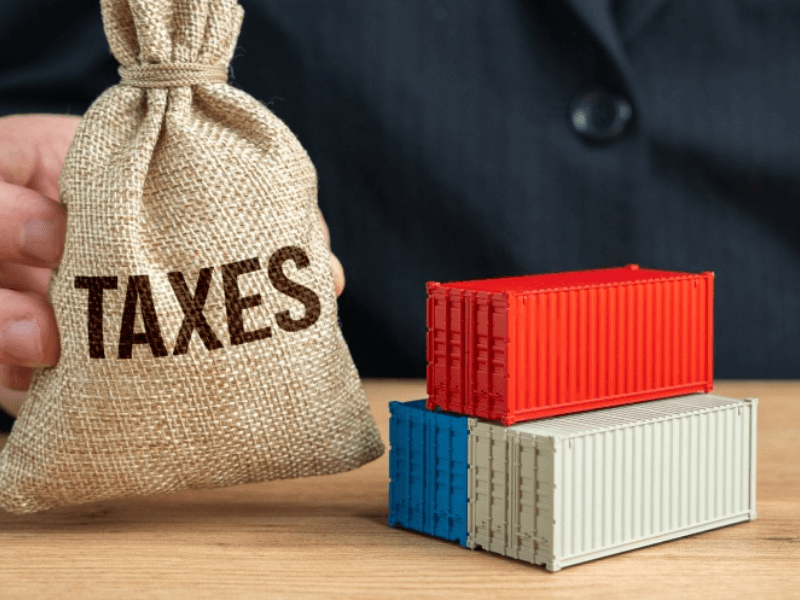
Furthermore, customs and import tax regulations are frequently amended, making it challenging for enterprises to stay updated and correctly apply the latest legal requirements. Such challenges are particularly significant for newly established enterprises or companies handling a large volume of customs declarations, where document control and tax compliance reviews are more susceptible to errors.
In practice, many enterprises only become aware of issues when customs authorities conduct inspections or post-clearance audits. Thus, proactively reviewing import tax compliance has become an essential measure for minimizing legal risks and ensuring transparency and stability in business operations.
II. Concept of import tax review
1. What is an import tax review?
An import tax review refers to a process by which an enterprise or a competent authority examines, compares, and evaluates documents and records relating to import activities in order to determine whether the declaration, calculation, and payment of import duties have been conducted in accordance with applicable laws.
The review typically focuses on HS classification, customs valuation, origin of goods, applicable duty rates, tax exemption/reduction/refund dossiers, and other customs-related documentation. Through such reviews, enterprises can promptly detect and rectify errors, thereby minimizing the risk of tax reassessments and administrative sanctions.
2. What does an import tax review include?
An import tax review generally involves examining and cross-checking all documents and information relating to import activities to determine whether customs declarations and tax obligations have been fulfilled in compliance with legal requirements.
Pursuant to Chapter VIII of Circular No. 38/2015/TT-BTC regarding post-clearance inspections, the review commonly focuses on customs dossiers, HS codes, customs valuation, origin of goods, applicable duty rates, payment documents, commercial invoices, sale and purchase agreements, and technical documents relating to imported goods.
In addition, customs authorities may review:
- The declaration of import duties and other related taxes;
- Tax exemption, tax reduction, and tax refund dossiers, where applicable;
- The legality, validity, and consistency of documents contained in the import dossier;
- The retention of supporting documents, accounting records, and data required for post-clearance inspections;
- Any discrepancies that may result in underpayment of taxes or violations of customs regulations.
3. Is an import tax review mandatory?
Current laws do not prescribe a specific mandatory procedure referred to as an import tax review. Nevertheless, enterprises remain responsible for self-declaring, determining, and taking responsibility for the taxes payable in accordance with applicable laws.
Specifically, Clause 2, Article 18 of the Law on Customs 2014 requires customs declarants to accurately and fully declare customs dossiers and retain documents relating to imported goods. In addition, Point b, Clause 2, Article 37 of the Law on Tax Administration 2025 provides that taxpayers must file accurate, truthful, and complete tax declarations and take legal responsibility for the information and documents submitted to tax authorities.
Accordingly, enterprises should proactively conduct import tax reviews to identify and correct errors in a timely manner and minimize the risk of tax reassessments or penalties during customs inspections.
III. Legal regulations relating to import tax reviews
1. How is import duty regulated under Vietnamese law?
At present, import duties in Vietnam are primarily governed by the Law on Export and Import Duties 2016, which took effect on September 1st, 2016 and remains applicable through 2026. This Law regulates taxable objects, taxpayers, tax calculation methods, tax assessment timing, tariff schedules, tax exemptions, reductions, refunds, and various duties applicable to imported and exported goods.
Specifically, according to Article 2 of the Law on Export and Import Duties 2016, goods imported or exported through Vietnamese border gates and border crossings are subject to import or export duties, except for certain categories such as goods in transit, humanitarian aid goods, and goods located within non-tariff zones as provided under Clause 4 of the same Article.
Furthermore, Article 3 of the Law on Export and Import Duties 2016 provides that taxpayers include owners of imported or exported goods and organizations or individuals authorized to pay duties on their behalf, such as customs brokers, express delivery enterprises, and credit institutions providing tax guarantees.
With respect to the timing of tax assessment, Clause 2, Article 8 of the Law on Export and Import Duties 2016 stipulates that the tax assessment date is the date on which the customs declaration is registered.

Regarding tax payment deadlines, Article 9 of the Law on Export and Import Duties 2016 requires duties to be paid before customs clearance or release of goods, except in cases where a tax guarantee is provided or the taxpayer qualifies for priority treatment under applicable regulations. In case a tax guarantee is granted, the guarantee period must not exceed thirty (30) days from the date of customs declaration registration. For priority enterprises, taxes may be paid no later than the tenth (10th) day of the following month.
In addition, the import duty regime is further guided by Decree No. 134/2016/NĐ-CP (as amended by Decree No. 18/2021/NĐ-CP), Decree No. 26/2023/NĐ-CP, and subsequent amending decrees issued in 2024 and 2025 concerning tariff schedules and lists of taxable goods.
2. How are import duty exemptions, reductions, and refunds regulated?
Cases of import duty exemption, reduction, and refund are prescribed under Articles 16, 18, and 19 of the Law on Export and Import Duties 2016.
- Import Duty Exemption (Article 16): Duty exemptions apply to certain categories of goods, including goods imported by organizations and individuals entitled to diplomatic privileges and immunities; humanitarian aid goods; gifts within prescribed limits; imported goods used to create fixed assets for investment incentive projects; imported materials and supplies used for manufacturing exported products; temporarily imported and re-exported goods; goods in non-tariff zones; and certain specialized goods serving education, science, national defense, security, and environmental purposes.
- Import Duty Reduction (Article 18): Goods under customs supervision that are damaged or lost and verified through an official assessment may qualify for a duty reduction corresponding to the actual level of loss. If goods are completely lost, no import duty is payable.
- Import Duty Refund (Article 19): Duty refunds may be granted in cases of overpayment, imported goods subsequently re-exported, imported goods used in the manufacture of exported products, or machinery and equipment temporarily imported and subsequently re-exported. As a general rule, the goods must not have been used, processed, or manufactured, except in certain specific circumstances provided by law.
3. Which authority has the power to inspect and review import taxes?
The authority responsible for inspecting and reviewing import taxes is the customs authority, which directly administers taxes applicable to imported and exported goods.
Pursuant to Clauses 1 and 2, Article 27 of the Law on Customs 2014, customs authorities have the power to verify factors relevant to tax obligations, including the origin of imported goods based on customs dossiers, certificates of origin (C/O), and results of physical inspections of goods. Customs authorities may also conduct origin verification where doubts arise in order to determine the appropriate duty rates and tax policies.
Under Article 80 of the Law on Customs 2014, the Director General of the General Department of Customs, the Director of the Post-Clearance Audit Department, and Directors of provincial-level Customs Departments have the authority to conduct post-clearance inspections at the premises of customs declarants, depending on their respective jurisdiction. These authorities may decide to conduct post-clearance inspections of enterprises nationwide or within their assigned areas.
Post-clearance inspections are implemented in accordance with annual plans issued by the General Department of Customs to assess the accuracy of customs declarations, tax calculations, tax exemptions, tax reductions, and tax refunds claimed by customs declarants.
4. What are the sanctions for violations relating to import duties?
Pursuant to Clause 2, Article 16 of Decree No. 125/2020/NĐ-CP, where an inaccurate declaration is not considered tax evasion but results in an underpayment of tax or an increase in tax exemption, reduction, or refund amounts, the following sanctions shall apply:
- A fine equal to twenty percent (20%) of the underpaid tax amount;
- Mandatory payment of the outstanding tax amount to the State budget;
- Payment of late-payment interest in accordance with applicable regulations.
In addition, if the conduct exhibits signs of fraud or tax evasion, more severe sanctions may be imposed under Decree No. 125/2020/NĐ-CP, or criminal liability may arise depending on the nature and severity of the violation.
IV. Questions regarding import tax reviews
1. How long must an enterprise retain import documents?
Pursuant to Point d, Clause 2, Article 18 of the Law on Customs 2014, customs declarants are required to retain customs dossiers relating to goods that have been cleared through customs for a period of five (05) years from the date of registration of the customs declaration.
During such a period, enterprises must retain all relevant customs declarations, contracts, invoices, transport documents, certificates of origin, and other supporting documents in order to facilitate inspections, audits, or post-clearance examinations conducted by customs authorities.
2. Should an enterprise engage a consulting firm to conduct an import tax review?
Although engaging a consulting firm to conduct an import tax review is not legally mandatory, it is highly advisable in practice, particularly for enterprises that regularly engage in import activities or handle a large number of complex product classifications.
An import tax review requires simultaneous verification of multiple factors, including HS classification, customs valuation, origin of goods, applicable tax policies, and tax exemption or reduction dossiers. These are areas where errors frequently occur and may result in tax reassessments, administrative fines, or tax impositions during post-clearance audits conducted by customs authorities.

Accordingly, utilizing professional consulting services enables enterprises to:
- Detect inaccuracies in customs declarations and supporting documents at an early stage;
- Optimize tax costs within the boundaries of the law;
- Standardize documents to satisfy customs inspection requirements;
- Minimize the risk of administrative sanctions or tax reassessments during inspections and post-clearance audits.
3. Is it necessary for newly established enterprises to conduct import tax reviews?
Point b, Clause 2, Article 37 of the Law on Tax Administration No. 108/2025/QH15, taxpayers are required to provide accurate, truthful, and complete tax declarations and take legal responsibility for the dossiers and documents submitted to tax authorities.
For newly established enterprises, limited experience with HS classification, customs valuation, origin determination, and applicable tax policies often increases the likelihood of declaration errors. Accordingly, although not mandatory, newly established enterprises are strongly advised to conduct import tax reviews from the outset in order to minimize the risk of tax reassessments, tax impositions, or administrative sanctions during post-clearance inspections.
4. Can a customs declaration be amended after customs clearance?
Enterprises are permitted to make supplementary declarations and amend customs declarations after customs clearance, provided that the relevant statutory conditions and deadlines are satisfied.
Pursuant to Clause 4, Article 29 of the Law on Customs 2014 and Article 20 of Circular No. 38/2015/TT-BTC (as amended and supplemented by Clause 9, Article 1 of Circular No. 39/2018/TT-BTC), customs declarants may submit supplementary customs declarations to amend or supplement information contained in a customs declaration and provide supporting documents. For goods that have already been cleared through customs, supplementary declarations may be made as follows:
- Within sixty (60) days from the date of customs clearance and prior to the issuance of a post-clearance inspection or audit decision by customs authorities, customs declarants may submit supplementary declarations upon discovering errors;
- After the expiration of the sixty (60) days period, supplementary declarations may still be submitted if errors are identified; however, the declarant may be subject to legal consequences in accordance with applicable regulations;
- Certain matters, such as export or import licenses and specialized inspection requirements prescribed by law, are not eligible for post-clearance supplementary declarations.
Furthermore, if the amendment involves accounting documents such as electronic invoices, replacement or adjustment procedures must comply with Article 19 of Decree No. 123/2020/NĐ-CP (as amended by Clause 13, Article 1 of Decree No. 70/2025/NĐ-CP) governing electronic invoices.
5. Is it possible to obtain a refund of import duties already paid?
Pursuant to Clauses 1 and 2, Article 19 of the Law on Export and Import Duties 2016, duty refunds are available in the following cases:
- Duties have been paid, but the goods were not actually imported or exported, or the quantity imported or exported is less than originally declared;
- Exported goods on which duties have been paid are subsequently re-imported;
- Imported goods on which duties have been paid are subsequently re-exported;
- Imported goods used for production and business activities have been incorporated into exported products that have actually been exported;
- Machinery, equipment, and means of transport temporarily imported and subsequently re-exported in circumstances prescribed by law.
In addition, the amount of duty refundable in relation to temporarily imported and re-exported machinery and equipment is determined based on the remaining usable value of the goods, calculated according to the period of use within Vietnam. Where the goods have exhausted their usable value, no refund shall be granted.
V. Why should you seek legal advice from NPLaw regarding import tax reviews?
With extensive experience in tax and customs advisory services, NPLaw assists enterprises in conducting comprehensive reviews of import dossiers, identifying errors at an early stage, assessing legal risks, and proposing appropriate remedial measures in compliance with applicable regulations. In addition, NPLaw’s legal team represents and supports enterprises throughout the process of working with customs authorities in the event of inspections, audits, or post-clearance examinations.
The information provided above is for reference purposes only. Should you require detailed legal advice regarding a specific matter, please contact NPLaw for prompt assistance.