When the domestic market is saturated, manufacturers often aim to export goods abroad to increase revenues for enterprises and attract foreign currency sources from abroad. So, what products are allowed to be exported in accordance with Vietnamese laws and how to export goods abroad?

When the domestic market is saturated, manufacturers often aim to export goods abroad to increase revenues for enterprises and attract foreign currency sources from abroad. So, what products are allowed to be exported in accordance with Vietnamese laws and how to export goods abroad?
I. How to export goods abroad?
To export goods abroad, enterprises have to implement the following steps:
1 / Applying for export licenses for some special goods
This step is only necessary when exported goods belong to the category that has to apply for export licenses for products such as rice, explosives, antiques, etc.
The application procedures for export licenses of these goods are implemented in accordance with the relevant specialized legal governing each type of goods.
2 / Signing contracts with foreign partners
Exporting enterprises enter into contracts to purchase and sell goods with foreign partners. Before signing the contracts, enterprises should carefully and accurately review the terms of the contract to avoid disputes or losses later, especially the terms of goods, payments, rights and obligations of the parties to the contract, applicable laws, dispute resolution authorities, etc.
3 / Receiving advance payments and preparing goods under contracts
After signing the contracts and receiving enough advance fees according to the agreements, the exporting enterprises organize production and fully prepare goods for delivering to foreign partners under the contracts. The goods have to comply with the agreed contents in contracts (quantity, types, quality, packaging specifications, etc.).
In case of the purchase and sale contracts, if there are attached documents to the goods as agreed (e.g. certificate of origin of goods, etc), the exporters have to prepare and supply them to the importers.
4 / Buying cargo insurance and hiring transportation
Exporting enterprises shall purchase cargo insurance (insurance of goods) and hiring means of transport as agreed in the contracts (if any).
5 / Implementing Customs Declaration procedures for exported goods
Exporting enterprises shall implement customs declaration procedures in accordance with the Law.
6 / Delivery
After completing the customs declaration procedures, the exporting enterprises conduct the delivery of goods on board to transport them abroad.
7 / Implementing steps to pay
Exporting enterprises implement the next steps as agreed in the contracts to be paid the entire remaining amount (if any).
II. What is the export of goods?
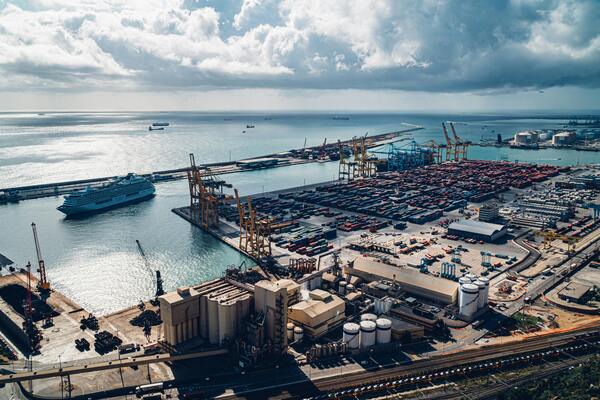
According to the provisions of Article 28 of the Commercial Law 2005, the export of goods is the action when the goods that are taken out of the territory of Vietnam or brought into special areas located in the territory of Vietnam that are considered as separate customs areas in accordance with the law.
List of import and export goods of Vietnam
On June 8th, 2022, the Ministry of Finance issued Circular No. 31/2022 / TT-BTC stipulated the list of goods exported and imported to Vietnam.
This circular takes effect from December 1st, 2022 and replaces Circular No. 65/2017/TT-BTC dated June 27th, 2017 and Circular No. 09/2019/TT-BTC dated February 15th, 2019 by the Ministry of Finance.
Types of goods exported by Vietnam
1 / Live animals and animal products;
2 / Plant products;
3 / Fats and oils derived from animals, plants or microorganisms and products separated from them; processed edible fats; and animal or plant waxes;
4 / Processed foods; beverages, spirits and vinegar; tobacco and raw materials to replace processed tobacco leaves; products containing or not containing nicotine, used for smoking without burning; and other nicotine-containing products used to bring nicotine into the human body;
5 / Mineral;
6 / Products of chemical industry or related industries;
7 / Plastic and plastic products; and rubber and rubber products;
8 / Raw leather, leather, fur leather and leather products; harness and harness suit; travel goods, handbags and similar container products; and items from animal gut (except silkworm gut);
9 / Wood and wooden items; charcoal from wood; lie and lie products; products from straw, paper grass or other braided plaiting materials; and products from wicker and rattan;
10 / Pulp from wood or from other cellulose fiber raw materials; recovered paper or paperboard (scrap and excess chips); and paper, paperboard and their products;
11 / Textile materials and products;
12 / Shoes, sandals, hats and other headgear, umbrella, walking stick, handle sticks can be converted into seats, whips, control sticks, control whips of draft animals and parts of the above types of goods; processed feathers and products made from processed feathers; artificial flowers; and products made from human hair;
13 / Products made of stone, gypsum, cement, asbestos, mica or similar materials; ceramics and porcelain (ceramic); and glass and glass products;
14 / Natural or cultured pearls, precious or semi-precious stones, precious metals, metals covered with precious metals, and their products; jewelry made of other materials; and metal coins;
15 / Basic metals and basic metal products;
16 / Machine and mechanical equipment; electrical equipment; their parts; recording and reproducing equipment for sound, image, television sound, and parts and accessories of the above equipment;
17 / Vehicles, flying vehicles, boats and integrated transport equipment;
18 / Instruments and equipment for optical, photography, cinema, measurement, inspection, precision, medical or surgical; time clocks and personal clocks; musical instruments; and their parts and accessories;
19 / Weapons and ammunition; and their parts and accessories;
20 / Other items;
21 / Works of art, collectibles and antiques.
III. Law on import and export of goods
The Law on Export and Import Duties No. 107/2016/QH13 is adopted by the National Assembly of the Socialist Republic of Vietnam XIII at the 11th session dated April 6th, 2016, effective from September 1st, 2016 and replaces the Law on Export and Import Duties No. 45/2005 /QH11.
The Law on Export and Import Duties No. 107/2016/QH13 includes 05 chapters, 22 articles, regulating taxable objects, taxpayers, tax base, tax calculation time, tariff, anti-dumping tax, anti-subsidy tax, self-defense tax applicable to exported and imported goods; tax exemption, tax relief, and tax refund for export and import.
Payable taxes when exporting goods
1 / Export taxe
When exporting goods, goods owners must pay export tax (export duty).
The amount of export tax is determined based on the tax value and the tax according to the rate percentage of each item at the time of tax calculation.
Tax on exported goods are specified for each item in the export tariff. In the case of goods exported to the country, a group of countries or territories with preferential agreement on export duties in trade relations with Vietnam, follow these agreements.
2 / Value Added Tax
Value Added Tax is the tax calculated on the added value of goods and services arising in the process from production, circulation to consumption. In accordance with the current law on Value Added Tax, the Value Added Tax rate applied to exported goods is 0%.
IV. Fees need to pay when exporting goods
1) Local charge (fee incurred at the local ports)
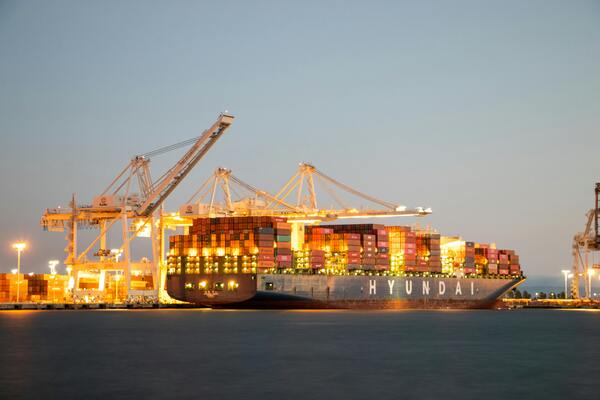
This fee is paid for loading and unloading goods on board, delivering goods at seaports, airport ports, terminals collected by carriers and airlines in addition to freight.
2) Local charge of exported goods by containers
- THC fee (Terminal Handling Charge);
- B/L fee (Bill of Lading fee) – AWB fee (Airway Bill fee) – Documentation fee;
- Seal Fee;
- Telex release fee;
- BAF/ EBS/ FAF fee: surcharge (additional fee) of fuel price fluctuation;
- AMS (Advanced Manifest system fee) / ANB
- B/L (Amendment fee)
- DEM/DET fee
V. Are exports subject to VAT?
Value Added Tax is the tax calculated on the added value of goods and services arising in the process from production, circulation to consumption. In accordance with the current value-added tax law, the value-added tax rate applied to exported goods is 0%.