Failure to provide sufficient documents proving ownership of goods constitutes a commercial violation. The following article examines the legal regulations governing such failure and addresses several related questions to help parties safeguard their legitimate rights and interests.
Failure to provide sufficient documents proving ownership of goods constitutes a commercial violation. The following article examines the legal regulations governing such failure and addresses several related questions to help parties safeguard their legitimate rights and interests.
I. Current situation regarding failure to provide sufficient documents proving ownership of goods
Failure to provide adequate documents proving ownership of goods is a common issue in trade transactions. Insufficient or missing ownership documents may result in legal risks, difficulties in conducting transactions, disputes over property rights, and loss of legal protection. Moreover, violators may be subject to administrative or even criminal sanctions when competent authorities inspect such goods documents.
1. Definition of failure to provide sufficient documents proving ownership of goods
Under Article 158 of the Civil Code 2015, ownership rights include the right of possession, the right of use, and the right of disposition over property in accordance with law.
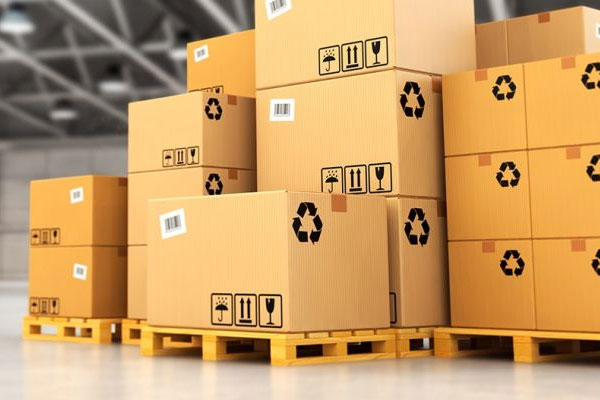
Furthermore, Clause 2, Article 3 of the Law on Commerce 2005 defines goods, including all types of movables, regardless of those to be formed in the future, and things attached to land.
Documents proving ownership of goods are legal instruments that demonstrate who is the lawful owner of the goods. Accordingly, failure to provide sufficient documents proving ownership of goods refers to a situation in which an individual or organization cannot produce valid legal documents to verify their ownership of certain goods.
2. Consequences of failure to provide sufficient documents proving ownership of goods
Individuals or organizations that fail to provide adequate ownership documents may take the following consequences:
- Loss of legal ownership recognition: Losing legal entitlement to the property, especially in respect of assets requiring registration such as real estate or vehicles;
- High risk of disputes: The seller may reclaim the goods if disputes arise later;
- Administrative sanctions: Selling goods without invoices or required documents may result in fines;
- Tax risks: Transporting goods without proper invoices or legal documents may be deemed tax evasion;
- Difficulty in evidencing obligation execution: The buyer cannot prove payment obligations have been fulfilled, while the seller cannot prove delivery;
- Failure to prove origin: Goods without proper documents may be deemed of unclear origin and classified as illegally traded goods.
II. Legal provisions governing failure to provide sufficient documents proving ownership of goods
1. Relevant legal provisions
The legal framework for such issues varies depending on the specific sector and applicable specialized legal documents.
- Clause 2, Article 148 of the Vietnam Maritime Code 2015 defines a bill of lading as a transport document serving as evidence that the carrier has received the goods in the quantity, type, and condition stated therein for carriage to the place of delivery; it also serves as evidence of ownership of the goods for disposal and receipt and of the contract of carriage by sea.
- Under Point c, Clause 2, Article 15 of Decree No. 162/2013/ND-CP, as amended by Clause 2, Article 1 of Decree No. 23/2017/ND-CP, the administrative fine for transporting goods without, or with incomplete legal documents proving their legality of goods in Vietnam’s continental shelf ranges from 3,000,000 VND to 30,000,000 VND, depending on the value of the goods.
- According to Clause 13, Article 3 of Decree No. 98/2020/ND-CP, goods of unclear origin are goods in circulation for which there is no evidence determining their place of production or origin. Proof of origin includes information on labels, packaging, accompanying documents, certificates of origin, contracts, invoices, customs declarations, and other documents demonstrating lawful ownership and civil transactions between the producer and related parties.
- Under Clause 1, Article 17 of Decree No. 98/2020/ND-CP, as amended by Point b, Clause 3, Article 1 of Decree No. 24/2025/ND-CP, traders dealing in goods of unclear origin may be subject to warnings or monetary fines, and may face confiscation of the goods as an additional sanction. If the goods are harmful to human, animal, or plant health or the environment, destruction may be ordered as a remedial measure.
2. Remedial measures
When ownership documents are missing, the buyer may take the following actions:
Contacting the seller: Requesting immediate provision of the necessary documents to complete receipt and related procedures;

Reviewing the contract: Examining clauses on the seller’s obligation to deliver documents and the remedies for breach;
Pursuing legal measures: If the seller fails to cooperate, the buyer may file a lawsuit requesting the Court to compel obligation execution and seek compensation, or report to the market management or tax authorities.
III. Questions on failure to provide sufficient documents proving ownership of goods
1. If the seller intentionally fails to provide ownership documents, is it considered commercial fraud?
Intentional failure to provide sufficient ownership documents may constitute commercial fraud. Individuals or organizations committing such acts may take administrative sanctions or criminal prosecution, depending on the severity and consequences. The sale of goods without clear proof of origin is strictly prohibited and subject to sanctions under Decree No. 98/2020/ND-CP, as amended by Decree No. 17/2022/ND-CP.
2. What legal steps should the buyer take upon discovering that the seller failed to provide ownership documents?
Upon discovery, the buyer should first request the seller to immediately provide all necessary documents and review the contract terms.
If the seller refuses to comply, the buyer may initiate legal proceedings under Article 186 of the Civil Procedure Code 2015, which allows individuals, organizations, or their lawful representatives to file lawsuits with competent courts to protect their lawful rights and interests.
3. What are the legal consequences if the goods are detained by customs due to insufficient ownership documents?
Under Point b, Clause 5, Article 11 of Decree No. 128/2020/ND-CP, failure to provide documents, records, or electronic data related to import/export goods or vehicles entering/exiting the territory may result in a fine of 20,000,000 VND to 30,000,000 VND.
Therefore, individuals or organizations failing to provide sufficient documents proving ownership, leading to customs detention, may take administrative sanctions as prescribed above.
4. In import–export contracts, which law applies when ownership documents are missing?
Pursuant to Clause 1, Article 683 of the Civil Code 2015, the parties to the contract may agree on the applicable law, except in cases provided in Clauses 4, 5, and 6 of the same article. If no agreement is made, the law of the country most closely connected to the contract shall apply.

Accordingly, in import–export contracts, when ownership documents are insufficient, the applicable law will be that chosen by the parties in the contract. In the absence of such choice, the law of the country with the closest connection to the transaction will apply.
5. If goods are confiscated due to insufficient ownership documents, must the seller refund the buyer?
Under Article 34 and Clause 1, Article 50 of the Law on Commerce 2005:
- The seller must deliver goods and relevant documents in accordance with the quantity, quality, packaging, and other terms agreed upon in the contract. If no specific agreement exists, the seller must deliver the goods and accompanying documents as prescribed by law.
- The buyer is obliged to pay and receive the goods as agreed.
Therefore, if the goods are confiscated due to lack of ownership documentation, the seller must refund the buyer, as the buyer has fulfilled the payment obligation but has not received the goods.
V. Why you should consult lawyers when lacking ownership documents
Engaging a lawyer is strongly recommended in cases involving insufficient ownership documents. A lawyer can assess the legal situation, identify risks, propose appropriate solutions, and protect clients’ legitimate interests. With expertise and experience, lawyers help clients understand potential legal consequences and guide them through dispute resolution or related procedures.
The above information is provided by NPLaw to clarify legal issues regarding failure to provide sufficient documents proving ownership of goods. With a team of experienced lawyers and legal specialists, NPLaw offers reliable and professional legal services to ensure optimal protection of clients’ lawful rights and interests. For further legal assistance, please contact NPLaw for consultation and support.