In business activities, commercial contracts play a crucial role in determining the rights and obligations of the parties. However, in practice, parties do not always fully and timely execute their contractual commitments. Breaches of commercial contracts are common complex issues, which may seriously affect business relationships between partners and cause substantial financial losses.
So how are commercial contract breaches resolved? Below, NPLAW provides legal consultation and clarifications for clients.
In business activities, commercial contracts play a crucial role in determining the rights and obligations of the parties. However, in practice, parties do not always fully and timely execute their contractual commitments. Breaches of commercial contracts are common complex issues, which may seriously affect business relationships between partners and cause substantial financial losses.
So how are commercial contract breaches resolved? Below, NPLAW provides legal consultation and clarifications for clients.
I. Current situation of breaches of commercial contracts
Breaches of commercial contracts are increasing in business and commerce. However, in the context of an increasingly developed and globalized market economy, such breaches continue to rise and take on more complex forms. These violations may occur between enterprises within the same country or across borders, directly affecting the lawful rights and interests of the contracting parties.
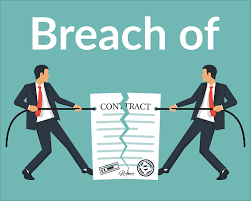
Common forms of commercial contract breaches include:
- Breach of delivery obligations: Failure to deliver goods in terms of time, location, quality, or quantity as agreed in the contract.
- Breach of payment obligations: Failure to make payment on time or in full, adversely affecting cash flow and business operations of the other party.
- Breach of quality conditions: Goods or services failing to meet the agreed standards or specifications.
- Breach of confidentiality obligations: Failure to comply with confidentiality clauses, resulting in disclosure of sensitive information or trade secrets of the counterparty.
- Failure to execute warranty obligations: Failure to fulfill warranty or maintenance commitments for goods or products, causing damage to the buyer.
II. Legal regulations on breaches of commercial contracts
1. What is a commercial contract?
Pursuant to Clauses 1, 2, and 3 Article 3 of the Law on Commerce 2005, a commercial contract is understood as an agreement between traders, or between traders and related parties, to establish, modify, or terminate rights and obligations in commercial activities, specifically:
- Activities for profit-making purposes, including goods trading, service provision, investment, trade promotion, and other profit-oriented activities.
- Goods include:
+ All types of movable property, including future-formed movable property;
+ Assets attached to land. - Commercial practices are rules of conduct with clear content, formed and repeatedly applied over a long period between parties, implicitly recognized by the parties to determine their rights and obligations in commercial contracts.
2. What constitutes the breach of the commercial contract?
Pursuant to Clause 12 Article 3 of the Law on Commerce 2005, the breach of the commercial contract is an act whereby one party fails to execute, executes incompletely, or executes improperly its obligations as agreed by the parties or as prescribed by the Law on Commerce 2005.
Pursuant to Article 292 of the Law on Commerce 2005, commercial sanctions include:
- Specific execution of the contract.
- Contractual sanctions.
- Compensation for damages.
- Suspension of contract execution.
- Termination of contract execution.
- Cancellation of the contract.
- Other measures agreed upon by the parties that do not contravene the fundamental principles of Vietnamese law, international treaties to which the Socialist Republic of Vietnam is a member, and international commercial practices.
Note: Pursuant to Article 293 of the Law on Commerce 2005, unless otherwise agreed, the injured party may not apply sanctions of suspension, termination, or cancellation of the contract for non-fundamental breaches.
3. Cases of exemption from liability for the breaching party
Pursuant to Article 294 of the Law on Commerce 2005, a party breaching a commercial contract in 2024 shall be exempt from liability in the following cases:
- Occurrence of liability exemption events agreed upon by the parties.
- Occurrence of force majeure.
- The breach is entirely attributable to the fault of the other party.
- The breach results from compliance with decisions of competent state authorities that the parties could not have known at the time of contract execution.
Note: The breaching party takes the burden of proving the circumstances of liability exemption.
III. Common questions regarding commercial contract breaches
1. Is the non-breaching party entitled to claim compensation for damages?
The relationship between contractual sanctions and compensation for damages is governed by Article 307 of the Law on Commerce 2005:
- If the parties have no agreement on contractual sanctions, the injured party is only entitled to claim compensation for damages, unless otherwise provided by this Law.
- If the parties have agreed on contractual sanctions, the injured party may apply both contractual sanctions and claim compensation for damages, unless otherwise provided by this Law.
In addition, pursuant to Article 316 of the Law on Commerce 2005, the application of other sanctions does not deprive a party of the right to claim compensation for damages arising from the other party’s breach.

Accordingly, where one party breaches a commercial contract, the other party is entitled to claim compensation for damages resulting from such breach.
2. Is it permissible to impose contractual penalties when a party breaches a commercial contract?
Contractual sanctions refer to the breaching party’s obligation to pay a sanction amount as agreed in the contract, unless the breach falls under liability exemption cases prescribed in Article 294 of the Law on Commerce 2005.
Thus, contractual sanctions may be applied when the following conditions are satisfied:
- The contract contains an agreement on contractual sanctions;
- One party commits a breach that, under the agreement, triggers liability;
- The breach does not fall within liability exemption cases under Clause 1 Article 294.
3. Is unilateral termination of a commercial contract permitted in case of breach?
Unilateral termination of a contract is governed by Article 428 of the Civil Code 2015:
- A party has the right to unilaterally terminate contract performance without compensation where the other party seriously breaches contractual obligations, or where otherwise agreed or prescribed by law.
- The terminating party must promptly notify the other party of the termination; failure to do so causing damage shall give rise to compensation liability.
Accordingly, a party may unilaterally terminate a commercial contract if the other party commits a serious breach, or if agreed by the parties or provided by law.
4. Is compensation for damages allowed when the contract only stipulates contractual sanctions?
Pursuant to Article 307 of the Law on Commerce 2005, where the parties have agreed on contractual sanctions, the injured party may apply both sanctions and claim compensation for damages, unless otherwise provided by law.

Therefore, even if a contract only stipulates contractual sanctions, compensation for damages may still be claimed.
5. Is suspension of contract execution allowed in case of a fundamental breach?
Suspension of contract execution is governed by Articles 308 and 309 of the Law on Commerce 2005:
- Except for liability exemption cases under Article 294 of this Law, suspension of contract execution refers to a party temporarily ceasing its contractual obligations in the following cases:
- Occurrence of a breach agreed upon by the parties as a condition for suspension;
- A fundamental breach of contractual obligations.
Accordingly, a fundamental breach alone is insufficient to justify suspension unless the parties have agreed that such breach constitutes a condition for suspension.
6. How is the sanction level for breach of commercial contractual obligations determined?
Pursuant to Articles 300 and 301 of the Law on Commerce 2005, the sanction level or the total sanction for multiple breaches shall be agreed upon by the parties but must not exceed 8% of the value of the breached contractual obligation.
IV. Legal consultation services on commercial contract breaches
Above is the comprehensive legal information provided by NPLaw to assist clients regarding commercial contract breaches. Should you require consultation or assistance with procedures related to breaches in goods delivery or other commercial contract matters, please contact NPLaw for direct legal support and guidance.