Compensation for damage caused by unsafe food refers to the liability of organizations or individuals engaged in the production or trading of food that harms consumers’ health or lives to fully compensate for actual damages to property, health, and mental well-being, in accordance with the Civil Code 2015 and other relevant legal instruments. The following analysis by NPLAW discusses the current situation and the applicable legal framework on compensation for damages arising from unsafe food.
Compensation for damage caused by unsafe food refers to the liability of organizations or individuals engaged in the production or trading of food that harms consumers’ health or lives to fully compensate for actual damages to property, health, and mental well-being, in accordance with the Civil Code 2015 and other relevant legal instruments. The following analysis by NPLAW discusses the current situation and the applicable legal framework on compensation for damages arising from unsafe food.
I. Current situation regarding compensation for damage caused by unsafe food
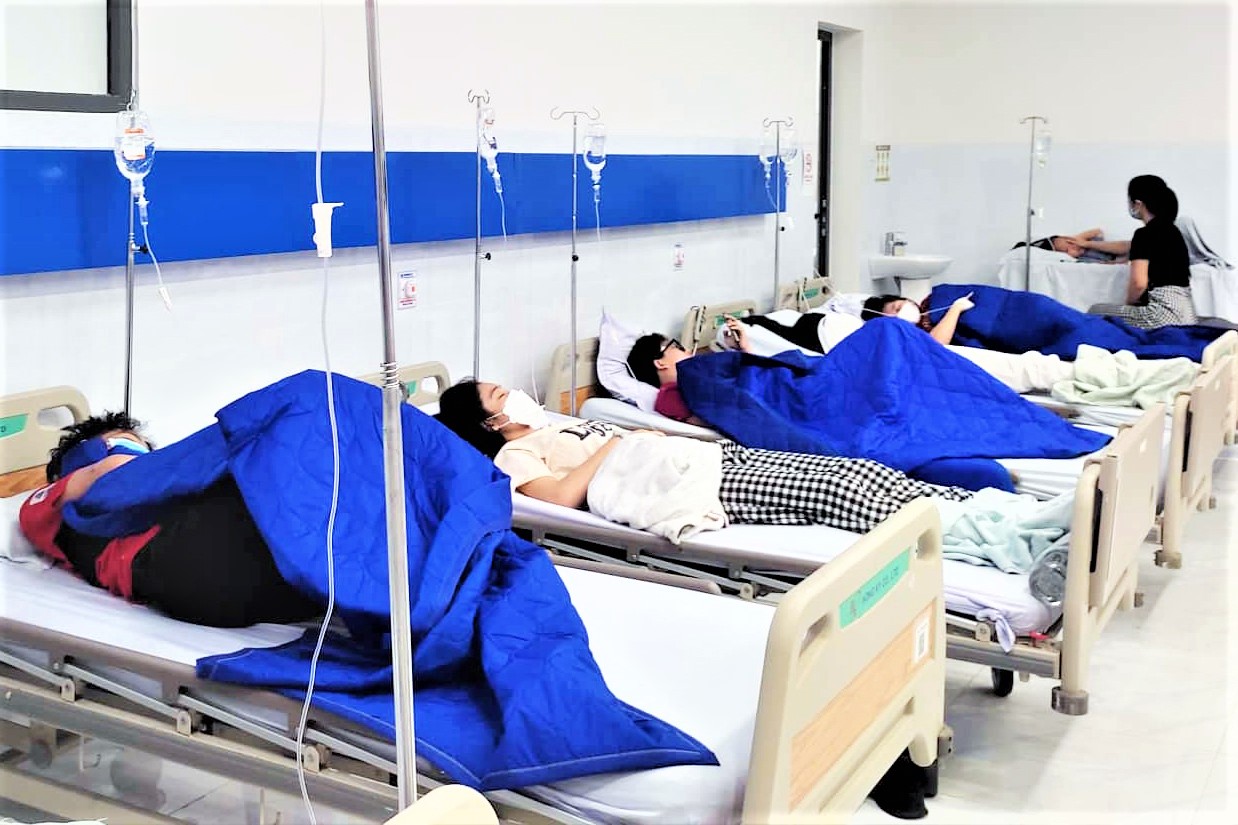
In practice, unsafe food remains a prevalent issue, leading to poisoning, health impairment, and even death among consumers.

However, seeking compensation is often challenging because consumers find it difficult to prove the origin of the product or the causal connection between the damage and the wrongful act. It highlights the need for a clearer and more transparent legal mechanism to protect consumer rights.
II. Legal provisions governing compensation for damage caused by unsafe food
Vietnamese law provides detailed provisions for determining liability and ensuring consumer protection when damage results from unsafe food.
1. What is compensation for damage caused by unsafe food?
Unsafe food refers to food that harms human health or life due to toxic substances, microbial contamination, unknown origin, expired products, or failure to meet the food safety requirements as defined under Chapter III of the Law on Food Safety 2010.
Compensation for damage means that an individual or organization whose act infringes upon another’s life, health, property, honor, dignity, or reputation must fully compensate for the actual damage caused by such act (pursuant to Article 584 of the Civil Code 2015).
Based on these definitions, compensation for damage caused by unsafe food means that an organization or individual engaged in the production, trading, or distribution of food that causes harm to consumers must compensate for the actual damages relating to health, life, property, or mental suffering caused by the unsafe food.
2. Circumstances exempting liability for compensation
Producers and traders of unsafe food are exempt from compensation liability when damage results from a force majeure or is entirely due to the fault of the injured party, unless otherwise agreed or provided by law (Clause 2, Article 584 of the Civil Code 2015, as guided by Article 2 of Resolution No. 02/2022/NQ-HĐTP).
Article 35 of the Law on Protection of Consumer Rights 2023 also provides that liability for compensation may be exempted if the producer can prove that the defect of the product could not have been detected by the existing state of science and technology, or if the consumer intentionally used the product despite sufficient warnings, among other exemption cases.
3. Who is liable for compensation?
Under the Law on Food Safety 2010, organizations and individuals that produce or trade food are obliged to compensate for damages in accordance with law when unsafe food they produce causes harm (Points l, Clause 2, Article 7 and Point l, Clause 2, Article 8 of the Law on Food Safety 2010).
Additionally, Article 23 of the Law on Protection of Consumer Rights 2010 stipulates that organizations and individuals trading in goods are responsible for compensating for damages in cases where defective goods supplied by them cause damage to the consumer’s life, health, or property.
III. Clarifications on common legal issues related to compensation for damage caused by unsafe food
Some practical scenarios are clarified under current legal regulations as follows:
1. What must consumers prove to claim compensation?
Consumers are obliged to promptly and accurately report to competent authorities or relevant organizations and individuals upon detecting unsafe food, or when such food causes or threatens to cause damage to life, health, honor, dignity, reputation, or property (Article 5 of the Law on Protection of Consumer Rights 2023).
Consumers should prove the purchase transaction, the unsafe product, and the damage caused by such product by keeping invoices, receipts, photographs, videos, product samples, and medical or other records demonstrating health or property damage.
2. Are there minimum or maximum compensation limits?
The maximum compensation limits are set out in Clauses 2 of Articles 590, 591, and 592 of the Civil Code 2015, as follows (unless otherwise agreed):
- For health impairment: Not exceeding 50 times the statutory base salary;
- For loss of life: Not exceeding 100 times the statutory base salary;
- For infringement upon honor, dignity, or reputation: Not exceeding 10 times the statutory base salary.
Furthermore, Resolution No. 02/2022/NQ-HĐTP provides guidance on the assessment of damage to determine compensation for non-contractual civil liability.
3. Can consumers claim compensation without invoices?
Even without invoices, consumers may provide other evidence such as photos, videos, witnesses, product samples, or confirmation from competent authorities to claim compensation for damage caused by unsafe food.
4. How is compensation responsibility allocated among multiple businesses in the supply chain?
If multiple businesses jointly participate in a supply chain and cause damage due to unsafe food, they must be jointly liable to compensate the injured person. The extent of compensation for each party shall correspond to the degree of fault; if the degree of fault cannot be determined, compensation shall be divided equally (Article 587 of the Civil Code 2015).
5. How can the family of a deceased consumer claim compensation?
If a consumer dies due to unsafe food, their family or lawful heirs are entitled to claim compensation for loss of life under Article 591 of the Civil Code 2015, including funeral expenses, alimony for dependents, mental distress compensation, and lost income. The compensation for mental distress shall be agreed upon by the parties; if no agreement is reached, the maximum shall not exceed 100 times the statutory base salary per deceased person.
IV. Legal consultancy services related to compensation for damage caused by unsafe food
Legal consultancy services on this matter assist clients with:
- Advising on legal rights and obligations in cases of damage caused by unsafe food;
- Collecting and assessing evidence proving the damage, cause, and fault of the producer;
- Drafting claims, complaints, or lawsuits;
- Representing clients in negotiation, mediation, or litigation before courts or arbitration;
- Advising on compliance with food safety regulations to mitigate legal risks for enterprises.
For any inquiries or legal support concerning compensation for damage caused by unsafe food, please contact NPLAW for direct consultation and guidance.