In the digital era, the electronic products manufacturing industry is rapidly developing, playing a crucial role in the global supply chain and the national economy. However, alongside its development potential, the manufacture of electronic products also entails significant legal risks if enterprises fail to fully comply with the relevant legal regulations.
This article by NPLaw analyzes a number of main legal provisions that organizations and individuals should take into account when engaging in the manufacture of electronic products in Vietnam.
.jpg)
In the digital era, the electronic products manufacturing industry is rapidly developing, playing a crucial role in the global supply chain and the national economy. However, alongside its development potential, the manufacture of electronic products also entails significant legal risks if enterprises fail to fully comply with the relevant legal regulations.
This article by NPLaw analyzes a number of main legal provisions that organizations and individuals should take into account when engaging in the manufacture of electronic products in Vietnam.
I. Overview of the manufacture of electronic products
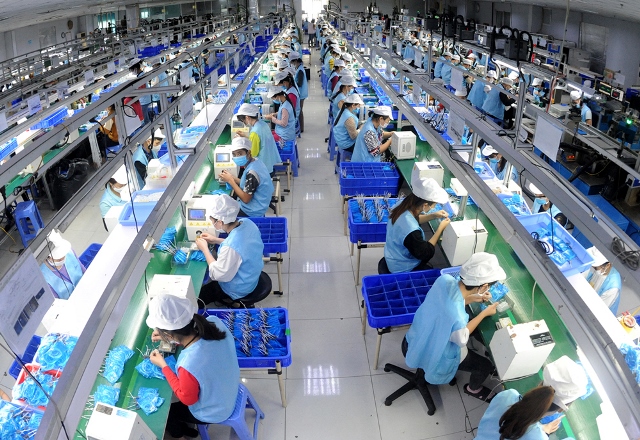
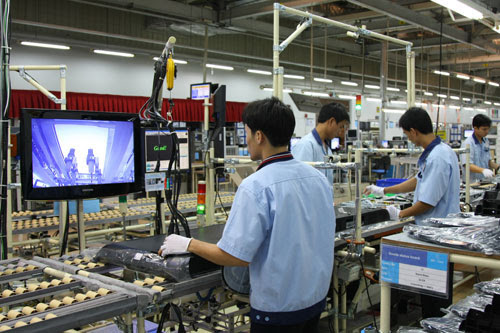
At present, the manufacture of electronic products in Vietnam is growing swiftly, becoming one of the country’s spearhead industries, contributing significantly to export turnover and attracting foreign investment. Major corporations such as Samsung, LG, Foxconn, and Intel have invested billions of US dollars in Vietnam, with concentrations in Bac Ninh, Thai Nguyen, Bac Giang, and Ho Chi Minh City. Accompanying these investments is an ecosystem of satellite enterprises and domestic component suppliers.
II. Legal provisions on the manufacture of electronic products
1. Definition of the manufacture of electronic products
The manufacture of electronic products refers to the process of utilizing technology, equipment, and manpower to fabricate and assemble electronic products such as computers, mobile phones, televisions, smart household appliances, printed circuit boards, microchips, and automated control devices, among others.
According to the Vietnamese System of Economic Sectors, this activity falls under Group 2640 – Manufacture of Consumer Electronics, and also includes the manufacture of computers, peripheral devices, and certain other sub-sectors.
2. Conditions for manufacturing electronic products
Enterprises engaged in electronic products manufacturing must satisfy certain legal conditions, including:
- General conditions upon business registration:
+ Registration of the appropriate business lines (codes in accordance with Decision No. 27/2018/QĐ-TTg);
+ A lawful production site and valid legal documents (Enterprise Registration Certificate, Construction Permit for the factory, if applicable).
- Compliance with specialized regulations:
+ Declaration of conformity/standard compliance of products pursuant to the Law on Standards and Technical Regulations and the Law on Product and Goods Quality;
+ Quality management of goods prior to market distribution under Decree No. 132/2008/NĐ-CP (as amended by Decree No. 74/2018/NĐ-CP);
+ Compliance with regulations on occupational safety, fire prevention and fighting, and environmental protection pursuant to the Law on Environmental Protection 2020 and the Law on Occupational Safety and Hygiene;
+ For telecommunications or broadcasting equipment, a Certificate of conformity/standard compliance under Circulars of the Ministry of Information and Communications (e.g., Circular No. 10/2023/TT-BTTTT) is required.
- Environmental conditions:
+ Depending on production scale, enterprises may be required to prepare an Environmental Impact Assessment (EIA) report or an environmental protection plan;
+ Management of electronic waste and hazardous waste in accordance with Circular No. 02/2022/TT-BTNMT.
3. Investment incentives for electronic products manufacturing
Electronic products manufacturing is categorized as an investment-incentivized sector under Point c, Clause 1, Article 16 of the Law on Investment 2020.
Forms of investment incentives are stipulated in Clause 1, Article 15 of the Law on Investment 2020, including:
+ Corporate income tax incentives: Application for a preferential corporate income tax rate lower than the standard rate for a definite or indefinite duration; exemptions, reductions, and other incentives under the Law on Corporate Income Tax;
+ Import duty exemptions: Application for imported goods used to form fixed assets; imported raw materials, supplies, and components for production as regulated by the laws on export and import duties;
+ Land-related incentives: Exemption or reduction of land use fees, land rents, and land use tax;
+ Accelerated depreciation & deductible expenses: Accelerated depreciation of fixed assets and increased deductible expenses when calculating taxable income.
III. Questions regarding electronic products manufacturing
1. Is a Fire Prevention and Fighting (FPF) license mandatory for manufacturing electronic products?
The manufacturing facility falls within the scope of establishments required to obtain a Fire Prevention and Fighting license under Appendix I of Decree No. 50/2024/NĐ-CP, specifically industrial facilities classified as fire and explosion hazard categories A, B, C, D, E.
In practice, many electronic manufacturing facilities utilize flammable components and materials (such as plastics, circuit boards, cleaning chemicals, solvents) and operate heat-generating machinery, typically placing them in fire hazard level C or above. Accordingly, they are required to obtain:
+ Fire prevention and fighting design appraisal before construction;
+ Fire prevention and fighting acceptance before operation;
+ A Safety Qualification Certificate for Fire Prevention and Fighting if subject to management requirements.
2. Can a branch engage in electronic products manufacturing?
A branch may engage in electronic products manufacturing provided that:
+ The branch is duly registered for production activities in the relevant business line;
+ It has a lawful production site (owned or long-term leased);
+ It fulfills tax obligations and environmental protection duties as the parent enterprise;
A branch may have a sub-tax code and issue invoices if operating as an independent accounting unit. If operating under dependent accounting, the branch may still organize production, but its costs must be accounted for through the parent company.
3. Can individuals manufacture electronic products at home?
Individuals may manufacture electronic products at home, subject to the following conditions:
+ Registration of a household business in accordance with Decree No. 168/2025/NĐ-CP;
+ No violation of local land-use planning (e.g., residential land may not be used for large-scale factory construction);
+ Adoption of safety measures concerning electricity, fire prevention, and environmental protection (noise, dust, chemicals, etc.);
+ If products fall under categories requiring mandatory conformity (e.g., telecommunications devices), individuals cannot manufacture without legal entity status or proper business registration.
In practice, home-based manufacturing of electronics is generally suitable only for small-scale, manual, or simple assembly activities.
4. Must electronic products manufacturing comply with environmental standards?
Enterprises engaged in electronic products manufacturing must comply with the Law on Environmental Protection 2020, including:
- Preparation of appropriate environmental dossiers according to production scale (Environmental Protection Plan or Environmental Impact Assessment – EIA);
- Management of solid waste, emissions, and wastewater, particularly hazardous waste (e.g., discarded circuit boards, batteries, solvents);
- Registration of waste generator books and contracting with licensed waste treatment providers.
Additionally, certain electronic products must comply with RoHS standards (Restriction of Hazardous Substances), prohibiting the use of lead, mercury, cadmium, etc., if exported to the EU or the US.
5. Are there requirements for the location of electronic products manufacturing facilities?
The location of manufacturing facilities must comply with planning and investment laws, including:
- Conformity with local land-use planning (factories may not be located in residential areas);
- Priority placement in industrial zones, high-tech parks, or areas with suitable infrastructure to facilitate investment incentives;
- For medium or large scale production, or use of high-capacity machinery, approval of investment policy and environmental appraisal is required before construction.
IV. Legal advisory services on electronic products manufacturing
The above comprises detailed information provided by NPLaw to support clients concerning the manufacture of electronic products. Should you have further questions on this matter or other legal issues, please contact NPLaw for direct consultation and guidance.