In today’s business environment, leasing production factories is considered an optimal solution that enables enterprises to reduce initial capital investment and focus on their manufacturing and business operations. However, the process of leasing factories is not merely a commercial transaction, it is also governed by various legal regulations regulated to protect the lawful rights and interests of both the lessor and the lessee.
In the following article, NPLaw assists our Clients in clearly understanding the legal regulations governing the leasing of production factories in industrial zones, export processing zones, economic zones, and high-tech zones.
In today’s business environment, leasing production factories is considered an optimal solution that enables enterprises to reduce initial capital investment and focus on their manufacturing and business operations. However, the process of leasing factories is not merely a commercial transaction, it is also governed by various legal regulations regulated to protect the lawful rights and interests of both the lessor and the lessee.
In the following article, NPLaw assists our Clients in clearly understanding the legal regulations governing the leasing of production factories in industrial zones, export processing zones, economic zones, and high-tech zones.
I. Overview of leasing production factories
Leasing production factories is a common form of business operation, particularly for small and medium-sized enterprises that lack sufficient capital to invest in building their own production facilities.
Reasons for leasing production factories are as follows:
- Saving initial investment costs: Leasing factories helps enterprises minimize expenditures on land acquisition and construction of physical infrastructure. Enterprises can concentrate on production activities without concerns about land use and construction of factories or facilities.
- Flexibility in production: Enterprises may easily adjust production scale, relocate to new locations, or change leasing arrangements when expanding or downsizing their operations.
- Convenience in infrastructure: Factories available for lease are often located in industrial zones and are equipped with existing infrastructure (transportation systems, electricity, water supply, drainage systems, etc.), thereby reducing the burden on enterprises in constructing and maintaining such utilities.
II. Legal regulations on leasing production factories
1. What is leasing a production factory?
A factory is a physical asset with a large capacity and management scale (compared to retail premises), serving as a location for concentrating human resources, machinery, equipment, and raw materials for manufacturing, storage, and transportation of goods.
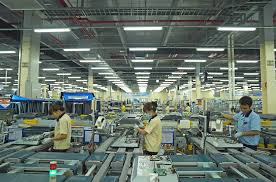
Leasing a production factory is a form of asset leasing, specifically the lease of pre-built infrastructure (factory premises) to serve manufacturing, processing, or production activities, instead of investing in the construction and ownership of an independent factory.
2. Conditions for leasing the production factory
To lease a production factory, an enterprise must satisfy certain fundamental conditions as prescribed by law and required by the lessor, including:
- Conditions regarding the lease contract: The factory lease contract must be made in writing and duly signed by the relevant parties (the lessor and the lessee). The contract must comply with the legal provisions on contracts, particularly the Civil Code and other relevant laws.
- Legal conditions and documents: The lessor must possess documents evidencing lawful ownership of the factory, including the land use right certificate, construction permit (if any), and other relevant legal documents. The lessee must have a valid business license, certifying that the enterprise is legally qualified to operate in the relevant manufacturing sector.
- Financial and payment conditions: The enterprise must have sufficient financial capacity to pay the rental and other incidental costs in a timely manner throughout the lease term.
- Conditions on purpose of use: The leased factory must be used strictly in accordance with the production purposes agreed upon in the contract (processing, manufacturing, production of goods, etc.). Any change in the purpose of use (such as subleasing or use for other activities) must obtain the consent of the lessor.
3. Procedures and required legal dossiers for leasing the production factory
Leasing procedures:
- For the lessor: The factory owner must register the additional business line of factory leasing in accordance with the Law on Investment, the Law on Real Estate Business, and legal regulations applicable to export processing zones and industrial zones.
- For the lessee: After leasing the factory, the lessee must implement the following legal procedures:
- Registration of the Investment Registration Certificate (IRC);
- Registration of the hazardous solid waste source owner logbook;
- Registration of internal labor regulations, facilitation of the establishment of a trade union organization;
- Conclusion of collective labor agreements, registration of salary scales and payrolls, submission of reports on labor utilization.
Legal dossiers:
- Documents evidencing the legal status of the enterprise (Enterprise Registration Certificate, Investment Registration Certificate).
- Factory lease contract: Notarization or authentication of the factory lease contract is not mandatory and depends on the agreement of the parties. However, the contract content should clearly define and allocate responsibilities between the lessor and the lessee.
- Construction permit of the factory, ensuring compliance with technical and safety requirements.
- Land use right certificate of the factory owner.
III. Common questions regarding leasing production factories
1. Must a production factory lease contract be in writing? Is notarization required?
Pursuant to Clause 8, Article 3 of the Law on Real Estate Business 2023, a real estate business contract is a written agreement between an organization or individual engaged in real estate business that satisfies the conditions prescribed by law and another organization or individual, for the purposes of sale, lease, or lease-purchase of houses or construction works; transfer, lease, or sublease of land use rights with technical infrastructure in real estate projects; or transfer of all or part of a real estate project.
A production factory lease contract constitutes a type of real estate business contract; therefore, it must be made in writing in accordance with the above provisions.
Regarding notarization, according to Clause 3, Article 27 of the Land Law 2024, factory lease contracts are not required to be notarized or authenticated. Notarization or authentication shall be implemented depending on the agreement and purposes of the parties.
2. How is the rental price of a production factory determined?
When leasing a production factory, rental price is one of the most critical factors to consider. Rental prices vary depending on location, convenience, area, infrastructure, and surrounding environment.
To select a factory with a rental price suitable to operational needs and budget, enterprises should research and compare rental rates from multiple providers to ensure that the offered price is reasonable in accordance with current market conditions.
3. Are enterprises leasing production factories outside industrial zones eligible for corporate income tax incentives?
Pursuant to Clause 4, Article 18 of Circular No. 78/2014/TT-BTC, as amended by Clause 2, Article 10 of Circular No. 96/2015/TT-BTC, regarding conditions for corporate income tax incentives, enterprises manufacturing outside industrial zones may be eligible for corporate income tax incentives if they have investment projects entitled to such incentives by satisfying conditions relating to preferential investment sectors or preferential investment locations as prescribed in Article 20 of Decree No. 31/2021/ND-CP.
Accordingly, whether an enterprise operating outside industrial zones is entitled to corporate income tax incentives depends on the preferential investment sector and preferential investment location applicable to such an enterprise.
IV. Should enterprises engage lawyers when leasing production factories? How to proceed?
Although leasing a production factory may not be overly complex for enterprises, engaging a lawyer is a prudent choice to ensure legality, mitigate risks, and maximize the protection of lawful rights and interests. Lawyers assist in ensuring that all legal aspects from contractual terms to statutory compliance obligations are properly addressed, thereby enabling smooth business operations and minimizing potential disputes.
If our valued clients require legal consultation regarding the leasing of production factories, please contact NPLaw to receive direct advice and guidance from our professional legal team.