Operating a business in jewelry and precious metals presents various opportunities but also demands careful consideration, as this sector is strictly regulated by the State. To legally conduct business in this field, entrepreneurs must meet specific statutory conditions and obtain the appropriate business licenses. This article provides a detailed overview of the regulatory framework governing the jewelry and precious metals business in Vietnam.
I. Classification of jewelry and precious metals business
The jewelry and precious metals business falls into two primary categories:

- Trading in jewelry and fine arts gold.
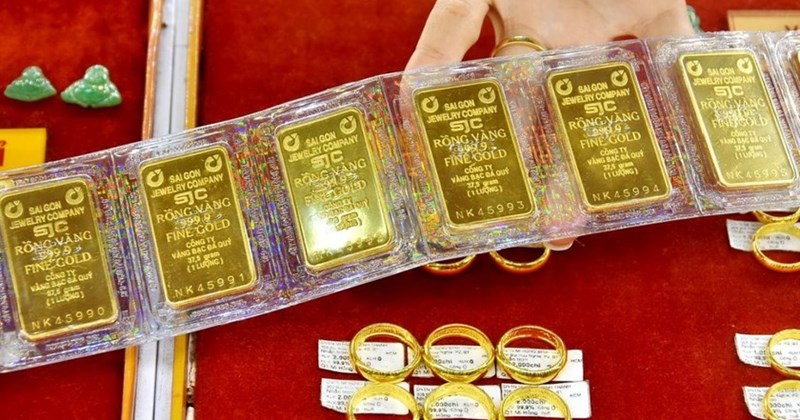
- Trading in gold bullion.
Each type of gold business is subject to distinct legal conditions as provided by the law.
II. Conditions for trading in jewelry and precious metals
Trading in jewelry and precious metals is classified as a conditional business sector. Hence, compliance with statutory requirements is mandatory.
Under Article 8 of Decree No. 24/2012/NĐ-CP on the management of gold business activities, an enterprise engaged in the production and trading of jewelry or fine arts gold must satisfy the following conditions:
- Be a legally established enterprise with a valid Enterprise Registration Certificate that includes the production and trading of jewelry or fine arts gold as a registered business line.
- Have physical premises, infrastructure, and essential equipment to support the production of jewelry and fine arts gold.
Thus, individuals or organizations seeking to operate a jewelry store must first establish an enterprise and register it for the appropriate line of business.
III. Conditions for Obtaining a License to Trade in Gold Bullion
Once a business is duly established, the State Bank of Vietnam (SBV) will review applications for a License to Trade in Gold Bullion in accordance with Article 11 of Decree No. 24/2012/NĐ-CP, specifically the conditions for granting a license to trade in gold bars are as follows:
- Being a legally established enterprise.
- Having a charter capital of at least 100 billion VND.
- Having a minimum of two years of experience in gold trading.
- Having annual tax payments from gold trading activities of at least 500 million VND over the previous two consecutive years (with certification from the tax authority).
- Having a network of branches or sales locations in at least three provinces or centrally governed cities in Vietnam.
Thus, if all of the above conditions are fully met, you may conduct gold and jewelry trading activities with your business rights protected under the law.
IV. Obligations of enterprises trading in jewelry and fine arts gold
Since the business of buying and selling gold, jewelry, and handicrafts is a specialized sector under State management, enterprises engaged in this activity must fulfill their obligations to the State in accordance with the law. Specifically, Article 6 of Decree No. 24/2012/ND-CP regulates the responsibilities of enterprises engaged in the production of gold, jewelry, and handicrafts as follows:
- Stamping product codes and gold content on products, announcing the applicable standards and the product’s weight in accordance with the law, and bearing legal responsibility for the announced standards and the declared product weight of the items produced by the enterprise.
- Bearing responsibility for the quality and declared weight of products processed by subcontractors.
- Complying with the legal regulations on accounting practices, the preparation and use of invoices and accounting the documents.
- Have a plan to ensure safety in business operations, protect the environment, and prevent fire and explosions.
- Ensure the maintenance of the conditions specified in Clause 1, Article 5 of this Decree.
V. Procedures for starting a jewelry and precious metals business
5.1. Required documents
According to the conditions for trading gold and jewelry under Article 8 of Decree No. 24/2012/ND-CP, an enterprise must be established in accordance with the law and have registered the business of buying and selling gold, jewelry, and handicrafts in its Enterprise Registration Certificate.

Therefore, individuals and organizations can proceed with preparing the documentation to establish an enterprise. Each type of enterprise requires a different set of establishment documents.
- Private enterprises: As specified in Article 19 of the Law on Enterprise 2020 and guided by Article 21 of Decree 01/2021/NĐ-CP.
- Partnership companies: As provided in Article 20 of the Law and Article 22 of the Decree.
- Limited liability companies (LLCs): As outlined in Articles 21, 23, and 24.
- Joint-stock companies (JSCs): As regulated in Article 22 of the Law and Article 23 of the Decree.
5.2. Step-by-step registration process
Pursuant to Article 26 of the Law on Enterprise 2020, the registration process is as follows:
- The founder of the enterprise or an authorized representative registers the enterprise by submitting the registration directly at the Business Registration Office, via postal service, or through an electronic information network (see detailed guidance in Chapter V of Decree No. 01/2021/ND-CP).
- Within three working days from the day of receipt of the application, the Business Registration Authority is responsible for reviewing the validity of the enterprise dossier. If the dossier is incomplete or invalid, a written notice specifying necessary amendments is provided. In case of rejection, the Authority must notify the founder in writing and the reasons must be clearly stated.
- If the dossier is valid, a Certificate of Enterprise Registration will be issued. The enterprise founder or an authorized representative shall receive the result.
- Publication and company seal: Official company information must be published, and the company seal created.
VI. Common questions regarding the jewelry and precious metals business
6.1. Can gold be carried when exiting or entering Vietnam?
Under Article 9 of the Foreign Exchange Ordinance 2005 (as amended in 2013), individuals may carry gold when entering or exiting the country. However:
- Residents and non-residents who are individuals entering Vietnam and carrying cash in foreign currency, cash in Vietnamese dong, or gold exceeding the limits set by the State Bank of Vietnam must declare these items at the border customs.
- Residents and non-residents who are individuals leaving Vietnam and carrying cash in foreign currency, cash in Vietnamese dong, or gold exceeding the limits set by the State Bank of Vietnam must declare these items at the border customs and present documents in accordance with the regulations of the State Bank of Vietnam.
- A resident is a credit institution authorized to carry out the export and import of cash in foreign currency after obtaining written approval from the State Bank of Vietnam. The State Bank of Vietnam shall regulate the dossier, procedures, and processes for approving the export and import of cash in foreign currency by authorized credit institutions.
Therefore, you are allowed to carry gold when exiting the country. In cases where the amount of gold exceeds the limits set by the State Bank of Vietnam, you must declare it at the border customs.
6.2. Can individuals directly trade in jewelry gold?
According to Article 8 of Decree 24/2012/NĐ-CP, only enterprises may conduct jewelry gold trading. Individuals must first establish an enterprise to engage in this activity legally.

6.3. Which authority can revoke a gold bullion trading license?
According to Point b, Clause 4, Article 16 on the responsibilities of the State Bank of Vietnam under Decree No. 24/2012/ND-CP on the management of gold trading activities dated April 3, 2012, the State Bank of Vietnam is responsible for issuing and revoking licenses for the business of buying and selling gold bars.
VII. Legal advisory services for jewelry and precious metals business
Several law firms and legal service providers offer advisory services in this area. Among them, NPLaw is recognized for its expertise and professional team. Their services include:
- Preparing and submitting registration dossiers.
- Liaising with competent state agencies.
- Registering and establishing businesses efficiently.
For further inquiries or tailored legal assistance, please contact: