Although not a frequently used business contract, a loan agreement between enterprises is still a common type of contract related to assets and profit-seeking that enterprises are interested in. Through this article, NPLaw would like to provide esteemed readers with some legal information about loan agreements between enterprises.
I. The current situation regarding loan agreements between enterprises
Currently, there are no official statistics on the quantity, value, and specific clauses of loan agreements between enterprises in Vietnam. However, in reality, the practice of enterprises loaning to supplement capital and cover temporary capital shortcomings (when the money from the sales of goods and products has not yet been fully paid or when the capital cash is currently in the form of goods, etc.) is a common occurrence. According to a National Survey of Small and Medium Enterprises in Vietnam (NS SMEs): In 2022, 62% of enterprises reported having loaned capital from other enterprises. In 2023, 65% of enterprises reported having loaned capital from other enterprises. This has led to a significant demand for various forms of loans, corresponding to a variety of loan purposes, resulting in the need for legal regulations to govern the relationships between enterprises in establishing, adjusting, and resolving loan relationships between enterprises.

II. Understanding loan agreements between enterprises
1. What is a loan agreement between enterprises?
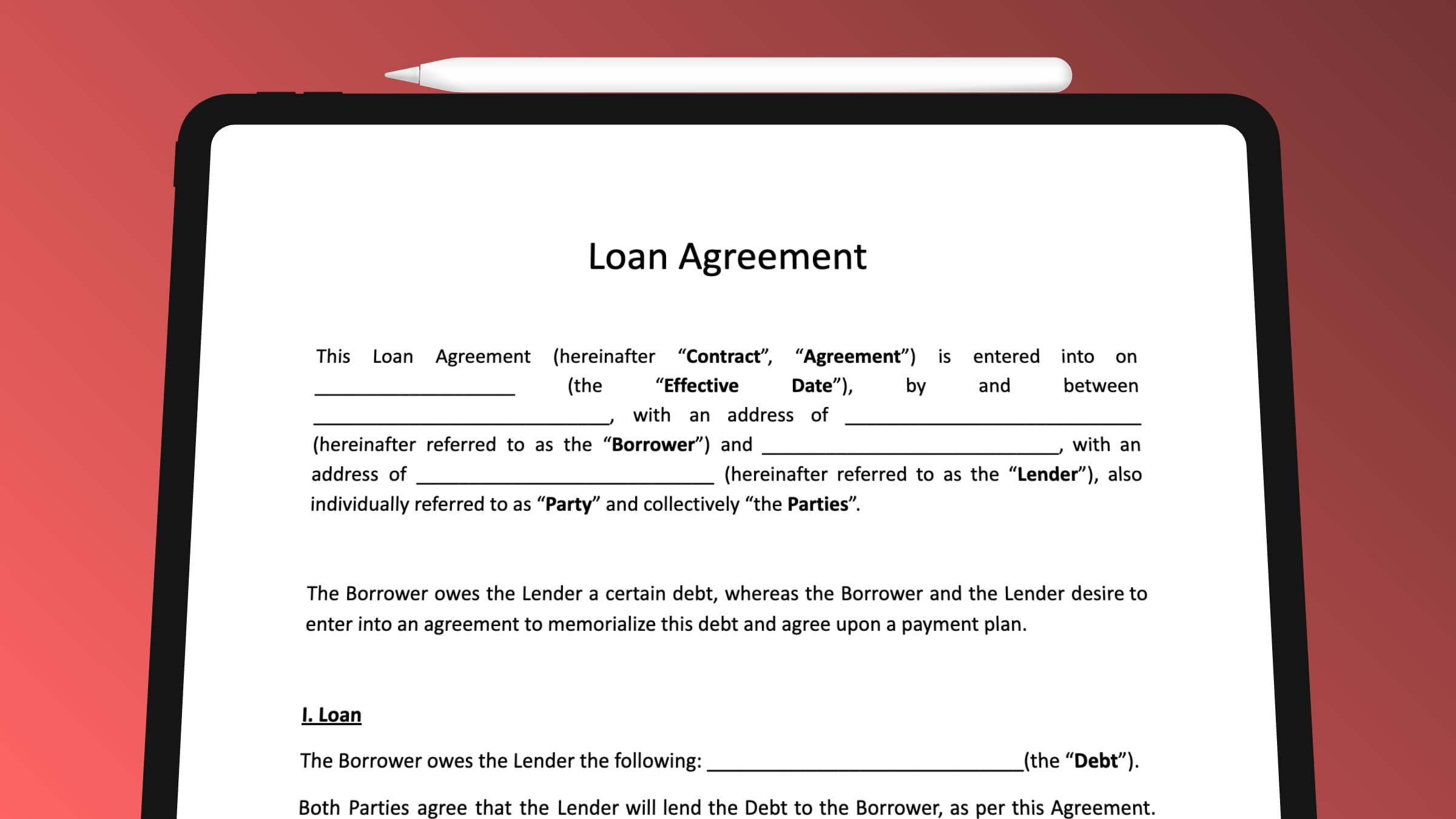
A loan agreement between enterprises, also known as an asset loan agreement between enterprises, is an agreement between parties that are enterprises whereby the lender lends assets (money or other assets) for the borrower to use, and the borrower commits to returning the same type of assets to the lender in the correct quantity and quality and possibly with interest if agreed upon or required by law.
Generally speaking, the loan relationship between enterprises is a civil relationship regulated by civil law. In which the borrowing and lending parties are both enterprises, without the function of supply credit as regulated by law.
2. Is it possible to have a loan between enterprises?
In business activities, enterprises can borrow and lend money to each other. The forms of lending and borrowing money between enterprises are expressed in the following ways:
- Deferred payment buying and installment buying (the case where the buyer has received the purchased asset and must pay for it after a certain period or pay in multiple installments as agreed by the parties).
- Interest-bearing loan (when a business has idle funds not used regularly and can use this capital for another enterprise to borrow and earn interest).
- Interest-free loan (When an enterprise has idle funds not used regularly, which can be lent to another enterprise without interest, and the idle funds are not used for business operations.).
In addition, if an enterprise borrows from another enterprise that is a credit institution, the borrowing method will be determined according to the Law on Credit Institutions 2024 and its implementation regulations.
Thus, a loan between two enterprises is completely legal if the lending does not occur frequently and is not of a business nature.
III. Legal regulations on loan agreements between enterprises
1. Some characteristics of loan agreements between enterprises
The loan agreement between enterprises has some basic characteristics as follows:
- Agreements with or without compensation: For example, when two enterprises sign a loan agreement and both parties agree to an interest-bearing loan (with compensation) or a non-interest-bearing loan (without compensation).
- Bilateral agreements: Pursuant to Clause 1, Article 402 of the Civil Code 2015, in a loan agreement, the borrower and the lender will have rights and obligations towards each other. The rights of one party will be the obligations of the other, which is the bilateral nature of the agreement.
- The agreement for the transfer of ownership of the asset from the lender to the borrower when the borrower receives the asset: Pursuant to Article 464 of the Civil Code 2015 regarding ownership rights over borrowed property, the borrower becomes the owner of the borrowed property from the moment they receive it.
2. Notes when drafting a loan agreement between enterprises
When making a loan agreement between enterprises, whether as the lender or the borrower, enterprises need to pay attention to the following issues:
- Agreement form: A written document will be the most reliable and detailed basis for recording the rights and obligations of the parties, reducing disputes compared to not entering into a written agreement.
- Agreement content: It can be based on the Civil Code 2015 for application, clearly and specifically recording the rights and obligations of each party, limiting the occurrence of each party having a different understanding while the agreement is vaguely written.
- Loan duration;
- Obligation to repay loans and interest;
- Risk when entering into an agreement;
In addition, depending on the relationship between the parties and the level of risk involved in the lending, the parties can implement loan security measures to ensure the rights of the lending enterprise.
IV. Answering questions related to loan agreements between enterprises
1. Can an enterprise be paid in cash for loans from another enterprise?
Pursuant to Article 4 of Circular No. 09/2015/TT-BTC regulating the payment methods in borrowing, lending transactions, and transactions repaying loans to each other between enterprises that are not credit institutions, as follows:
1. Non-credit institution enterprises (i.e., enterprises that are not established, organized, and operated pursuant to the Law on Credit Institutions) when conducting borrowing, lending transactions, and transactions repaying loans to each other use the payment methods pursuant to Clause 2, Article 3 of this Circular.
2. Non-credit institution enterprises, when conducting borrowing, lending transactions, and transactions repaying loans to each other in assets (not in cash), debt comparison, and transferring debt obligations, must comply with the provisions of the law on enterprises.
Thus, enterprises that are not credit institutions are not allowed to use cash when repaying loans from other enterprises.
2. In the case of an interest-free loan, if the borrowing enterprise does not repay by the due date, does the lender have the right to demand interest?
Pursuant to Clause 4, Article 466 of the Civil Code 2015, which regulates the obligation to repay debts in the case of one enterprise lending to another, as follows:
4. In the case of an interest-free loan, if the borrower does not repay the debt or repays it incompletely when due, the lender has the right to demand interest payment at the interest rate pursuant to Clause 2, Article 468 of this Code on the overdue amount corresponding to the overdue duration, unless otherwise agreed or regulated by law.
Thus, in the case where one enterprise lends to another without interest, if the borrower fails to repay by the due date and if the parties have no other agreement and the law has no other regulations, the lender has the right to demand interest payment from the borrower.
3. When does a loan agreement between enterprises lead to a dispute?
Loan agreements between enterprises can lead to disputes in various situations, but the most common cases are:
- Disputes regarding the fulfillment of payment obligations: The borrower is delayed in repaying the debt; the borrower pays an incorrect amount. The borrower pays in a manner different from the agreement…
- Disputes regarding the performance of other obligations: The lender does not disburse the full loan amount; The borrower uses the loan amount for purposes other than intended; The borrower violates the guarantee clauses…
- Dispute regarding agreement interpretation: The two parties have differing opinions on the content of the agreement; the agreement has vague and unclear clauses…
- Dispute over asset loan agreements related to the subject signing the agreement.
- Dispute over loan agreements due to the absence of a money transfer receipt.
- Disputes over loan agreements arise when the borrower delays repayment.
- Dispute over loan agreements regarding interest rate.
- Dispute over loan agreements related to the assets as collateral for the loan;
- Dispute arises from the artificial nature of the loan agreement.
In addition, loan agreements between enterprises can also lead to disputes due to other reasons such as force majeure, legal violations, etc.
V. Should enterprises contact a lawyer when drafting a loan agreement between businesses? How to contact?
Whether you are a lending enterprise or a borrowing enterprise, you should consider contacting an experienced lawyer to best protect your legal rights and interests. Regarding this matter, Ngoc Phu Limited Liability Law Company, with extensive experience in various fields and a network of offices across many provinces, will support and advise our valued customers on issues related to loan agreements between enterprises. Readers can contact NPLaw immediately to receive thorough and prompt advice from NPLaw's experienced lawyers using the contact information below.