Along with the development of the market economy, company auction activities are now becoming more popular than ever in Vietnam. Especially the auction of state-owned companies.
So what are the current legal regulations on company auctions? What are the problems that need to be solved related to the auction of companies?
To answer this question, Ngoc Phu Law Company Limited would like to send the following information to readers:
I. Understanding company auctions today
It is very important to do your research before participating in a company auction.
1. What is a company auction?
Based on the definition of "enterprise auction" in Clause 1, Article 2 of the Regulations on Auctioning State-owned Enterprises issued together with Decision No. 330/2005/QD-TTg, a company auction can be understood as the transfer of ownership of an entire company to a collective, individual or another legal entity for a fee through a competitive and public bidding process.
2. Common types of company auctions today
Currently, there are the following popular types of company auctions:
- Direct voice auction at the auction;
- Direct voting auction at the auction;
- Indirect voting auction;
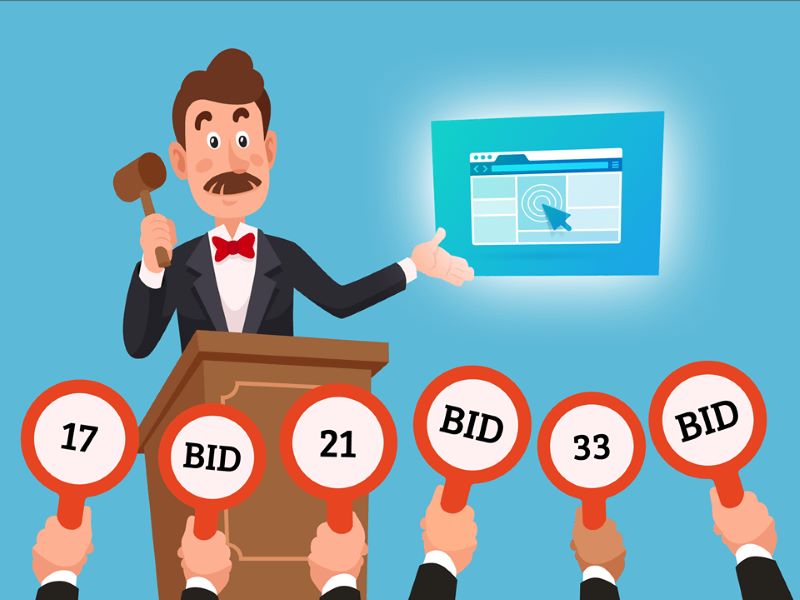
- Online company auction.
II. Legal regulations on company auctions
Currently, the auction of state-owned companies must follow the strictest procedures and conditions, and is also of interest to many investors because investing in companies with a history as state-owned companies will have easier access to more customers and a larger market share than newly established companies. Therefore, this article will focus on analyzing the auction of state-owned companies. The current legal regulations on company auctions are as follows:
1. Conditions for company auctions
The conditions for a company auction include:
- The company to be auctioned must have been resolved for financial issues according to current state regulations; and be financially supported to settle all employees in accordance with the provisions of the Labor Law and policies for surplus labor due to the restructuring of state-owned enterprises.
- The buyer of the enterprise shall continue to organize production and business activities at the enterprise; inherit debts, exercise creditor's rights over receivables and debtor's obligations for payables (in case of sale with debt inheritance) of the enterprise.
- The rights and obligations of foreign investors and enterprises with foreign investment participating in the purchase of enterprises depend on the form of enterprise converted after purchase in accordance with the regulations of Vietnamese law and the decision of the Prime Minister.
The State shall ensure the legitimate rights and interests of the buyer of the enterprise.
(According to Article 5 of Decision No. 330/2005/QD-TTg)
2. Company Auction Process
The company auction process is carried out in the following steps:
- Step 1: Auction Preparation
- Based on the state-owned enterprise ownership conversion plan approved by the Prime Minister, the agency deciding to sell the enterprise selects and decides to sell the enterprise in the form of an auction, and at the same time establishes an Auction Steering Committee.
- The Auction Steering Committee appoints and signs a contract with a valuation organization on the list published annually by the Ministry of Finance for enterprises with total asset value according to accounting books of over 30 billion VND or appoints a valuation organization or assigns the enterprise to self-determine the value of the enterprise in case the enterprise has a total asset value according to accounting books of under 30 billion VND.
- Based on the results of the enterprise valuation, the Auction Steering Committee considers submitting to the agency deciding to sell the enterprise to publish the starting price for the enterprise auction.
- The agency deciding to sell the enterprise appoints an enterprise sale organization according to regulations.
- Within 5 working days from the date the agency deciding to sell the enterprise publishes the starting price, the enterprise sale organization must publicly announce the necessary information related to the enterprise and the auction on the mass media at the enterprise sale organization and at the enterprise's headquarters no later than 45 working days before the auction date.
- Step 2: Register to Participate in the Auction and Deposit
- Investors who are eligible to participate in the auction register to participate in the auction to buy the company with the auction organization and deposit a deposit with the auction organization according to the deadline and deposit amount specified in Article 11 of the Company Auction Regulations.
- Upon receipt of the application and deposit, the auction organization will issue to the investor a bidding ticket to buy the state-owned enterprise (Form No. 8) and a deposit receipt.
- Investors must register in the auction registration book according to the rules of the auction session.
- Step 3: Survey the Company's Actual Situation
- Before auctioning the company, the auction organization will coordinate with the company to arrange for investors who have registered to participate in the auction to survey the actual situation, study the records, financial reports, asset lists, certificates of ownership, right to use assets, land; contracts related to the company.Step 4:
- Announce the Results of Registration to Participate in the Auction
- After the deadline for registration to participate in the company auction, the auction organization must announce the registration results to the Auction Steering Committee. The auction session can only be held when there are at least two investors who have submitted valid applications to buy the company.
- In case there is only 01 application to participate in the auction, the auction organization will report to the Auction Steering Committee for submission to the agency deciding to sell the state-owned enterprise for consideration and decision on the application of the direct negotiation form.

- Step 5: Organizing the Auction Session
- The organization conducting the company auction appoints a representative with the authority to conduct the auction session and invites a notary public to witness the auction session. The bidding process and the rules of conduct in the auction session are carried out according to the rules of the auction session.
- All state-owned enterprise auctions are conducted by secret ballot in each round of bidding, the rounds of bidding are carried out continuously until the winning bidder is selected.
- Before the auction, the auctioneer must announce the basic contents of the auction rules and the highest price stated in the application to participate in the auction of the state-owned enterprise of the investors, which is the starting price of the first round of the auction.
- The auctioneer distributes bidding slips to the investors. The bidding slip must clearly state the starting price of the current round and a blank space for the investor to write the desired price on their slip. After each round, when all the slips have been collected, the auctioneer announces publicly the code number and price of the investor with the highest bid and continues to distribute slips to the investors participating in the auction to start bidding for the next round. The highest price paid in the previous round is the starting price for the next bidding round. The auction ends when the remaining bidders voluntarily refuse to continue bidding, the investor with the highest bid (final round) is the winning bidder.
- In case the investors voluntarily refuse to continue participating in the auction (final round) and there are investors with the same bid, the auctioneer will organize a draw among those investors and announce the investor who wins the draw as the winning bidder with the right to buy the company.
- At the end of the auction session, the auctioneer prepares a Minutes of the Company Auction and sends it to the Auction Steering Committee.
- In case the auction session is not successful for various reasons, the auctioneer must prepare a Minutes of the Unsuccessful Auction (Form No. 9) and clearly state the reason for the failure.
- Step 6: Procedures after the Auction Session
- No later than 2 working days from the end of the successful auction session, the authorized representative of the agency deciding to sell the company and the investor must sign the company purchase and sale contract, the auction organization will refund the deposit to the investors.

- The deposit will not be refunded to the investor in case the bid is lower than the starting price, the bid in the next round is lower than the highest price of the previous round, the investor refuses to sign the company purchase and sale contract or violates the rules of the auction session.
- Step 7: Payment for the Purchase of the Company
- The investor must fulfill the payment commitment according to the regulations in the purchase and sale contract.
- Step 8: Company Handover
- After the investor has made the payment in accordance with the regulations in the company purchase and sale contract, the agency deciding to sell the company organizes the handover of the company to the investor according to the regulations in the company purchase and sale contract and both parties sign the handover minutes.
- The signed company purchase and sale contract and handover minutes are the legal basis proving the investor's ownership of the company. This file is sent to the same level financial agency for monitoring and supervision.
- Step 9: Announcement of the Termination of the State-Owned Enterprise
- Within 15 working days from the date of signing the handover minutes, the agency deciding to sell the company shall announce the sale of the company and the termination of its operation on the mass media.
(According to Part II of Circular No. 51/2006/TT-BTC)
3. Documents Required for Company Auction
The following documents are required for a company auction:
- Detailed information on the financial situation and production and business activities of the state-owned enterprise (such as financial reports, asset lists, certificates of ownership, right to use assets, land; contracts related to the auctioned company);
- Application form (Form No. 2);
- Power of attorney (Form No. 3);
- Auction rules (Form No. 4);
- Documents that the buyer must sign after the auction session: Minutes of the auction session (Form No. 5), purchase and sale contract (Form No. 6), handover minutes (Form No. 7).
(According to Point b, Clause 2, Part II of Circular No. 51/2006/TT-BTC)
III. Answering Questions Related to Company Auctions
When participating in a company auction, it is important to note the following:
Picture 4
1. Does the auction organization need to conduct a site survey of the auctioned company?
The auction organization must coordinate with the company to arrange for investors who have registered to participate in the auction to survey the actual situation, study the records, financial reports, asset lists, certificates of ownership, right to use assets, land; contracts related to the auctioned company. (According to Point a, Clause 3, Part II of Circular No. 51/2006/TT-BTC)
2. What is the responsibility of the auction organization for the company auction?
The auction organization is responsible for the following for the company auction:
- Developing an application form for buying an enterprise, the process of receiving and reviewing applications. Auction rules, power of attorney form, registration book for bidders, auction minutes, draft contract for buying and selling enterprises;
- Announcing the auction on mass media;
- Organizing for buyers to survey the enterprise's actual situation;
- Appointing or hiring an auctioneer to perform the rights and obligations according to the regulations of the Auction Steering Committee and the auction rules;
- Conducting the auction to determine the highest bidder;
- Reporting to the Enterprise Auction Steering Committee on the results of the enterprise auction.
(According to Clause 1, Article 22 of the Regulations on Auctioning of State-Owned Enterprises issued with Decision No. 330/2005/QD-TTg)
3. Are foreigners allowed to participate in company auctions?
Foreigners are allowed to participate in company auctions if they are allowed to invest according to the regulations of Vietnamese law. (According to Article 3 of Decision No. 330/2005/QD-TTg)
4. Can an investor who has registered withdraw their application to participate in the company auction?
An investor who has registered can withdraw their application to participate in the company auction. If the investor withdraws their application to participate in the company auction within the deadline for receiving applications, they will be immediately refunded the deposit. (According to Point d, Clause 4, Part II of Circular No. 51/2006/TT-BTC)
5. Two entities participating in an auction, one of which holds shares in the other, is that allowed?
Two entities participating in an auction, one of which holds shares in the other, will be accepted if it does not fall under the prohibited acts in Clause 5, Article 9 of the Law on Auctioning of Property 2016. The prohibited acts for bidders include:
- Providing false information or documents; using forged documents to register for and participate in the auction;
- Colluding with auctioneers, property auction organizations, owners of auctioned property, other bidders, individuals, or other organizations to lower the price or distort the results of the property auction;
- Obstructing the property auction; causing disorder at the auction;
- Threatening or coercing auctioneers or other bidders to distort the results of the property auction;
- Other prohibited acts as prescribed by relevant laws.
IV. Consultancy and Implementation Services for Procedures Related to Company Auction
NGOC PHU LAW COMPANY LIMITED is a company with experience in consulting and implementing procedures related to company auctions. The process and work involved include:
- Receiving information and implementing procedures for company auction;
- Guiding clients in preparing documents to complete the procedures;
- Drafting, representing, and supporting clients in submitting, amending dossiers, and working with competent state agencies;
- Receiving results after completing the procedures and handing them over to the client.
Above is the information to answer the questions about company auction that NPLAW sends to our readers. If you have any further questions, please contact NPLAW with the following contact information: