Foreign currency trading on the foreign exchange market aims to generate profit based on the difference in exchange rates between foreign currencies. What types of foreign exchange activities are currently permitted? Are foreign currency trading activities subject to value-added tax? In this article, NPLaw provides information relating to foreign currency exchange agents.
Foreign currency trading on the foreign exchange market aims to generate profit based on the difference in exchange rates between foreign currencies. What types of foreign exchange activities are currently permitted? Are foreign currency trading activities subject to value-added tax? In this article, NPLaw provides information relating to foreign currency exchange agents.
I. Current status of foreign currency exchange agents
Economic organizations engaging in foreign currency exchange activities must satisfy the conditions prescribed by law. An economic organization may conduct foreign currency exchange activities (excluding the exchange of currencies of countries sharing a land border) only after obtaining a Certificate of Registration for Foreign Currency Exchange Agent issued by the State Bank of Vietnam.

To be considered for the issuance of such a Certificate, the economic organization must first be established or registered for business in accordance with Vietnamese law. In addition, the organization must have an agent location or multiple locations that satisfy legal requirements.
II. Understanding of foreign currency exchange agents
1. What is a foreign currency exchange agent?
According to Clause 1 Article 2 of Circular No. 07/2012/TT-NHNN:
- Foreign currency means the currency of another country or territory, or the common European currency and other common currencies used in international and regional payments.
In addition, Point a Clause 1 Article 4 of the Ordinance on Foreign Exchange 2005 provides that foreign exchange includes:
- The currency of another country or the common European currency and other common currencies used in international and regional payments (hereinafter referred to as “foreign currency”).
Accordingly, a foreign currency exchange agent is understood as a commercial activity in which the principal and the agent agree that the agent, in its own name, exchanges foreign currency for the principal or provides the principal’s services to customers in return for remuneration.
2. Are agents permitted to exchange foreign currency?
Pursuant to Article 4 of Decree No. 89/2016/NĐ-CP on conditions applicable to foreign currency exchange activities, an economic organization may conduct such activities only after being issued a Certificate of Registration for Foreign Currency Exchange Agent by the State Bank of Vietnam. The conditions for an economic organization to be considered for the Certificate include:
- The organization must first be established or registered for business in accordance with Vietnamese law. Additionally, it must have at least one qualified location designated for conducting foreign currency exchange activities.
III. Legal regulations on foreign currency exchange agencies
1. Conditions for obtaining a license for foreign currency exchange agency
According to Article 4 of Decree No. 89/2016/NĐ-CP:
Economic organizations may only conduct foreign currency exchange agency activities after receiving a Certificate of Registration for Foreign Currency Exchange Agency from the State Bank of Vietnam. The conditions include:
- Having an agency location at one or more qualified places, including:
- Tourist accommodation establishments rated three stars or higher by the competent tourism authority;
- International border checkpoints (land, air, or waterway);
- Licensed entertainment facilities offering prize-winning games for foreigners;
- Ticket offices of foreign airlines, shipping lines, tourism companies, and international ticket offices of Vietnamese airlines;
- Tourist areas, commercial centers, or supermarkets frequented by foreign visitors.
- Having operational procedures for foreign currency exchange and implementing necessary security and safety measures. The transaction location must publicly display exchange rates and a signboard showing the name of the authorized credit institution and the agency’s name.
- Being authorized by a licensed credit institution to act as a foreign currency exchange agency.
- Each economic organization may act as an agent for only one authorized credit institution.
2. Procedures for applying for a foreign currency exchange agency license
According to Article 7 of the Regulation on Foreign Currency Exchange Agencies (issued together with Decision No. 21/2008/QĐ-NHNN, as amended by Clause 7 Article 2 of Circular No. 11/2016/TT-NHNN and Circular No. 15/2019/TT-NHNN):
- An economic organization seeking to operate or modify a foreign currency exchange agency shall submit one (01) application dossier by post or in person to the State Bank’s provincial or municipal branch where the agency is located.
- If the dossier is incomplete or invalid, the State Bank branch shall, within ten (10) working days from receipt, issue a written request for supplementation.
- Within thirty (30) working days from receipt of a complete and valid dossier, the State Bank branch shall review and issue either the Certificate of Registration for Foreign Currency Exchange Agency (Form No. 2) or the Certificate of Registration for Changes (Form No. 6). If the application is refused, the State Bank branch must provide written reasons.

If the Certificate is issued for an agency located in a province or centrally-run city different from the applicant’s headquarters, the issuing State Bank branch shall send a copy of the Certificate to the State Bank branch where the applicant’s headquarters is located for monitoring purposes.
IV. Questions about foreign currency exchange agencies
1. Which authority has the power to license foreign currency exchange agencies?
Under Article 7 of the Regulation on Foreign Currency Exchange Agencies, the application dossier must be submitted to the State Bank’s provincial or municipal branch where the agency is located.
Accordingly, the competent authority for issuing the license is the State Bank of Vietnam’s provincial or municipal branch in the locality where the agency is situated.
2. What is the processing time for issuing a Certificate of Registration for Foreign Currency Exchange Agency?
According to Article 7 of the Regulation:
- If the dossier is incomplete or invalid, the State Bank branch shall issue a request for supplementation within ten (10) working days from receipt.
- Within thirty (30) working days from receipt of a complete and valid dossier, the State Bank branch shall either issue the Certificate or notify the applicant in writing of the refusal and the reasons.
3. Under what circumstances may a business open a foreign currency exchange agency at a tourist accommodation establishment?
Point a Clause 2 Article 4 of Decree No. 89/2016/NĐ-CP stipulates that:
A foreign currency exchange agency may be located at tourist accommodation establishments rated three stars or higher by the competent tourism authority.
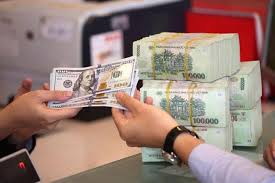
Accordingly, a business may open a foreign currency exchange agency at a tourist accommodation establishment only if it has been rated three stars or above.
V. Consulting services and assistance relating to foreign currency exchange agencies
One of the reputable law firms providing legal services relating to foreign currency exchange agencies is Ngoc Phu Law Firm (NPLaw). When using our services, clients will receive dedicated assistance from highly qualified and experienced legal specialists and lawyers.
Clients will be advised on the procedures for addressing matters relating to foreign currency exchange agency activities. If you require assistance to protect your lawful rights and interests, please contact NPLaw promptly via the following information: