Currently, food labeling fraud has become relatively common, with many businesses deliberately providing misleading information to attract consumers. Such acts lead to a loss of trust, potential health risks, and serious violations of laws on food safety.
Currently, food labeling fraud has become relatively common, with many businesses deliberately providing misleading information to attract consumers. Such acts lead to a loss of trust, potential health risks, and serious violations of laws on food safety.
I. Current situation regarding food labeling fraud
Food labeling is an essential step that enables consumers to understand a product’s composition, origin, usage instructions, and potential risks. However, in Vietnam’s production and business practices, many businesses deliberately engage in acts of deception for profit: falsifying ingredients, inflating nutritional values, misrepresenting origins, or exaggerating product functions beyond reality.
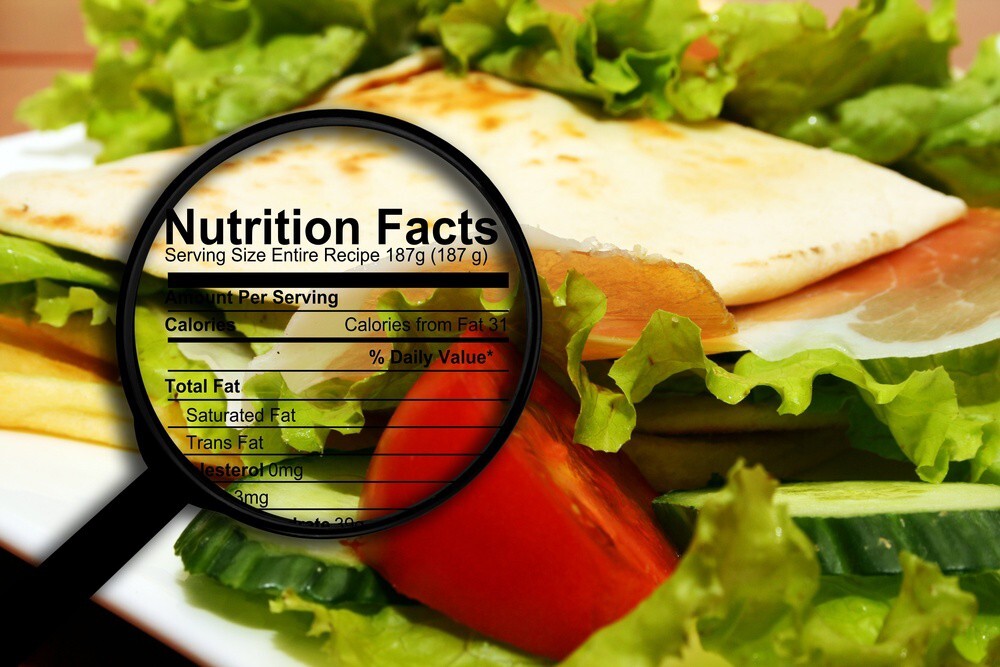
These acts not only violate legal provisions but also seriously harm consumer rights and market integrity.
II. Legal provisions concerning food labeling fraud
The regulations regarding food labeling fraud are provided as follows:
1. What constitutes food labeling fraud?
Clause 2, Article 3 of Decree No. 43/2017/NĐ-CP stipulates that goods labeling means displaying essential and necessary information about goods on their labels so that consumers can recognize, select, purchase, and use them; manufacturers and traders can inform and promote their products; and competent authorities can perform inspection and supervision.
Accordingly, food labeling fraud refers to acts of providing false, dishonest, or misleading information to consumers or authorities through product labels, with the intent to conceal the original nature of goods, gain unlawful profit, or create confusion.
2. Common acts of food labeling fraud
Common fraudulent acts in food labeling include:
- Misstating product names, ingredient lists, or raw material contents;
- Omitting mandatory information required by law;
- Falsifying product origin;
- Inflating nutritional values or claiming exaggerated functions;
- Using misleading illustrations;
- Concealing risk warnings or undesired components (e.g., preservatives or additives exceeding permitted levels).
3. Sanctions for businesses committing food labeling fraud
Acts of food labeling fraud are governed by Articles 30 and 31 of Decree No. 119/2017/NĐ-CP, as amended and supplemented by Decree No. 126/2021/NĐ-CP. Accordingly:
- Businesses violating labeling regulations in business activities may be fined from 500,000 VND to 30,000,000 VND, depending on the severity and value of goods, and are subject to mandatory recall of non-compliant products.
- Businesses violating mandatory labeling requirements may be fined from 500,000 VND to 60,000,000 VND, and may take additional sanctions such as confiscation, destruction of products, and suspension or revocation of licenses or practice certificates.

In cases where labeling fraud is intended to deceive consumers or causes serious consequences, businesses may face criminal liability under:
- Clause 2, Article 197 of the Penal Code 2015 (as amended in 2017) – Offense of False Advertising: Fine from 5,000,000 VND to VND 50,000,000 VND, and prohibition from engaging in certain occupations from 1 to 5 years;
- Article 198 of the Penal Code – Offense of Deceiving Customers: Fine from 10,000,000 VND million to 1 billion VND, imprisonment from 1 to 5 years, and occupational prohibition from 1 to 5 years.
III. Questions regarding food labeling fraud
1. Can businesses be required to recall products due to food labeling fraud?
Under Clauses 3, Article 30 and 8, Article 31 of Decree No. 119/2017/NĐ-CP (as amended by Decree No. 126/2021/NĐ-CP), businesses that violate labeling regulations may take not only fines but also remedial measures such as:
- Mandatory recall and relabeling in accordance with legal requirements before distribution;
- Destruction of non-compliant labels;
- Destruction or repurposing of goods with inseparable non-compliant labels;
- Revocation of business or professional licenses in cases of repeated violations.
2. Is mislabeling of nutritional components considered food labeling fraud?
Nutritional composition is mandatory and essential information for consumers to assess food quality. If a business intentionally inflates or falsifies nutritional information, such conduct constitutes the provision of false information, i.e., food labeling fraud.
3. Are distributors jointly liable for food labeling fraud?
Under the Law on Food Safety 2010 and its guiding regulations, both manufacturers and distributors (including importers and retailers) are responsible for verifying product labels and related documents. Point b, Clause 2, Article 8 of the Law on Food Safety 2010 stipulates that food business organizations and individuals are obligated to inspect food labels and documents related to food safety.
Therefore, distributors may take joint liability if they are aware or have sufficient grounds to suspect that a product is mislabeled but continue to distribute it. In such cases, they may be deemed accomplices or take shared responsibility.
4. Are there technological measures to detect food labeling fraud quickly?
Technological solutions for rapid detection of labeling fraud include chemical analyses such as Near-Infrared Spectroscopy (NIR), Gas/Liquid Chromatography (GC/LC), Mass Spectrometry (MS), classical wet chemistry, and molecular biology techniques such as DNA analysis (NGS, PCR) and immunoassays (ELISA).
These technologies enable fast and accurate identification of food composition, origin, and illegal additives or contaminants.
5. How can businesses remedy the consequences of food labeling fraud?
Businesses found to have engaged in labeling fraud must implement corrective measures such as recalling products, removing or replacing incorrect labels, and handling violating goods in accordance with the requirements of competent authorities.
IV. Legal advisory services concerning food labeling fraud
Legal consultancy services regarding food labeling fraud include:
- Reviewing and revising product labels to ensure compliance with legal regulations;
- Advising on and preparing product registration dossiers, and guiding transparent and accurate labeling;
- Representing clients before competent authorities during inspections or administrative proceedings;
- Assisting with remedial actions, recalls, and relabeling in compliance with law;
- Providing advice and representation in disputes or complaints arising from labeling fraud.
For any inquiries or legal assistance regarding food labeling fraud, please contact NPLAW Company Limited for direct consultation and guidance.