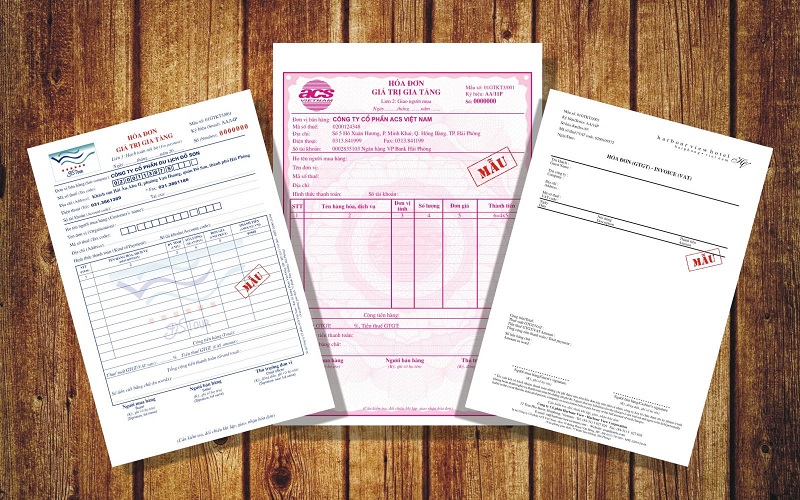
For increasingly stringent supervision by tax authorities and investigative agencies through electronic data management systems, violations relating to accounting documents are being dealt with very severely. NPLaw Firm regularly receives urgent requests for legal advice from enterprises that have intentionally or unintentionally become involved in the use of false VAT invoices. The following article analyzes the relevant legal aspects to help enterprises and individuals fully understand the associated risks and protect their legitimate rights and interests.
I. What conditions must be met for a legal representative to receive a suspended sentence or exemption from criminal liability in a case involving the use of false VAT invoices?
Once criminal proceedings have been initiated, the greatest concern for enterprise owners is how to minimize the possibility of imprisonment. Although the use of false VAT invoices constitutes a serious violation of the law, Vietnamese criminal law still provides certain leniency mechanisms.

Pursuant to Article 65 of the Criminal Code 2015 (as amended and supplemented in 2017) and Resolution No. 02/2018/NQ-HĐTP (as amended by Resolution No. 01/2022/NQ-HĐTP), a court may grant a suspended sentence to a legal representative if all four of the following mandatory conditions are satisfied:
- The imposed prison sentence does not exceed three (03) years;
- The offender has a good personal record (i.e., no prior criminal convictions or administrative violations of a serious nature);
- There are at least two mitigating circumstances of criminal liability (for example, full remediation of the consequences under Point b, Clause 1, Article 51, or sincere confession under Point s, Clause 1, Article 51 of the Criminal Code);
- The offender has a clear place of residence to facilitate supervision by the competent authorities.
In addition, to be exempt from criminal liability, under Clause 3, Article 29 of the Criminal Code 2015, a person who commits a less serious crime or a serious crime through negligence causing damage to another person's life, health, honor, dignity, or property may be exempt from criminal liability if such a person has voluntarily remedied the damage, compensated for the loss, or otherwise mitigated the consequences, and has been voluntarily reconciled with the victim or the victim’s lawful representative, who subsequently requests exemption from criminal liability.
However, for offences infringing upon the economic management order, including tax-related crimes, courts generally rely on Clause 2, Article 29 of the Criminal Code where there has been a change in circumstances rendering the offender no longer dangerous to society, or where the offender is suffering from a terminal illness.
In practice, exemption from criminal liability for such offences is exceptionally rare; nevertheless, the possibility of being granted a suspended sentence remains realistic if the offender promptly rectifies the consequences and fully remedies the damage caused.
II. Understanding the use of false VAT invoices
1. What constitutes the use of a false VAT invoice?
Pursuant to Clause 9, Article 3 of Decree No. 123/2020/NĐ-CP on invoices and vouchers, the use of false VAT invoices includes the use of unlawful invoices or vouchers (namely invoices containing information on economic transactions where the sale of goods or provision of services did not actually occur, either in whole or in part), or the use of invoices issued by another organization or individual to legitimize purchases or sales.
In essence, such a conduct creates artificial expenses for the purpose of claiming input VAT deductions or reducing the amount of Corporate Income Tax payable.
Accordingly, the fundamental nature of using false VAT invoices is the fraudulent manipulation of accounting documents to evade financial obligations owed to the State.
2. At what threshold of invoice quantity or tax evasion amount does the use of false VAT invoices result in criminal prosecution?
Such conduct may lead to criminal liability under two separate offenses depending on the underlying purpose.
- First, if the purpose is tax evasion, Clause 1, Article 200 of the Criminal Code 2015 provides that a person who uses unlawful invoices to evade taxes in an amount ranging from 100,000,000 VND to under 300,000,000 VND or less than 100,000,000 VND but has previously been administratively sanctioned for the same conduct may be subject to criminal prosecution.
- Second, if the conduct involves the unlawful purchase or sale of invoices for illicit profit, Clause 1, Article 203 of the Criminal Code 2015 stipulates that criminal liability arises where the offender trades from ten (10) to under thirty (30) invoices, or earns illicit profits ranging from 30,000,000 VND to under 100,000,000 VND.
3. What is the responsibility of the accounting department when false VAT invoices are used within an enterprise?
Accountants cannot avoid liability by claiming that they merely followed the instructions of the company director.
Pursuant to Article 17 of the Criminal Code 2015 concerning accomplice liability, if an accountant or chief accountant knowingly recognizes false transactions in the accounting documents, prepares payment orders, or files tax declarations to legitimize the use of false VAT invoices despite knowing that no actual goods or services exist, such individual may be prosecuted as an aider and abettor in tax evasion or unlawful invoice trading offenses.
The sentence imposed will depend on the nature and extent of the individual’s participation, as well as any salary or benefits derived from the unlawful conduct.
III. Legal framework governing the use of false VAT invoices
1. What current legal regulations on electronic invoices are intended to prevent the use of false VAT invoices?
Pursuant to Clause 3, Article 26 of the Law on Tax Administration 2025 and Decree No. 123/2020/NĐ-CP, all enterprises are required to adopt electronic invoices in accordance with the tax authority’s prescribed data standards.

Under Article 22 of Decree No. 123/2020/NĐ-CP (as amended by Point a, Clause 14, Article 1 of Decree No. 70/2025/NĐ-CP), the tax authority-authenticated electronic invoice system enables the General Department of Taxation to monitor commercial transactions in real time. Tax authorities utilize artificial intelligence to review supply chains and immediately flag high-risk enterprises whenever an upstream supplier is identified as issuing false invoices.
As a result, the use of false VAT invoices can no longer remain concealed through periodic reporting cycles as was previously possible.
2. What is the legal basis for prosecuting commercial legal entities that commit tax evasion through the use of false VAT invoices?
Pursuant to Article 76 and Clause 5, Article 200 of the Criminal Code 2015 (as amended in 2017), commercial legal entities may themselves take criminal liability for the offense of tax evasion. If a company uses false VAT invoices to evade taxes, the applicable monetary fines are substantially higher than those imposed on individuals.
Depending on the amount of tax evaded, the legal entity may be subject to fines ranging from 300,000,000 VND to 10,000,000,000 VND (ten billion Vietnamese dong), suspension of operations for a period of six (06) months to three (03) years, or even permanent cessation of operations in particularly serious cases.
3. What administrative and criminal sanctions apply to the use of false VAT invoices?
If the conduct does not rise to the level of criminal liability, Article 28 of Decree No. 125/2020/NĐ-CP provides for administrative fines ranging from 20,000,000 VND to 50,000,000 VND for the unlawful use of invoices, together with an obligation to pay the outstanding tax and late-payment interest.
From a criminal perspective, Article 203 of the Criminal Code 2015 prescribes a maximum sanction of five (05) years’ imprisonment for the unlawful printing, issuance, trading, or sale of invoices and documents relating to State budget revenues. For the offense of tax evasion under Article 200, the maximum sentence for an individual offender is seven (07) years’ imprisonment.
In short, the legal consequences of using false VAT invoices are extremely severe and may ultimately lead to the collapse of an enterprise.
IV. Questions regarding the use of false VAT invoices
1. Can the legal representative be immediately detained when the company is investigated for large-scale use of false VAT invoices?
Pursuant to Article 119 of the Criminal Procedure Code 2015, detention may be applied to defendants accused of very serious or particularly serious crimes. For offenses prescribed under Articles 200 and 203 of the Criminal Code 2015, the highest sanction is seven years’ imprisonment, which falls within the category of serious crimes.
Investigative authorities may issue a detention order if there are grounds to believe that the accused may abscond, destroy evidence, or collude with others in a manner that obstructs the investigation process.
Thus, where a case involving the use of false VAT invoices is connected to a large-scale network with multiple participants and complex circumstances, the immediate detention of the legal representative is entirely possible.
2. Can a chief accountant who signs relevant documents be considered an accomplice directly assisting the use of false VAT invoices?
As analyzed in Section II.4 above, pursuant to Article 17 of the Criminal Code 2015 concerning accomplices, the chief accountant is responsible for financial oversight. Deliberately approving documents containing false transactions to assist a company in reducing its tax liabilities constitutes conduct that directly facilitates the commission of tax evasion offenses, both materially and mentally.
Accordingly, the law may regulate the chief accountant as an active aiding accomplice. Such an individual cannot avoid liability by claiming ignorance or asserting that they merely acted under an employee’s instructions.
In summary, in cases involving the use of false VAT invoices, a chief accountant takes not only professional accounting responsibilities but may also face criminal prosecution as an accomplice if they knowingly participate in approving and legitimizing unlawful tax documentation.
3. May a company continue issuing new invoices while being investigated for the use of false VAT invoices?
Pursuant to Clause 1, Article 16 of Decree No. 123/2020/ND-CP, where tax authorities or law enforcement agencies detect indications that a company has unlawfully used false VAT invoices for tax evasion purposes, the tax authority may issue a decision suspending the use of electronic invoices. Such a measure may include the automatic restriction of the enterprise’s tax code from generating new invoices. As a result, the company’s sales activities may effectively be frozen until an official conclusion is reached by the investigative authorities and all remedial obligations have been fulfilled.

Thus, being investigated for the use of false VAT invoices not only creates criminal liability risks but may also severely disrupt business operations by preventing the lawful issuance of invoices to customers and business partners.
4. Can a defendant receive a suspended sentence if they are merely an employee acting under instructions when participating in the use of false VAT invoices?
Pursuant to Article 65 of the Criminal Code 2015 and relevant resolutions of the Council of Judges of the Supreme People’s Court, if a defendant (typically an accountant or documentation officer) can demonstrate that the offense was committed under coercion, entirely under the direction of superiors, without receiving any material benefit from the tax evasion scheme, while also possessing a good personal background and a family with meritorious contributions to the nation, the court may consider imposing a sentence below the statutory minimum under Article 54 of the Criminal Code 2015 and granting a suspended sentence.
5. What is the role of defense counsel in distinguishing the liabilities of individuals and legal entities in cases involving the use of false VAT invoices?
Tax-related criminal cases often involve overlapping liabilities between legal entities (companies) and individual managers.
Pursuant to Article 73 of the Criminal Procedure Code 2015, defense counsel participating from the investigation stage may directly petition competent authorities to re-examine accounting figures and distinguish lawful financial flows from unlawful ones.
The lawyer assists in clarifying the legal boundary between:
- Administrative and financial liabilities attributable to the company as a commercial legal entity; and
- Criminal liabilities that may be personally attributable to the director or other individuals.
Such distinction helps prevent wrongful attribution of liability to individuals and avoids situations where a single person is unfairly burdened with the entire civil and financial consequences arising from corporate conduct.
V. Is your business looking for a criminal law specialist to advise on risks associated with the use of false VAT invoices?
The Criminal and Economic Law Team at NPLaw, with extensive practical experience handling major tax-related cases, is committed to serving as a reliable legal partner for your enterprise.
We provide:
- Risk assessment of accounting and tax documents;
- Representation in explanations and discussions with tax authorities;
- Legal defense during investigations conducted by the Police Investigation Agency;
- Representation before courts at all levels;
- Collection and presentation of mitigating circumstances;
- Development of optimal legal strategies to protect both the enterprise and its management personnel.
NPLaw is dedicated to securing the most favorable outcome possible, safeguarding the interests of both enterprises and individual executives.
The information provided above is for reference purposes only. Should you require detailed advice regarding a specific matter, please contact NPLaw for prompt legal consultation.












