
I. Overview of electronics companies
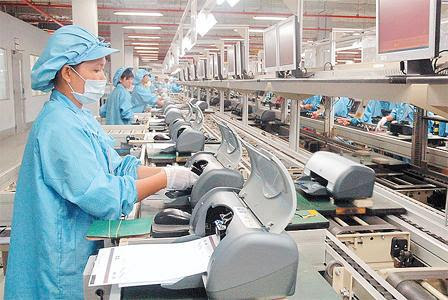
An electronics company is a business entity operating in the field of manufacturing, assembling, and trading electronic products such as household appliances, components, microchips, and other high-tech devices.
These companies play a crucial role in promoting the development of the electronics industry, meeting the growing demands of the market, and contributing to national economic growth.

II. Legal regulations on electronics companies
1. What is an electronics company?
Pursuant to Article 4 of the Law on Enterprise 2020, an enterprise is defined as an organization with legal status, established and operating in accordance with the law. Accordingly, an electronics company is a business established under Vietnamese law and operates in the electronics sector, including the manufacture, assembly, and trading of electronic devices and related components.
2. Conditions for establishing an electronics company
According to the Law on Enterprise 2020 and the Law on Investment 2020, an electronics company must register the appropriate business lines in accordance with the national economic sector classification.
Businesses are allowed to operate in business sectors that are not prohibited by law. However, for conditional business lines, the following requirements must be met: business license, certificate of eligibility, professional practice certificate, liability insurance certificate, statutory capital requirement, or other conditions as prescribed by law.
Applicable industry codes for electronics manufacturing and trading may include:
- Code 2610: Manufacture of electronic components
- Code 2620: Manufacture of computers and peripheral equipment
- Code 2630: Manufacture of communication equipment
- Code 2640: Manufacture of consumer electronics
- Code 2733: Manufacture of wiring devices of all kinds
- Code 2740: Manufacture of lighting equipment
- Code 2750: Manufacture of domestic electrical appliances
- Code 2790: Manufacture of other electrical equipment
- Code 4651: Wholesale of computers, peripheral devices and software
- Code 4652: Wholesale of electronic and telecommunications equipment and components
- Code 4659: Wholesale of other machinery, equipment and spare parts
- Code 4741: Retail sale of computers, peripheral devices, software and telecommunications equipment in specialized stores.
Regarding charter capital: Businesses must have sufficient capital when establishing electronics manufacturing companies. The minimum required capital depends on the nature of the business lines, financial capacity, and capital contribution ratio. Types of capital may include legal capital, charter capital, and escrow capital.
Regarding business location: The registered office must be located within the territory of Vietnam, with a clearly defined address. It must not be situated in apartment buildings or collective housing.
Regarding special business conditions: The above requirements apply generally to all companies. However, if the company produces or trades in disguised recording, filming, or tracking equipment or software, it falls under conditional business lines per No. 04, Appendix IV of the Law on Investment 2020. In addition, business conditions in such a sector are also governed by security and order regulations, particularly under Decree No. 66/2017/ND-CP.

3. Procedures for establishing electronics companies
- Step 1: Preparing and submitting a dossier to the Department of Planning and Investment
To register the establishment of an electronics company, the applicant must prepare a full set of documents (a dossier) in accordance with the Law on Enterprise 2020 and submit them to the Department of Planning and Investment in the locality where the company's head office is located. A dossier includes:
+ Application for enterprise registration (standard form);
+ Company charter (with signatures of all founding members or shareholders);
+ List of members or founding shareholders (for Limited Liability Companies and Joint Stock Companies);
+ Valid copies of legal documents of individuals or organizations establishing the business:
For individuals: valid citizen ID card, or passport;
For organizations: the Enterprise Registration Certificate or Decision on Establishment;
+ Information on charter capital;
+ The Investment Registration Certificate (if there is foreign investment as per the Law on Investment 2020).
If the dossier is valid, the Department of Planning and Investment will issue the Enterprise Registration Certificate within 3 working days.
- Step 2: Publishing enterprise registration information
Within 30 days of receiving the Enterprise Registration Certificate, the company must publish its registration information on the National Enterprise Registration Portal.
The published contents must include:
+ Company name
+ Address of head office
+ Registered business lines (must correspond to electronics production, assembly, trading, etc. per Decision No. 27/2018/QD-TTg)
+ Charter capital
+ Legal representative's information
Failure to comply may result in administrative fines ranging from 1 million dong to 2 million dong, pursuant to Decree No. 50/2016/ND-CP.
- Step 3: Creating company seal and seal specimen notification
After obtaining the Enterprise Registration Certificate, the electronics company must create a corporate seal and notify its seal specimen on the National Enterprise Registration Portal before using it.
Seal-related regulations:
+ The company may decide the design, quantity, and content of the seal, which must include the business’s name and registration number;
+ The seal may be round or square and made of any material suitable for the company’s needs;
+ The company is responsible for managing and using the seal in accordance with the law.
In addition to the above steps, the electronics company must also implement the following:
+ Open a corporate bank account and register for a digital signature for tax declaration purposes;
+ Register for tax with the local tax authority and issue e-invoices;
+ Register for trademark protection with the Intellectual Property Office of Vietnam to secure intellectual property rights for its electronic products (as per the Law on Intellectual Property 2005, amended 2019);
+ Apply for additional permits where required:
If manufacturing telecommunications equipment: apply for a license from the Ministry of Information and Communications;
If importing electronic components: comply with import-export regulations under the Law on Foreign Trade Management 2017.
III. Questions about electronics companies
1. Which authority is responsible for issuing business licenses for electronics companies?
Under the Law on Enterprises 2020 and Decree No. 01/2021/ND-CP on enterprise registration, the Department of Planning and Investment of the province or city where the head office is located is the competent authority.
If the company operates in conditional business sectors (e.g., manufacturing telecommunications devices or specialized components), it must obtain additional licenses from the Ministry of Industry and Trade or the Ministry of Information and Communications.
2. Are electronics companies eligible for Corporate Income Tax (CIT) incentives when investing in the Central Highlands region?
According to Decree No. 218/2013/ND-CP guiding the Law on Corporate Income Tax, and the Corporate Income Tax Law 2008 (amended in 2013, 2014, and 2020), businesses investing in socio-economically disadvantaged areas, including the Central Highlands, are entitled to tax incentives:
+ 10% preferential tax rate for 15 years;
+ Full Corporate Income Tax exemption for 4 years, and 50% reduction for the following 9 years.
3. Is trademark registration mandatory for electronics companies?
According to the Law on Intellectual Property 2005 (amended in 2009, 2019, and 2022), trademark registration for electronics companies is not mandatory. However, it is strongly recommended in order to protect the company’s economic interests and intellectual property rights, and to avoid disputes. Registration is conducted at the Intellectual Property Office under the Ministry of Science and Technology.
4. Are electronics companies allowed to import and trade electronic components?
Under the Law on Foreign Trade Management 2017 and Decree No. 69/2018/ND-CP, electronics companies are permitted to import and trade electronic components, provided that the imported products comply with technical standards, safety regulations, and conformity certification requirements set by the Ministry of Industry and Trade.
5. Do electronics companies need special permits to manufacture or assemble electronic products?
According to the Law on Investment 2020 and Decree No. 01/2021/ND-CP, whether additional permits are required depends on the type of products manufactured:
+ For telecommunications equipment: a license is required from the Ministry of Information and Communications.
+ For regular electronic component assembly: special permit isn’t required, but compliance with environmental and occupational safety standards is required.
IV. Legal advisory services for electronics companies
The above is a comprehensive overview provided by NPLaw regarding legal matters relevant to electronics companies. Should you have any further questions or need legal assistance on this matter or other legal issues, please do not hesitate to contact NPLaw. Our team of experts is ready to provide timely and thorough legal support.