Application for construction permits for investment projects is a mandatory legal procedure to ensure that projects are implemented in compliance with regulations on planning, architecture, and construction safety. Currently, obtaining such permits can be challenging for investors due to complex procedures and requirements for detailed documents. Therefore, investors need to fully understand legal regulations and are advised to consult lawyers for accurate and timely guidance.
I. Current situation of construction permits for investment projects
Currently, issuing construction permits for investment projects in Vietnam still has many troubles, despite procedural improvements. The amended Construction Law 2020 and the Land Law 2024 have simplified legal documents and procedures, such as accepting electronic drawings, applying for permits online, and exempting such permits for small rural houses.

However, the process remains complex, including land documents, technical designs, planning approvals, and tightened post-permit inspections.
II. Construction permits for investment projects?
1. What is a construction permit for an investment project
According to Clause 17, Article 3 of the Construction Law 2014:
- A construction permit is a legal document issued by a competent State authority to the project owner, allowing the new construction, renovation, improvement, or relocation of structures.
Accordingly, the construction permit for the investment project is a legal document issued by a competent authority, authorizing the project owner to conduct construction activities in accordance with planning, design, technical standards, and current legal regulations. It is a mandatory condition to ensure that the project is legally compliant, safe, and aligned with local urban development and land use plans.
2. Is it difficult to apply for construction permits for investment projects?
Obtaining construction permits is not overly difficult if the investors understand the procedures and prepare all required documents properly. However, in practice, many projects encounter challenges due to administrative complexity, detailed legal requirements (planning, design, land legality, etc.), lengthy approval times, and variations in legal procedures between localities.
Therefore, consulting legal advisors or law firms is highly recommended to ensure compliant documents and prompt procedures.
3. Required documents and main elements
- To apply for the construction permit for investment projects, the required documents include:
- Application form as prescribed (Form No. 01, Appendix II, Decree 175/2024 and 15/2021);
- Proof of land use rights (Certificate of land use rights, land recovery documents, or documents for investment approval);
- Project approval decision with confirmation documents of infrastructure, fire prevention and fighting, and environmental assessments (if applicable);
- Two sets of construction design drawings (technical design or construction drawings): including site plan, cross-sections, elevations, foundations, structural solutions, and technical connection diagrams (electricity, water, drainage, etc.).
- Most important elements
The two sets of construction design drawings are the critical part of the application. They clearly demonstrate:
- Compliance with planning, architectural, and technical requirements;
- Structural safety and technical infrastructure connections.
If these drawings are missing or incorrect, the application will not be approved, causing delays or rejections. It affects project timelines and feasibility.
In summary, apart from the application and legal documents, the construction design is the decisive factor for approving permits. Thus, investors should invest carefully in the drawings to ensure compliance and timely project implementation.
III. Legal regulations on construction permits for investment projects
1. Necessary regulations
Based on Decree 175/2024/ND-CP and amended Construction Law 2020, important regulations to consider when applying for the construction permit for investment projects in Vietnam include:
- Simplified documents and procedures (Articles 6 and 7, Decree 175/2024/ND-CP): Administrative procedures follow a one-stop mechanism. Documents are simplified, avoid duplication, and do not require hard copies if data exists in the national system on construction and land.
- Standardized appraisal content (Article 6, Decree 175/2024/ND-CP): Transparent appraisal principles ensure consistency in feasibility studies, construction designs, and technical drawings across localities.
- Strong decentralization to local authorities (Article 77, Decree 175/2024/ND-CP): Provincial People’s Committees handle appraisal, examination, issuance, and revocation of construction practice certificates; local Departments for Construction handle II and III projects; Provincial or district authorities manage ordinary projects; and the Ministry of Construction or the central government shall approve special works.
- Reduced mandatory appraisal scope (Article 6 and Appendix III, Decree 175/2024/ND-CP): Projects under 20 billion VND (excluding Category A or heritage works) only require economic-tech reports instead of full feasibility studies as previously required for projects under 15 billion VND.
- Construction practice certificates are valid for 10 years (previously 5 years), applicable to foreigners (not exceeding the work permit duration).
Thus, investors should note these new regulations, including simplified documents, decentralization, adjusted appraisals, and extended validity of certificates. They are main reforms aimed at increasing transparency, reducing costs, and expediting permit procedures.
2. Procedures and steps for obtaining construction permits
The process of issuing construction permits for investment projects in Vietnam, according to Decree 175/2024/ND-CP and amended Construction Law 2020, involves:
- Preparation of documents: Application, land documents, project approval, technical designs, fire/environmental reports (if required), and two sets of construction drawings for each project stage.
- Submission of documents: Submitting directly to the provincial or district People’s Committee (small works) or the Department for Construction (large projects), or online via the Public Service Portal. Authorities review within five (05) days and may request additional information or inter-agency consultation.
- Appraisal of documents: Competent authorities shall compare submitted drawings with approved designs; and check fire prevention and fighting, environmental compliance, and investment appraisal results.
- Issuance of permits: Once approved, authorities issue permits with signature or electronic authentication and provide the approved drawings to investors.
- Receipt of results: Within five (05) working days, construction permits and certified drawings are handed over, if documents are complete and no additional information is required.
The process is currently more transparent and efficient due to reforms for simplified documents, clear checks, online submission, and shorter waiting times.
3. Important legal notes to avoid violations
Main points to ensure compliance with construction permit regulations:
- Compliance with planning and land use: Construction must align with approved detailed planning or architectural management regulations, and land use purposes must be appropriate with the permit.
- Appraised design: Submitted drawings must be appraised, ensuring safety, environmental, fire prevention and fighting, structural, and infrastructure standards.
- Commitment to protecting adjacent works (especially for basements or infill construction): The investor must provide safety assurances for adjacent works.
- Signage and notification: Investors must hang the signs and notify the commencement of construction if required.
- Adjustment for permits if significant changes occur: Changes in location, height, façade, function, or structure require prior adjustment approval.
- Without violating permit conditions: Investors are only allowed to build according to approved drawings; deviations may result in suspension or revocation of the permit.
Compliance ensures prompt project implementation, minimizes risks, and avoids sanctions.
IV. Questions on construction permits for investment projects
1. Can construction permits be applied for online?
Since December 30, 2024, under Decree 175/2024/ND-CP, investors can submit electronic applications via the National Public Service Portal or directly at provincial/district one-stop mechanisms, depending on the project type.

The process includes submission, appraisal, verification of drawings, and inter-agency consultation within fifteen (15) to twenty (20) days. Upon approval, the permit is digitally signed and sent electronically to the investor.
Accordingly, online applications shorten processing time, and are more convenient.
2. What happens if the permit is issued but the investor does not execute the project?
The investor shall take the following consequences if the construction permit is issued but without progressing or abandoning the investment project:
- Permit expiration: If the construction work does not progress within 12 months from the date of issuance, the permit automatically expires. Accordingly, the investor needs to apply for issuing a new permit to continue performing the project.
- Administrative fines: Based on Clause 6, Article 16 of Decree No. 16/2022/ND-CP, if the investor doesn’t conduct the project in stated as the permit, including violations such as incorrect construction, failure to display permit, etc., may incur fines from 60 million to 140 million VND.
- Restoration: Authorities may require demolition or restoration of the project’s initial status if the investor violates legal regulations.
- Criminal liability: When there are serious consequences such as flooding, collapse, etc., resulting in major damages for property or community, the investor shall be entitled to criminal prosecution.
Failure to commence construction work after issuing permits will increase risk of cancellation, demolition, fines and potential criminal liability.
3. Is it required to apply for reissuing a new permit if the project’s content changes?
According to Clause 1, Article 98 of the amended Construction Law 2014, any changes affecting façade, location, area, height, floors, structures, fire prevention and fighting, or environment standards require adjustment of the construction permit.
Required documents:
- Adjustment request form (Form No. 02);
- Original issued permit;
- Two sets of construction drawings revised after basic design;
- Appraisal report and approval of the adjusted design (except individual houses).
Process includes:
- The investor submits two sets of applications at the competent authority;
- Within seven (07) working days, the authority reviews the application, consults with related departments, and requests additional information if needed.
- Within fifteen (15) to twenty (20) working days from the date of receiving the valid application fully, the authority shall issue an adjustment permit. In case, if it needs to obtain additional discussion, the issuance will be extended for up to 10 days.
Note: If changes are not serious and don’t affect the permit’s main content, the investor is exempted from adjustments.
4. How are violations in construction handled during the project implementation?
When detecting violations during the implementation of the construction projects, authorities shall handle, as follows:
- Record and suspension: For deviations from design or planning, construction work is suspended and demolished incorrect parts as required.
- Adjustment or reissuance: Within 60 days from the date of the record, the investor must submit an application for adjustment or reissuance for a construction permit.
- Remediation: Construction works affecting the environment or causing subsidence and cracks in adjacent works will not be continuously implemented and the investor is required to compensate for damages.
- Administrative fines: The administrative fine for violations will be very large, depending on the severity, it can reach hundreds of millions VND.
- Permit revocation or official suspension: The investor can be suspended from three (03) to twenty-four (24) months, and the fine is higher with recidivism.
- Criminal liability: Severe violations causing collapse, death, or major damage may lead to criminal prosecution.
Investors must follow approved designs and be willing to take corrective measures immediately.
5. Should the permit be publicly disclosed before project execution?
According to Article 66, Decree 175/2024/ND-CP:
-
Authorities must publicly post issued permits on their official websites.
-
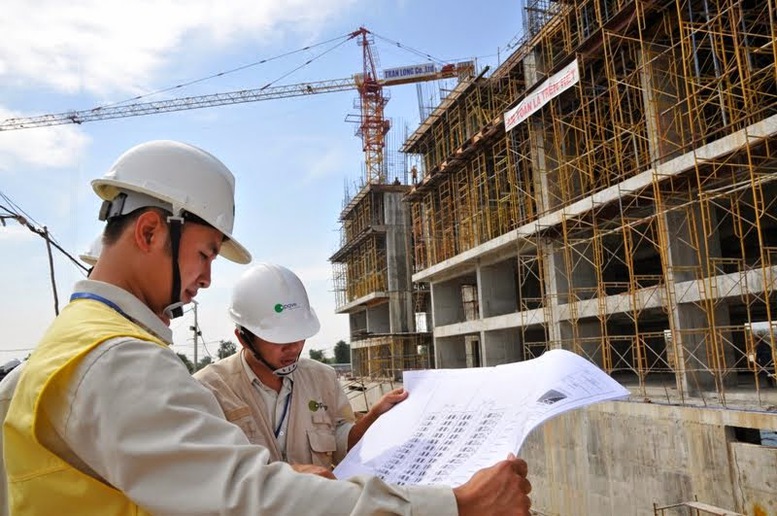
Investors must display the permit on site throughout construction for monitoring by relevant parties.
V. Why should investors consult lawyers on construction permits for investment projects
Applying for construction permits involves complex legal regulations on planning, environment, authority, and administrative procedures. Consulting a lawyer ensures:
- Proper documents, reducing processing time and minimizing risk of rejection or fines.
- Review of design and adjustment of permits when needed.
Protection of investor rights in case of legal disputes during project execution.