Supplies are types of materials (which can be either finished products or semi-finished products) necessary for use in the production process to create products but do not directly constitute the products. So how can we understand what a contract for the purchase of supplies is and the issues related to contracts for the purchase of supplies? Let's explore with NPLaw the legal regulations related to this issue below.
I. Understanding the principal contract for the purchase of supplies
1. What is a principal contract for the purchase of supplies?
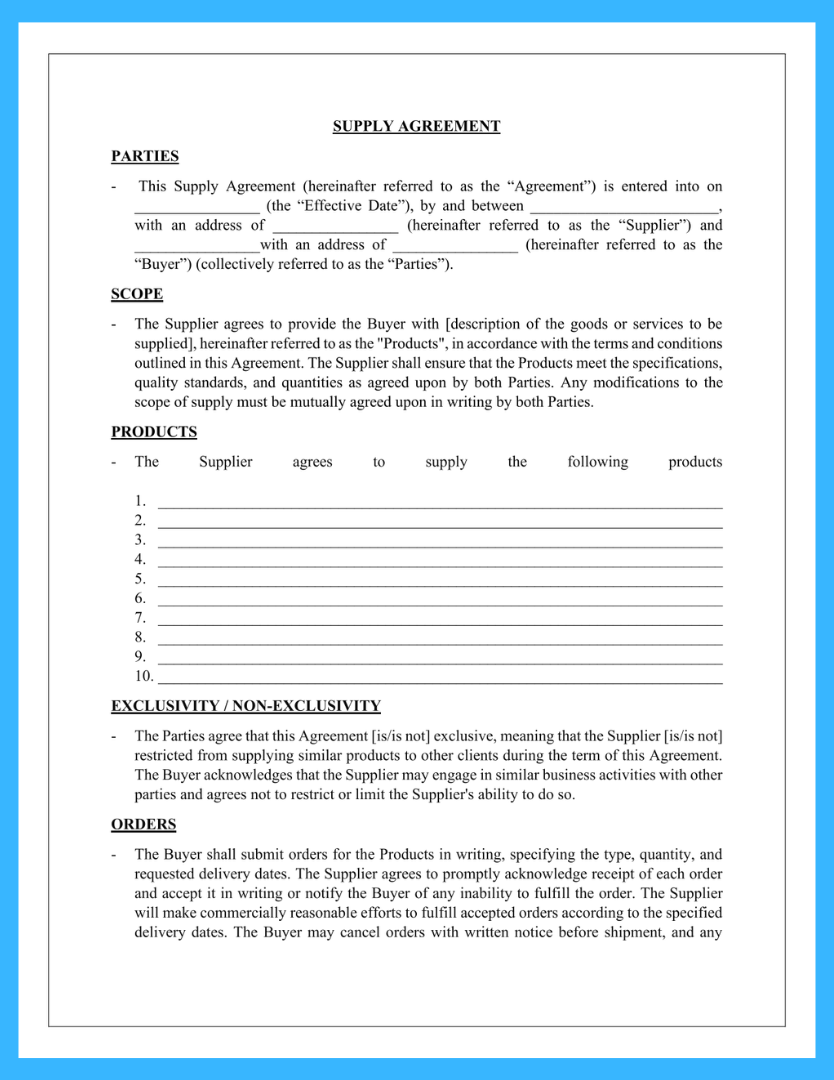
The principal contract for the purchase of supplies is a legal document that reflects the agreement between the seller and the buyer regarding the purchase and sale of assets and the fulfillment of payment obligations to become the owner of those assets.
The principal contract for the purchase of supplies includes terms such as the products to be purchased, pricing, payment conditions, delivery time, contract termination terms, etc.
2. The role of the principal contract for the purchase of supplies
The principal contract for the purchase of supplies is established as a foundation for the agreement on the purchase, sale, and provision of services. The content of the contract is constructed based on legal grounds and general conditions to facilitate the parties in establishing the supply of goods and services.
II. Legal regulations on the principal contract for the purchase of supplies
1. Content required in the principal contract for the purchase of supplies
Currently, there is no existing legal document that specifically regulates the content required in a principal contract for the purchase of supplies. Depending on the detailed agreement of the parties as well as the specific content of each type of transaction, the required content in the main contract will be determined.
The principal contract for the purchase of supplies is similar to a regular contract. Pursuant to Article 398 of the Civil Code 2015, the typical contents of a principal contract include:
- The parties involved in the principal contract and the parties with related rights and obligations mentioned in this transaction agreement.
- The subject of the contract, including issues such as quantity, quality, price, payment methods for the purchasing and selling, depositing... of that subject (if any).
- Duration, location, and method of contract execution.
- The responsibilities of the parties along with the rights and obligations of the parties in the execution of the principal contract.
2. Regulations when drafting the principal contract for the purchase of supplies
When drafting the principal contract for the purchase of supplies, it is necessary to ensure compliance with the following regulations:
- With the nature of the principal contract being a type of conditional agreement for the future. That is, the rights and obligations of the parties agreed upon in the principle contract will only take effect if a specific event or action occurs in the future.
- With the nature of the principal contract being an arrangement that provides overarching and principled commitment frames to serve as the basis for more detailed, clearer, and more comprehensive commitments in the future. At the time of signing the contract, the parties were not in a position to sign a detailed contract due to insufficient information and lack of legal basis...;
- The contract establishes a specific execution duration for the parties. During the validity duration of the Contract, the parties may sign one or more transactions, even without any actual transactions happening.
- The contract ensures that the elements relating to the format and content comply with legal regulations, do not violate prohibitions, have legal value, and are binding on the parties involved in the contract.
III. Answering some questions about the principal contract for the purchase of supplies
1. Can a principal contract for the purchase of supplies include penalty clauses?
The principal contract for the purchase of supplies, although only indicative in nature, must still ensure it contains the full elements of a contract in general regarding content and format, meaning the contract does not violate legal prohibitions, does not contradict ethics, and is not invalid, and also binds the responsibilities between the parties who have signed the contract with each other.
However, the subjects in the principal contract are usually only generally mentioned during the agreement, without specifying which goods or services, because later, when the type of goods or services is determined, the parties will sign a separate economic contract or sign an appendix to the principal contract.
Thus, during the negotiation of the main contract, in case of a dispute, one can rely on the agreements stated in the initial main contract to resolve issues not mentioned in the main contract. And the principal contract for the purchase of supplies does not need to include penalty clauses.
2. Is it allowed to have a choice of law agreement in a principal contract for the purchase of supplies with a foreign business entity?
The parties' choice of law agreement must be distinguished from the main contractual agreements between the parties ("Main Contract"). The main contract can, for example, be a sales contract, a service contract, or a loan contract. The parties can choose the applicable law in their main contract or through a separate agreement on the choice of applicable law (hereinafter referred to as a "choice of applicable law agreement").
The choice of applicable law agreement should also be distinguished from clauses or agreements on jurisdiction, clauses or agreements on the choice of trial location, or clauses or agreements on the choice of court, all of which mean only the parties' agreement on the trial location (usually the Court) will resolve the dispute. The choice of applicable law agreement should also be distinguished from arbitration clauses or agreements, which refer to the parties' agreement to bring disputes to an arbitration council for resolution. Although these clauses or agreements (collectively referred to as "dispute resolution agreements") are often combined with the choice of applicable law agreement in practice, they serve different purposes. The rules apply only to the choice of law agreement and not to the dispute resolution agreement or other issues, which are usually considered legal proceedings matters.
3. What are the penalties for not complying with the principles in the signed contract?
Pursuant to Clause 1, Article 418 of the Civil Code 2015, there are regulations regarding the agreement on penalties for violations. In which a penalty for a violation is an agreement between the parties in the contract. Accordingly, the party in violation of the obligation must pay a sum of money to the violated party.
Additionally, pursuant to Clause 2, Article 418 of the Civil Code 2015, Article 301 of the Commercial Law 2005, and Clauses 1 and 2, Article 146 of the Construction Law 2014 (amended by the amended Construction Law 2020), when the principles of the signed contract are not complied with and the contract is violated, the penalty for violation in a civil contract is agreed upon by both parties, while in commercial and construction contracts, it is based on the value of the violated contractual obligation, not exceeding 8% or 12%.
IV. Legal consulting services related to the principal contract for the purchase of supplies
Above is the article by NPLaw on the current regulations regarding framework contracts for the purchase and sale of materials. With a team of experienced lawyers and legal professionals, NPLaw provides reputable and professional legal services, ensuring the best protection of legal rights for our valued clients. If you need assistance with legal matters, you can contact NPLaw for consultation and support.
Above is the article by NPLaw on the current regulations regarding the principal contract for the purchase of supplies. With a team of experienced lawyers and legal professionals, NPLaw provides reputable and professional legal services, ensuring the best protection of legal rights for esteemed customers. If you need assistance with legal matters, you can contact NPLaw for consultation and support.