In recent years, the management and treatment of medical waste in hospitals have become a critical focus. Improper handling can pose serious risks to public health and even endanger healthcare personnel. Most hospitals now recognize the importance of strict compliance with proper medical waste protocols. This article by NPLaw provides a comprehensive overview of the legal framework, procedures, and fines related to the management and treatment of medical waste in Vietnam.
I. Definition of medical waste treatment
Hazardous medical waste refers to waste containing elements harmful to human health and the environment, such as infectious agents, toxic substances, corrosives, explosives, or radioactive materials.
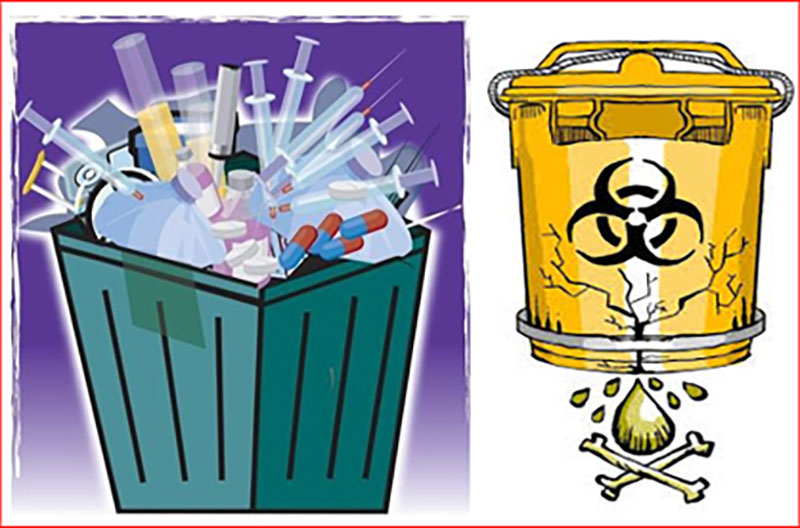
Medical waste treatment encompasses the processes of collecting, segregating, and applying appropriate measures to neutralize or minimize these hazards, thereby reducing risks to the environment and public health.
II. Legal provisions on medical waste treatment in healthcare facilities
According to Article 42 of Circular No. 02/2022/TT-BTNMT, medical waste management must comply with the following:
1. Ordinary medical waste
- Must be collected and segregated separately from hazardous medical waste, industrial waste, and domestic solid waste;
- Managed in accordance with regulations applicable to ordinary industrial solid waste;
- Hazardous medical waste must never be recycled into products or packaging used in the food industry.
2. Hazardous medical waste
- Must be segregated and stored separately from ordinary waste before being moved to a designated storage area;
- Facilities that are capable of on-site treatment or energy recovery may classify hazardous waste based on their available technology and methods.
3. Transportation standards
- Hazardous medical waste must be securely packaged in compliance with legal regulations to avoid rupture, leakage, or contamination during transportation;
- Storage containers on transport vehicles must be durable, sealed, and securely mounted to prevent spills or breakage;
- Vehicles must have insulated, enclosed storage compartments that comply with transportation regulations;
- In areas where specialized vehicles cannot be used, motorcycles equipped with sealed containers that meet transportation standards may be utilized.
4. Treatment hierarchy
Hazardous medical waste must be treated in the following order of priority:
- At licensed hazardous waste treatment facilities with designated medical waste units;
- Through a shared cluster model, where waste from multiple healthcare facilities is treated at a centralized location;
- On-site, using approved treatment systems within the healthcare facility.
III. Procedures for medical waste collection and treatment
Under Article 7 of Circular No. 20/2021/TT-BYT, medical waste must be collected and treated as follows:
1. Collection of infectious waste
- Establishing routes and schedules that minimize disruption to patient care areas;
- Using leak-proof containers for collection;
- Sealing bags and covering bins tightly before transport;
- High-risk infectious waste must be disinfected near its source. Facilities without disinfection equipment must double-bag the waste, properly label it “HIGH-RISK INFECTIOUS WASTE,” and store it separately for treatment or transfer to licensed service providers;
- Liquid infectious waste must be routed to the facility’s medical wastewater system;
- Collection frequency:
+ At least once daily from points of generation;
+ For facilities generating less than 5 kg/day, infectious sharps must still be collected at least once a month.
2. Collection of non-infectious hazardous waste
- Non-infectious hazardous waste must be collected and stored separately in the designated waste storage area within the healthcare facility.
- Broken, damaged, or used medical equipment containing mercury must be collected and stored separately in plastic containers or other suitable materials to ensure that mercury does not leak or release vapors into the environment.
- Ordinary solid waste must be divided into two groups: Solid waste that can be recycled (e.g., plastic bottles, metal cans) and Solid waste that cannot be recycled. These two groups must be collected separately.
- Non-hazardous liquid waste must be discharged into the healthcare facility’s wastewater collection system and managed in accordance with regulations on medical wastewater management.
- Exhaust gases must be treated to remove pathogenic microorganisms before being released into the surrounding environment.
3. Collection of wastewater
- The wastewater collection system must be closed (sealed) and ensure that all wastewater generated within the healthcare facility is fully collected.
- Medical wastewater must be collected and treated in accordance with the current legal regulations on wastewater management.
IV. Environmental protection requirements
Pursuant to Article 62 of the Law on Environmental Protection 2020, medical waste treatment activities must meet the following requirements:
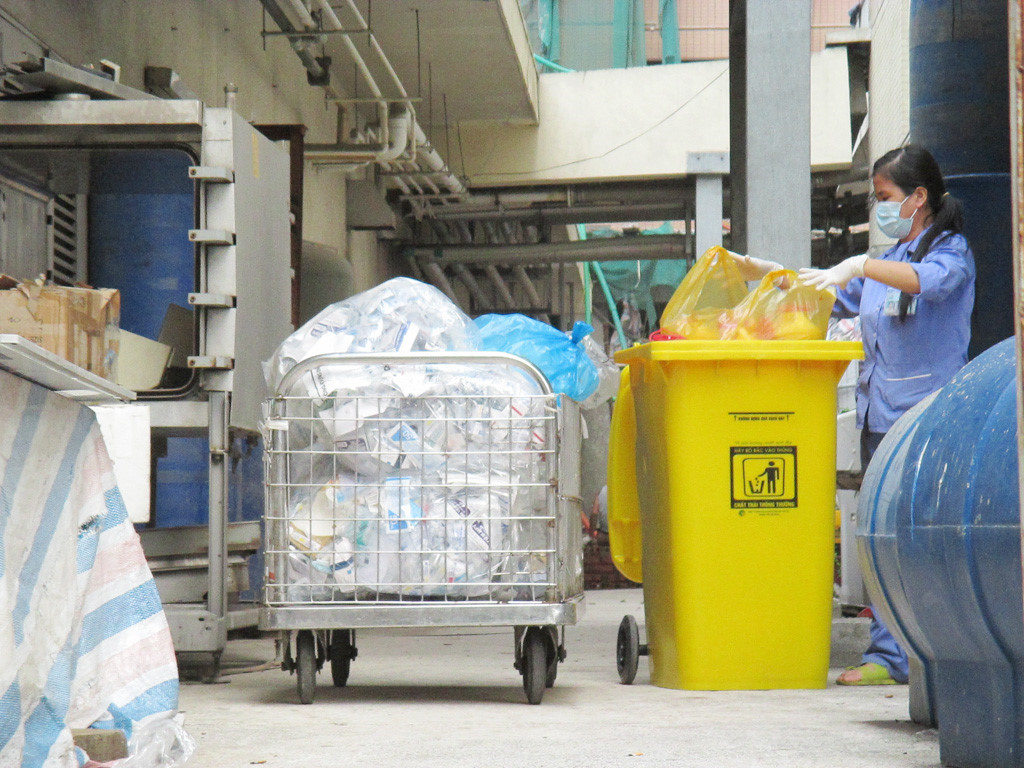
- Proper collection and treatment of wastewater before discharge;
- Source segregation of solid waste and safe storage, transport, and treatment;
- Non-incineration technologies are preferred for infectious medical waste;
- Encouragement of on-site disinfection before centralized treatment;
- Implementation of environmental incident prevention and response plans;
- Air emissions must comply with environmental safety standards;
- Construction and maintenance of appropriate sanitation and waste storage systems.
V. Waste management rules for specialized clinics
Specialized clinics must comply with Article 6 of Circular No. 20/2021/TT-BYT, which includes:
- Segregating medical waste at the point and time of generation;
- Using designated containers and packaging for each type of waste;
- Combining non-reactive hazardous wastes with similar treatment methods in the same container (except sharps);
- Treating mixed infectious and non-infectious waste as infectious waste.
VI. Current challenges and common violations
Vietnam generates approximately 120,000 m³ of medical wastewater and 350–400 tons of medical solid waste daily, including around 42 tons of hazardous medical waste.
Despite this volume, many facilities lack proper infrastructure:
- Only 53.4% of hospitals have wastewater treatment systems;
- About 90% collect solid medical waste daily;
- Just 67% operate incinerators, with 32.2% still using manual burning or burial methods.
This inadequate management exacerbates environmental pollution, threatens ecosystems, increases disease risks, and endangers human health.
VII. Fines for non-compliance
Under Decree No. 55/2021/NĐ-CP (amending Decree No. 155/2016/NĐ-CP), administrative fines of up to 100,000,000 VND may be imposed for violations such as:
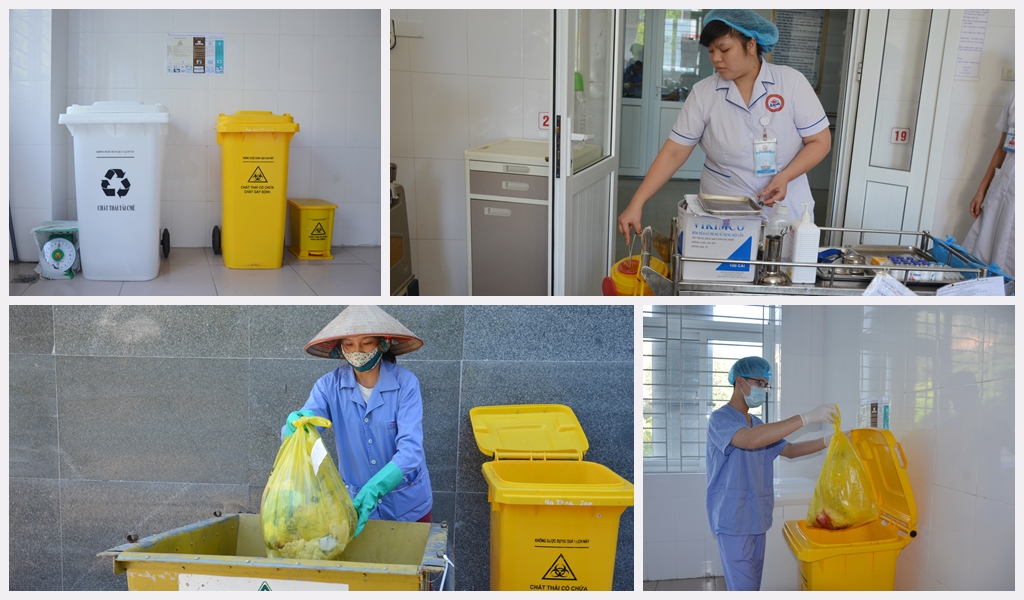
- Discharging untreated medical waste directly into the environment;
- Failing to operate waste treatment systems regularly or correctly;
- Improper installation or operation of treatment facilities contrary to approved environmental impact assessments.
Legal assistance
For guidance on compliance, building internal waste management protocols, or addressing violations, contact: