Currently, applying for temporary residence cards for foreign entrepreneurs in Vietnam is increasingly common but faces many practical challenges. Some applications are refused due to a lack of documents proving investment purposes or failure to meet legal requirements. To ensure lawful residence and business activities, compliance with legal regulations and preparation for complete applications is a prerequisite for international entrepreneurs.
I. Impact of application for temporary residence cards for foreign entrepreneurs
In the context of global economic integration, the demand for temporary residence cards for foreign entrepreneurs in Vietnam has been rising, especially in investment and trade sectors. However, many entrepreneurs encounter difficulties due to invalid applications such as documents without proving financial capacity, or unclear resident purposes.
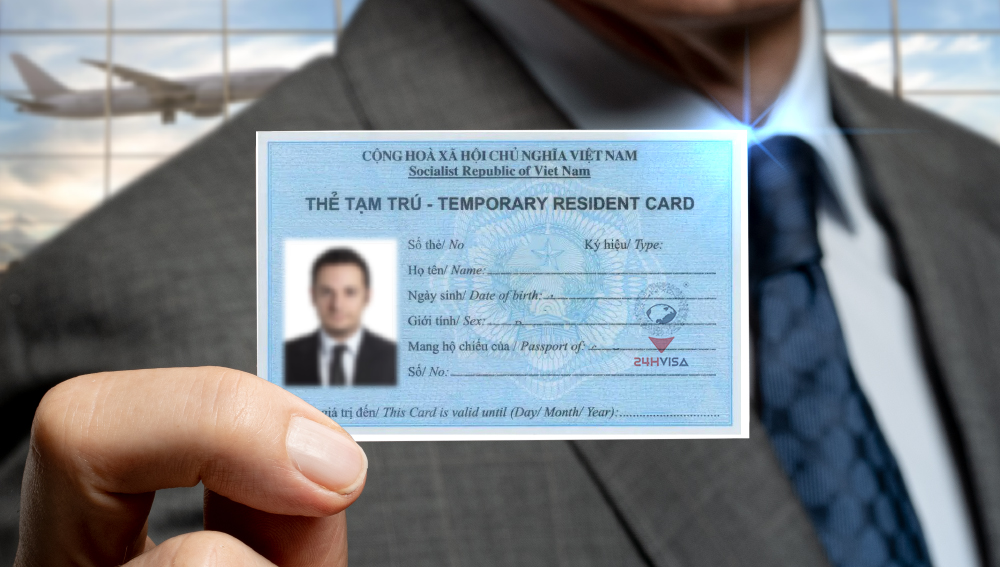
For example, a South Korean entrepreneur investing in technology in Ho Chi Minh City was refused a temporary residence card because of a lack of capital contribution confirmation, significantly affecting the project’s implementation plans in Vietnam.
II. What is an application for temporary residence cards for foreign entrepreneurs?
1. Definition
According to Clause 5, Article 2 of the Law on Residence 2020:
- Residence registration is the procedure for registering permanent residence, temporary residence, and temporary absence; and reporting residence and updating residence information.
Applying for temporary residence cards for entrepreneurs is the legal procedure for foreigners coming to Vietnam to invest, manage a business, or conduct commercial activities. Under Article 2 of the Law on Residence 2020, temporary residence is that a person lives at a place other than one’s permanent residence for a certain period and has registered it. Thus, applying for temporary residence cards allows entrepreneurs to notify authorities of their living and ensure legal conditions for working, conducting business, and residing in Vietnam for the permitted duration.
2. Why do entrepreneurs need to apply for temporary residence cards?
Applying for temporary residence cards is a mandatory procedure to ensure lawful residence and business operations in Vietnam.
- First, under Vietnamese law, foreigners staying in Vietnam for a specified period must register temporary residence to receive legal protection and supervision.
- Second, obtaining temporary residence cards helps entrepreneurs facilitate travel, signing of contracts, opening of bank accounts, investment protection, and other legal procedures related to business operations.
III. Legal regulations on temporary residence cards for foreign entrepreneurs
1. Required documents for applying for temporary residence cards
According to Clause 1, Article 28 of the Law on Residence 2020, guided by Article 5 of Decree 154/2024/ND-CP, the following documents must be prepared for temporary residence cards:
- Residence information change declaration (for minors, the declaration must include consent from parents or guardians, unless written consent has already been provided).
- Documents proving legal accommodation, which may include:
+ One of documents listed in Clause 2, Article 5 of Decree 154/2024/ND-CP. If the legal accommodation is provided by lease, loan, or permission from an organization, such documents do not need notarization or authentication.
+ Commitments stating ownership rights, no disputes over the property, and stable residence. The commitment must include full name, date of birth, personal identification number, place of residence, and accommodation information.
+ Documents from owners of tourist accommodations or other facilities permitting registration of temporary residence.
+ Documents from authorities managing industrial zones, export processing zones, or economic zones authorizing temporary residence under their management.
+ Documents from organizations managing construction sites, dormitories, craft villages, or production/business facilities permitting temporary residence at managed or owned facilities.
2. Procedures for applying for temporary residence cards for foreign entrepreneurs
Based on Article 28 of the Law on Residence 2020 regarding temporary residence registration and extension:
- Step 1: Submission of the application
- The applicant submits the temporary residence application to the local residence registration authority at the expected residence. Required documents include:
- Residence information change declaration;
- Documents proving legal accommodation.
- Step 2: Verification by the residence registration authority
- If the application is complete and valid, it is accepted, and the applicant receives a receipt form and an appointment for result notification.
- If the application meets conditions but is incomplete, it is required to amend and supplement it, and a supplementary guidance form is issued to the applicant.
- If the application does not meet requirements, it is refused, and a refusal form is issued to the applicant.
- Step 3: Payment of residence registration fee according to regulations.
- Step 4: Receipt of results on the scheduled date.
Note: The processing time is 3 working days from the date of receiving a complete and valid application.
3. Financial requirements for temporary residence applications for foreign entrepreneurs
For investment-related temporary residence, Vietnamese law imposes specific financial requirements to ensure transparency and practical capacity of the investor:
- Minimum investment capital: Entrepreneurs must demonstrate their capital contribution to a Vietnamese enterprise. Depending on the capital, the temporary residence cards may be issued as:
+ From 3 billion VND to under 50 billion VND: Temporary residence card for up to 3 years
+ From 50 billion VND to under 100 billion VND: Temporary residence card for up to 5 years
+ From 100 billion VND or more: Temporary residence card for up to 10 years. - Financial documents: Investment registration certificate, financial statements, capital contribution agreements, bank statements, etc.
- Commitment to maintain business operations: Entrepreneurs must operate their business activities as declared; otherwise, the temporary residence card may be revoked.
4. Processing Time
According to Article 28 of the Law on Residence 2020, the processing time from receiving a complete application is 3 working days. Applicants can file a complaint if such a period is exceeded without justifiable reasons.
5. Who can submit the application, and is authorization required?
The applicant may be:
- Entrepreneurs: If entrepreneurs reside in Vietnam and are fully capable legally.
- The sponsoring enterprise: The administrative department, human resources or legal representative shall implement the application procedures.
- An authorized person: Lawyers, service companies, or other legally authorized individuals shall be authorized to implement the procedures.
If not submitted by the entrepreneurs or legal representative, a legal power of attorney is required, specifying the scope, signature, company seal (if applicable), and possibly notarization.
IV. Questions on temporary residence cards for foreign entrepreneurs
1. Can entrepreneurs apply for temporary residence cards under the investment category?
If they meet capital and investment requirements. Investment visas correspond to long-term residence cards are issued based on invested capital:
|
Visa Type |
Investment Capital |
Temporary Residence Duration (maximum) |
|
Type 1 |
From 100 billion VND or more |
10 years |
|
Type 2 |
From 50 billion VND to under 100 billion VND |
5 years |
|
Type 3 |
From 3 billion VND to under 50 billion VND |
3 years |
|
Type 4 |
Under 3 billion VND |
Under 12 months, and no residence card |
2. If the entrepreneurs do not yet have their own company, can they still apply?
The entrepreneurs still may apply for temporary residence cards if do not yet have their own company, as follows:
- Contributing capital to an existing enterprise;
- Participating in business cooperation agreements with a Vietnamese company;
- Obtaining a short-term survey visa to explore investment opportunities.
In all cases, a legal sponsor in Vietnam and clear resident purposes are required. Without legal grounds, temporary residence cards will not be approved.
3. Maximum resident duration for entrepreneurs
Specifically, in Clause 4, Article 15 of Circular 55/2021/TT-BCA, the certain resident duration does not exceed 30 days. After 30 days of such residence, if entrepreneurs wish to stay, they must register for temporary residence.
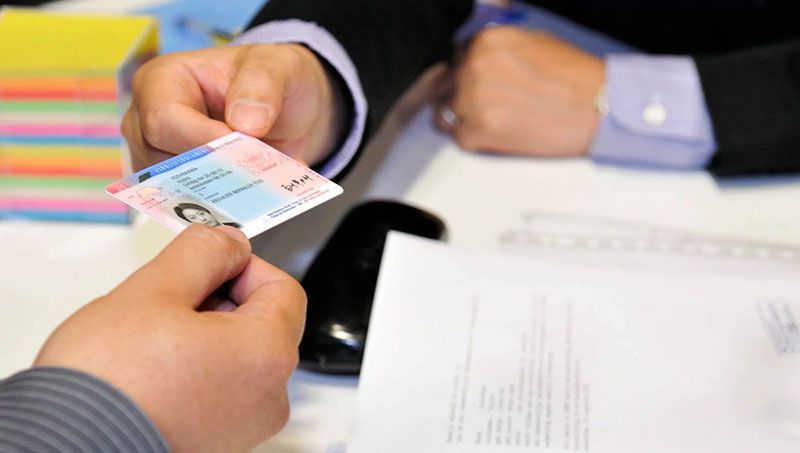
Temporary residence cards may be issued for up to 2 years and renewed multiple times. Non-registration may incur fines from 500,000 VND to 1,000,000 VND.
4. If an entrepreneur has been refused a temporary residence application before, can it reapply?
An entrepreneur who has been refused an application for temporary residence card can still reapply if it overcomes the previous problems.

Vietnamese law does not prohibit reapplying for temporary residence cards in such cases, but requires that the application be complete, in accordance with regulations and not violate the conditions of residence.
5. Does the temporary residence application require a labor contract?
For investment-category temporary residence, a labor contract is not needed. Documents proving investment role include:
- The investment registration certificate or enterprise registration certificate;
- Capital proof: Contribution agreement, bank statement, or financial report;
- Sponsorship request (Form NA6) and declaration (Form NA8).
For the labor/expert category, a valid labor permit and contract are required.
V. Should entrepreneurs consult lawyers to apply for temporary residence cards?
Applying for temporary residence cards involves specialized regulations on investment, residence, and legal documentation. Lawyers assist with reviewing applications, selecting the appropriate residence category (especially investment), preparing documents, and representing applicants with immigration authorities, ensuring efficiency and legal compliance.