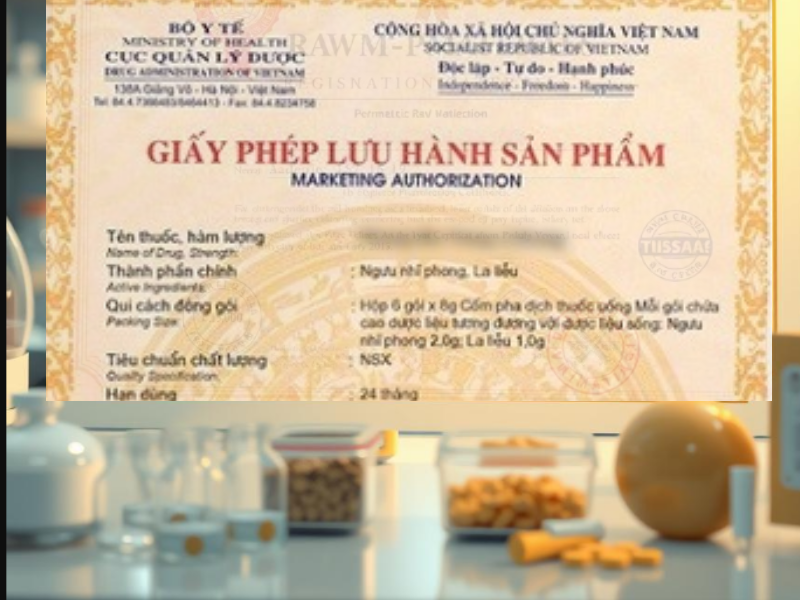
Registration for circulation of medicines is a critical regulatory procedure intended to ensure the safety and quality of medicines before they are distributed into the market. What is the circulation registration for medicines and the legal matters surrounding it? NPLaw provides below an overview of the current legal regulations governing such issues.
I. Current status of registration for circulation of medicines
Registration for circulation of medicinal products is a main process to ensure safe and effective conditions, and comply with quality standards prior to marketing. Some principal reasons include:
- Ensuring safety for users: Through the review and assessment of safety data and adverse effects, competent authorities can ensure that the medicinal product does not pose harm to consumers.
- Ensuring effective conditions: Circulation registration verifies that a medicinal product is effective for its indicated use as stated on its labeling.
- Controlling the product’s quality: The registration procedure requires manufacturers to submit certificates and evidence of production processes, ensuring that products meet the required quality standards.
- Providing comprehensive product information: Approved medicinal products are included in a database that provides essential information such as usage instructions, dosage, adverse effects, and interactions.
- Complying with consumer protection: Registration ensures that consumers only access products that have been evaluated and certified to meet regulatory standards.
In summary, circulation registration protects public health and strengthens public trust in the healthcare system and the pharmaceutical industry.
II. Overview of registration for circulation of medicines
1. What is registration for circulation of medicines? Why is registration required?
Legal basis: Article 2 of the Law on Pharmacy 2016
Medicinal products are formulations containing active pharmaceutical ingredients or herbal ingredients intended for humans for purposes of disease prevention, diagnosis, treatment, mitigation of illness, or regulation of physiological functions, including chemical medicines, herbal medicines, traditional medicines, vaccines, and biological products.

Medicinal products serve as the essential means for disease prevention and treatment. They are highly specialized goods which, if not strictly regulated and used appropriately, may pose serious risks to health and human life.
The registration for circulation or medicinal products refers to the administrative procedure for obtaining approval from the Ministry of Health to circulate medicines (medicines, vaccines, biologicals) to ensure that such products comply with regulatory requirements and are used safely and effectively.
In essence, circulation registration safeguards public health and reinforces confidence in the healthcare system and pharmaceutical sector.
2. How to register the circulation of medicines
To obtain a Circulation License of Medicines, a medicinal product or pharmaceutical ingredient must satisfy the following conditions:
- Complying with safety and efficacy requirements;
- Being manufactured at facilities that meet statutory conditions;
- Being manufactured in accordance with an approved production process and meeting the quality standards prescribed in Articles 102 and 103 of the Law on Pharmacy 2016.
III. Legal provisions on the registration for circulation of medicines
1. Processes and procedures for issuance of the Circulation License of Medicines
Pursuant to Article 8 of Circular 08/2022/TT-BYT, the Circulation License for medicinal products and pharmaceutical raw materials is valid for 5 years from its issuance or renewal. However, certain medicinal products are granted circulation valid for 3 years, including:
- New medicines, vaccines receiving their first issuance in Viet Nam, reference biologicals, and similar biologicals receiving their first issuance;
- Products with the same active ingredient, strength, dosage form as a new medicine that it has not been issued for 5-year circulation yet;
- Products subject to continued safety and effective monitoring based on the advisory opinion of the Council;
- Products falling into points a, b, and c of this Article but lacking safety and effective reports at the time of renewal due to unavailability of circulation or the quantity of medicines, the number of patients, and the duration of use that are limited according to the opinion of the Council, or there is a recommendation from the medical facility for further monitoring of safety and effectiveness.
2. Validity period of the Circulation License of Medicines
Under Clause 1 Article 36 of Circular 08/2022/TT-BYT, within a maximum of 12 months from the date of receiving a complete dossier for issuance of the Circulation License of Medicines, the Drug Administration of Vietnam shall issue the License.
If the License is not issued or deferred, the Drug Administration must provide a written notice stating the reasons.
IV. Questions regarding the registration for circulation of medicines
1. What are the sanctions for failure to register a medicine?
Currently, failure to register circulation of a medicinal product may result in significant sanctions, particularly for retail pharmacies. Pursuant to Article 56 of Decree 117/2020/ND-CP (as amended by Decree 124/2021/ND-CP) regulating violations in medicinal and pharmaceutical ingredient registration:
A fine from 10,000,000 VND to 20,000,000 VND shall be imposed for:
- Failure to report or provide information relating to medicinal registration in accordance with the obligations of the medicinal registrant or as requested by competent authorities, except where a written explanation is accepted;
- Failure to notify competent authorities of minor variations that require prior notification before circulating medicinal products or pharmaceutical ingredients.
A fine from 20,000,000 VND to 30,000,000 VND shall be imposed for:
- Failure to retain complete registration dossiers or failure to provide information relating to registered medicines when safety or effective requirements arise;
- Failure to update medicinal quality standards as required by law.
A fine from 30,000,000 VND to 50,000,000 VND shall be imposed for:
- Failure to implement the procedures for variation or supplementation of the Circulation License of Medicines to the competent authorities prior to circulation for medicines or pharmaceutical ingredients with major variations or minor variations requiring approval;
- Manufacturing or circulation of medicinal products or pharmaceutical ingredients with variations inconsistent with the approved registration dossier, when such variations require an amended license.
In addition, unregistered medicinal products or pharmaceutical ingredients must be recalled. For violators as organizations, the fines are doubled.

Registration for circulation is a mandatory procedure to ensure medicines meet appropriate quality standards prior to circulation. Violations may incur sanctions of up to 100,000,000 VND.
2. Which authorities have the competence to issue the Circulation License of Medicines?
According to Article 34 of Circular 08/2022/TT-BYT, the Drug Administration of Vietnam and other units designated by the Minister of Health (appraisal units) are responsible for appraising dossiers for issuance, renewal, and variation of the Circulation License of Medicines, except for minor supplements or variations requiring only notification to the Drug Administration’s official website.
3. In which cases may the Circulation License of Medicines be revoked?
Pursuant to Clause 1 Article 58 of the Law on Pharmacy 2016 regarding revocation of the Circulation License of Medicines, and Clause 2 Article 63 of the same law concerning violation levels of medicinal quality, the License shall be revoked in the following cases:
- Medicinal products subject to Level-1 violations;
- Within 60 months, two batches are mandatorily recalled due to Level-2 violations or three batches or more violate quality standards;
- Imported medicines whose Certificates of Medicines or Pharmaceutical Products issued overseas, serving as the basis for approval of the Circulation License of Medicines in Viet Nam, are revoked by the foreign competent authority;
- The Circulation License of Medicines is issued based on falsified dossiers;
- Medicinal products or pharmaceutical ingredients manufactured at a facility inconsistent with the registered dossier;
- Active ingredients, herbal materials, or medicines containing such substances that are deemed unsafe or ineffective by the World Health Organization, Vietnamese authorities, or the competent authority of the country of origin;
- Manufacturers or registrants voluntarily request the revocation of the Circulation License of Medicines.
V. Should you consult a lawyer regarding the registration for circulation of medicines? how to contact?
The above provides the detailed legal information that NPLaw offers to assist clients concerning the registration for circulation of medicines. Should you have any further inquiries on this matter or other legal issues, please contact NPLaw for direct consultation and guidance.