Advertising is closely linked to the development of the market economy and the production of goods and services. Practical experience has shown that advancements in science and technology have led to increasingly dynamic and diverse advertising activities. Advertising appears in various locations with multiple forms, and is conveyed through different media. Advertising is an economic activity, but it is also a form of cultural creativity that impacts consumer rights. Therefore, issues of honesty in advertising must be emphasized. So, what are legal regulations on product advertising? The following article by NPLaw will clarify this matter.
I. What is product advertising?
Pursuant to Clause 1, Article 2 of the Advertising Law 2012, advertising is a use of means to introduce to the public with products, goods, and services for profit-making purposes; non-profit products and services; organizations and individuals trading advertised products, goods, and services excluding news reports; social policies; and personal information.
Based on Article 17 of the Advertising Law 2012, advertising means include:
- Newspapers.
- Electronic information pages (webs), electronic devices, terminal devices, and other telecommunications equipment.
- Printed materials, audio and video recordings, and other technological devices.
- Billboards, banners, signboards, lightboxes, and specialized advertising screens.
- Means of transportation.
- Trade fairs, seminars, conferences, events, exhibitions, cultural and sports programs.
- Advertising product carriers and advertising objects.
- Other advertising media as prescribed by law.
II. Prohibited acts in advertising activities
Prohibited acts in advertising activities are specified in Article 8 of the Advertising Law 2012, as follows:
- Advertising the following products, goods, and services:
+ Goods and services banned from business as prescribed by law.
+ Tobacco.
+ Alcohol with an alcohol content of 15 degrees or higher.
+ Breast milk substitutes for children under 24 months old, supplementary nutritional products for children under six months old, baby bottles, and artificial pacifiers.
+ Prescription drugs; non-prescription drugs that government authorities have recommended restricting or requiring medical supervision.
+ Products and goods of a sexually stimulating nature.
+ Hunting guns and ammunition, sports weapons, and products or goods that incite violence.
+ Other products, goods, and services prohibited from advertising as regulated by the Government when new situations arise in practice.
- Advertising that discloses State secrets or harms national independence, sovereignty, security, or defense.
- Advertising that lacks aesthetic value and contradicts Vietnam's historical traditions, culture, ethics, and social customs.
- Advertising that negatively affects urban aesthetics, public order, traffic safety, or social security.
- Advertising that disrespects the national flag, national emblem, national anthem, Party flag, national heroes, cultural figures, and leaders of the Party and State.
- Advertising that discriminates against ethnic groups, races, religions, or gender, or that is prejudiced against people with disabilities.
- Advertising that insults the reputation, honor, or dignity of organizations or individuals.
- Advertising that uses images, words, or letters of individuals without their consent, except as permitted by law.
- Advertising that is false or misleading regarding business capacity and ability to supply products, goods and services of a business organization or an individual, and about the quantity, quality, price, utility, design, packaging, brand, origin, type, service method or warranty period of registered or announced products, goods, or services.
- Advertising that directly compares the price, quality or effectiveness of one's products, goods or services with those of other businesses or individuals offering similar products.
- Advertising that uses words such as “best,” “only,” “top,” “number one,” or similar terms without proved legal documents as prescribed by the Ministry of Culture, Sports, and Tourism.
- Advertising with contents that constitute unfair competition as defined by competition laws.
- Advertising that infringes intellectual property laws.
- Advertising that encourages children to think, speak or act in contradict ethics and social customs, or that negatively impact their health, safety or normal development.
- Forcing agencies, organizations or individuals to advertise or receive advertisements against their wills.
- Hanging, placing, pasting or drawing advertising on electric poles, power poles, traffic signal poles or trees in public places.
III. Conditions for product advertising
Article 20 of the Advertising Law 2012 stipulates conditions for product advertising as follows:

- Advertising business activities related to goods and services required to obtain the business registration certificate;
- Advertising products, goods and services must be accompanied by documents proving their compliance with standards and regulations as prescribed by law;
- Advertising assets that require ownership or use certification by law must be accompanied by proof of ownership or use rights;
- Advertising for special products, goods and services must meet the following conditions:
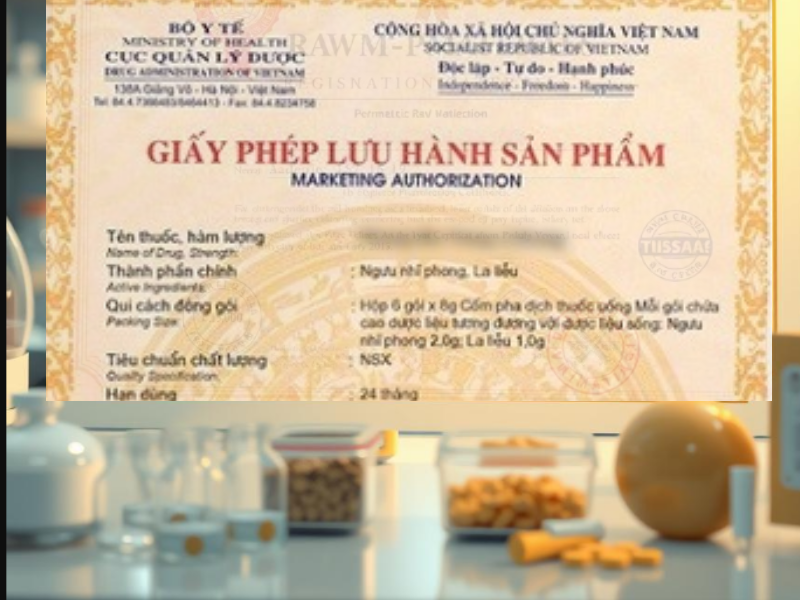
+ Advertising for medicines permitted for advertising under health laws must have a valid circulation permit in Vietnam and an instruction leaflet approved by the Ministry of Health
+ Advertising for cosmetics must have a cosmetic product declaration in accordance with health laws
+ Advertising for chemicals, insecticides and disinfectants used in household and healthcare must have the circulation registration certificate issued by the Ministry of Health
+ Advertising for milk and nutritional products for young children (excluding those restricted under Clause 4, Article 7 of the Advertising Law 2012) must have a standard certificate and a food safety certificate for domestically produced products. Otherwise, for imported nutritional products, a product quality certificate from the relevant authority in the country of origin and the circulation permit are required
+ Advertising for food and food additives must have a food safety and hygiene quality registration certificate for items requiring such a registration or a declaration receipt from the relevant authority for items requiring standard publication
+ Advertising for medical examination and treatment services must have a professional practice certificate issued by competent authorities under the Health sector as prescribed by law
+ Advertising for medical equipment must have a circulation permit for domestically manufactured devices or an import permit for imported medical devices
+ Advertising for plant protection drugs, raw materials for plant protection drugs and plant protection materials must have a registration certificate for plant protection drugs. Advertising for beneficial organisms used in plant protection must have a phytosanitary certificate issued by the Ministry of Agriculture and Rural Development
+ Advertising for veterinary drugs and veterinary materials must have a product circulation permit and a summary of product’s characteristics
+ Advertising for fertilizers, biological products for cultivation, animal feed, and biological products for livestock farming, must have a product quality certificate or a self-declared product quality document.
- The Government shall regulate advertising conditions for other special products, goods, and services when necessary based on actual circumstances.
IV. Some questions about product advertising
1. Is it necessary to register content before advertising?
Pursuant to Clause 1, Article 12 of Decree 181/2013/ND-CP, as amended by Article 5 of Decree 123/2018/ND-CP, advertising for special products, goods, and services specified from Articles 3 to 11 of Decree 181/2013/ND-CP (except for animal feed advertising) is only allowed to implement after obtaining approval from the relevant state authority. These include: Advertising for cosmetics; Advertising for food additives and food products; Advertising for chemicals, insecticides, and disinfectants used in households and health; Advertising for milk products and supplementary nutritional products for children; Advertising for medical examination and treatment services; Advertising for plant protection drugs, raw materials for plant protection drugs, plant protection materials, beneficial organisms for plant protection, veterinary drugs, and veterinary materials; and Advertising for fertilizers, biological products for cultivation, biological products for livestock farming, plant varieties, and livestock breeds.
Thus, advertising for the special products, goods, and services specified in Articles 3 to 11 of Decree 181/2013/ND-CP requires a content approval before being advertised.
2. Do foreign enterprises need to hire Vietnamese companies to advertise their products?
Clause 2, Article 39 of the Advertising Law 2012 regulating the advertising of foreign organizations and individuals in Vietnam, a foreign organization and an individual that do not operate in Vietnam but wish to advertise their products, goods, services, or activities in Vietnam must hire a Vietnamese advertising service provider to perform the advertising.
Thus, foreign enterprises are allowed to advertise their products, goods, services, and activities in Vietnam through a Vietnamese advertising service provider.
3. Can product advertisements be registered in a foreign language?
Pursuant to Article 18 of the Advertising Law, advertising must include content in Vietnamese, except in the following cases:
- Trademarks, slogans, brand names, and proper names in foreign languages or internationally recognized terms that cannot be replaced with Vietnamese;
- Books, newspapers, websites, and publications that are permitted to be published in ethnic minority languages or foreign languages; radio and television programs broadcast in ethnic minority languages or foreign languages.
- If both Vietnamese and a foreign language are used in the same advertising, the foreign language text size must not exceed three-fourths of the Vietnamese text size and must be placed below the Vietnamese text. When broadcast on radio, television, or audiovisual media, the Vietnamese version must be read before the foreign language version.
Therefore, enterprises can register advertising in any foreign language but must comply with legal regulations on language, script and text size.

The above information provides an overview of product advertising regulations. If you still have any concerns or difficulties, feel free to contact us. NPLaw is committed to providing the best legal services to our clients. We offer consultancy not only in advertising and investment but also in various other legal fields. NPLaw strives to be a trusted partner in your success. Your trust today will be the foundation for NPLaw's continued growth in the future.